









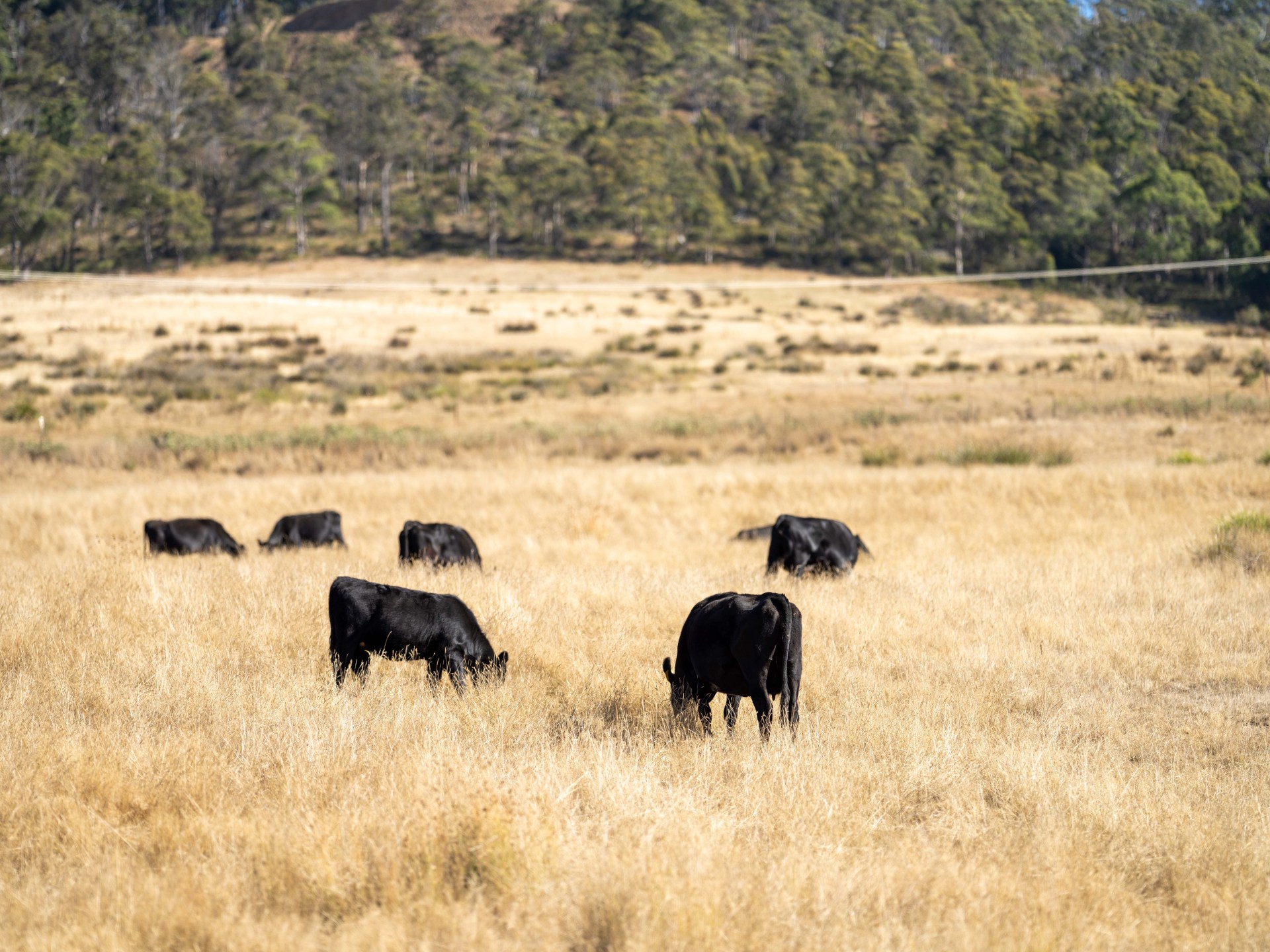
The food and agriculture sectors contribute to one-third of global greenhouse gas emissions, ranking second after fossil fuel combustion and ahead of the transport sector. However, the vast majority of media coverage on the climate crisis overlooks this vital sector, according to new data analysis.
The analysis conducted by Sentient Media indicates that only about a quarter of climate articles in 11 major US media outlets, including The Guardian, mention food and agriculture as a cause. Out of 940 articles analyzed, only 36 (3.8%) mentioned animal agriculture or meat production, the undisputed largest source of food-related emissions.
Sentient Media analyzed the latest online articles about climate change from 11 major US media outlets, excluding opinion pieces, published stories, and articles that only briefly mentioned climate change. The data revealed a media environment that hides a key factor in the climate crisis.
Jenny Splitter, editor-in-chief of Sentient Media who helped oversee the report, said she had long noticed this omission as a reporter covering the intersection of climate and food. She added, “We thought one way to start a dialogue with other journalists and newsrooms was to put some numbers to answer the question.”
Mark Hertsgaard, executive director and co-founder of Covering Climate Now, said, “As the climate crisis accelerates, it is increasingly unjustifiable for climate news coverage not to clearly state that this crisis is caused by very specific human activities, primarily fossil fuel combustion. Food, agriculture, and forests come second.”
Hertsgaard points out that food and agriculture have long been “a grievous neglect” in climate circles. He added that the UN Climate Change Summit did not dedicate attention to agriculture until 2015, reflecting its neglect among policymakers, research centers, and NGOs, which contributed to media ignorance on the topic.
Danush Dinesh, founder of Clim-Eat, a research foundation specializing in food systems, said climate organizations sometimes avoid this topic due to its culturally sensitive nature, which may keep it out of the media spotlight.
Dinesh added, “No one wants to be told what to eat; it’s a very sensitive issue. Even in climate advocacy, we see it’s controversial.”
In 2019, when a report published by The Lancet showed how low-meat diets could feed the world without environmental degradation, a coalition supported by the beef industry helped fund some negative reactions against it.
Beef industry groups take an active approach to messaging, including establishing a “command center” operating 24/7 in Denver, monitoring social media for negative stories and spreading counter-messages.
According to a report by the UN Food and Agriculture Organization (FAO), livestock and agricultural and food systems generally produce about 6.2 billion tons of carbon dioxide equivalent emissions annually, roughly 12% of total human-caused greenhouse gas emissions.
Livestock farming for meat and milk contributes about 3.8 gigatons of CO2 emissions annually, or about 62% of total emissions from the livestock sector.
Studies indicate methane gas has a warming effect 28 to 34 times greater than carbon dioxide over 100 years.
FAO estimates that digestion accounts for about 40% of emissions from animal agriculture, while a wide range of other emissions are linked to feed production, animal transport, and other activities.
Animal husbandry and feedlot establishment also release CO2 through deforestation for pasture or feed crop cultivation and energy use in breeding and transport operations.
Nitrous oxide is emitted from livestock waste and fertilizers used in feed crop cultivation, and it is 270 times more potent than CO2 in its warming effect.
Methane, a major ozone-depleting substance produced during digestion, accounts for about 10% of net global warming since the industrial revolution, according to some studies.
Production and processing of animal feed (such as hay, corn, and other grains) cause more emissions than digestion, especially from fossil fuel combustion to operate agricultural equipment, heat or cool barns and other facilities, and produce fertilizers.
When livestock farmers or beef producers clear forests to create grazing land, large amounts of carbon stored in trees are released, either quickly through burning or more slowly through decomposition.
FAO data projects a 20% increase in demand for animal-source foods by 2050, which may accelerate deforestation in some parts of the world, especially in the Amazon rainforest in South America, particularly Brazil.
The massive scale of livestock farming and related activities makes it a major driver of global warming and a significant contributor to climate change, with the sector’s impact rooted in daily human consumption patterns.



Recommended for you
Al-Jaghbeer: The Industrial Sector Leads Economic Growth
Alternative to UNIFIL Forces
Egypt Post: We Have Over 10 Million Customers in Savings Accounts and Offer Daily, Monthly, and Annual Returns
Talib Al-Rifai Chronicles Kuwaiti Art Heritage in "Doukhi.. Tasaseem Al-Saba"
Exhibition City Completes About 80% of Preparations for the Damascus International Fair Launch
Trump Advisor: Disarming Hamas is Central.. Palestinian Authority to Take Over Gaza After Required Reforms