




On a cold morning in 1659, the footsteps of an unknown Muslim man landed at the Cape of Good Hope aboard a Dutch ship, opening a new chapter in South Africa’s history and founding a Muslim community that today numbers about 1.6 million people, roughly 3% of the country’s 60 million population.
This community, born from exile, slavery, and migration, endured centuries of persecution and resistance, becoming an integral part of South Africa’s social fabric, carrying intertwined stories of resilience, success, and contribution to nation-building after apartheid.
Na’im Gina, senior researcher at the Mapungubwe Institute for Strategic Reflection, says, “When we talk about Muslims in South Africa, we cannot treat them as a single block. There are five distinct waves of arrival, each leaving its own mark on what we see today.”
The story began with Sheikh Yusuf Al-Maqassari in 1694 from Indonesia, exiled with 49 followers, who established the first organized Muslim community in Zandvliet near Cape Town.
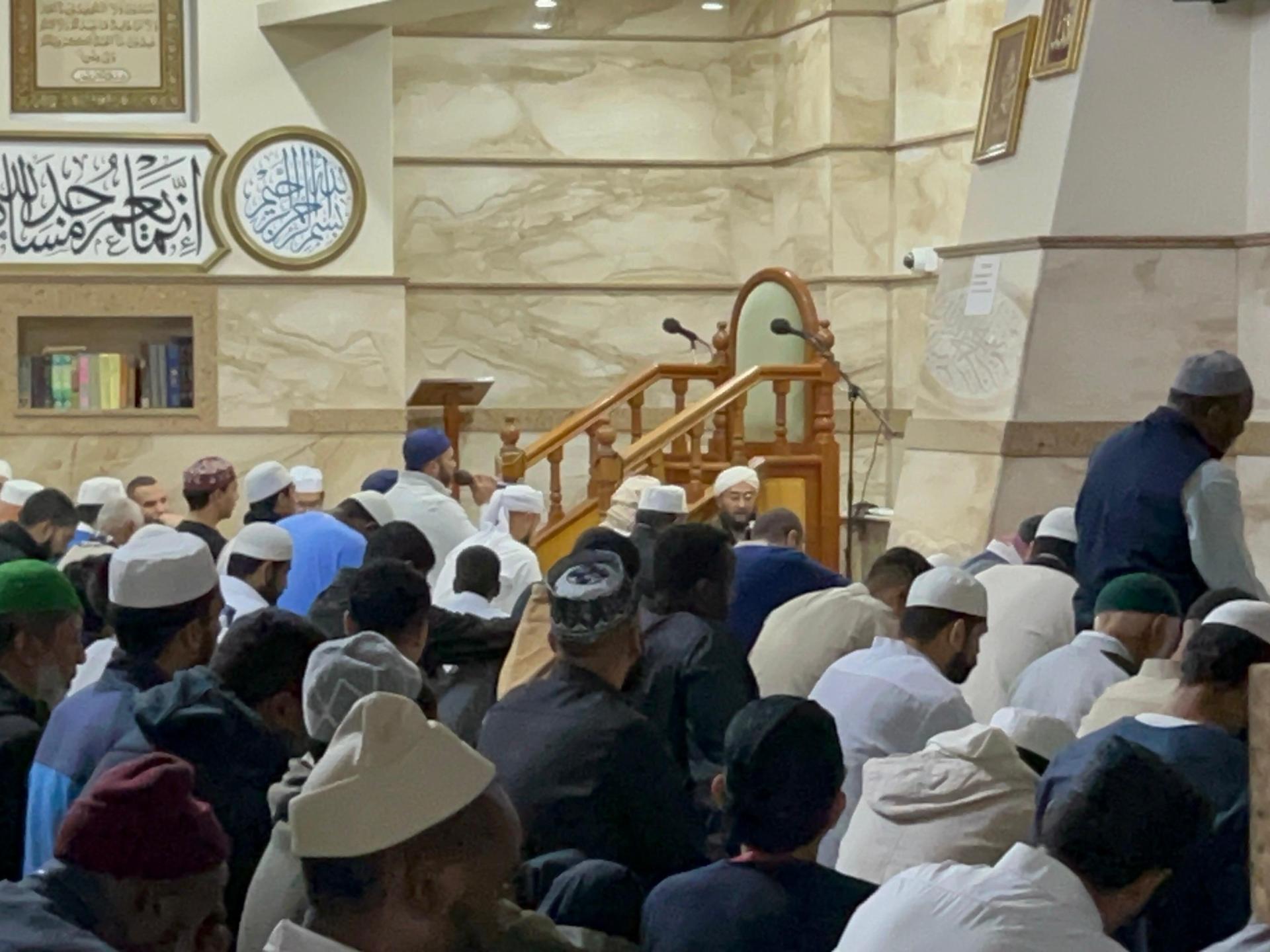
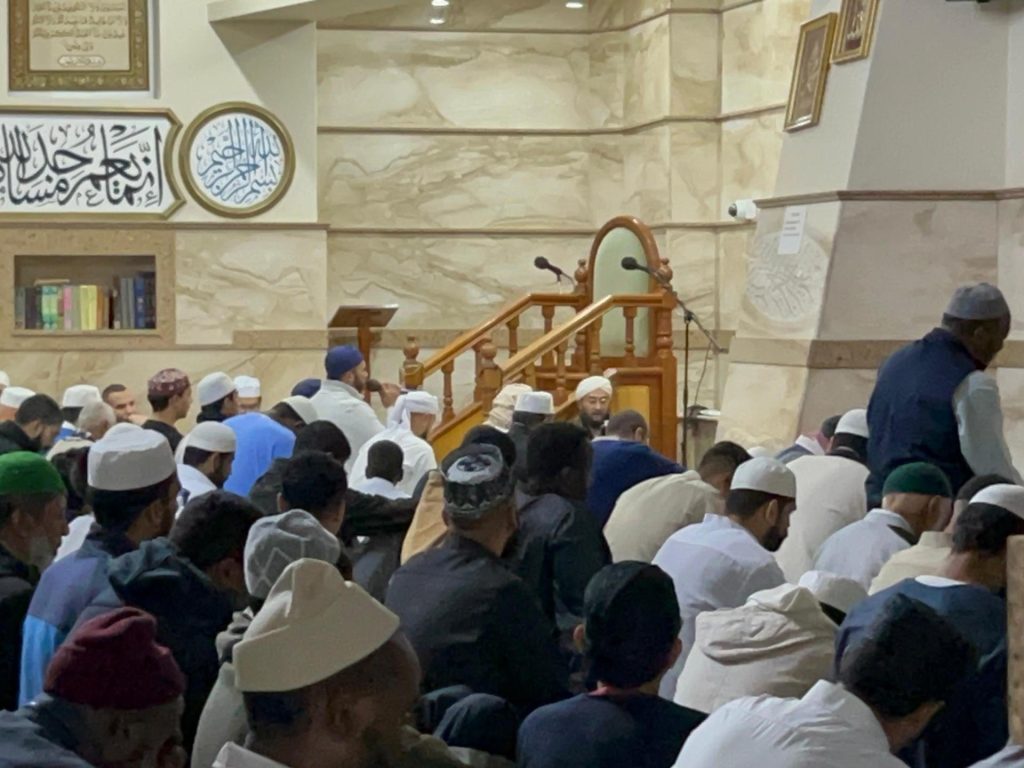
Later, the Indonesian scholar Tuan Guru arrived at Robben Island prison in 1780, founding after 11 years the ‘Auwal’ Mosque (the oldest mosque in the country) and inventing the ‘Afrikaans Arabic’ system to write Afrikaans using Arabic script.
Researcher Abdool Dyaan Petersen explains that this system is the oldest written form of Afrikaans, showing how early Muslims used their knowledge of Arabic to preserve the language of the marginalized, giving it identity and dignity.
With the discovery of gold and diamonds, thousands of Muslim workers were brought from the Indian subcontinent to Natal, some under harsh contracts, others as free migrants. Among the notable arrivals was the young lawyer Mohandas Gandhi in 1893, summoned by Muslim traders to defend them.
Here he began developing his philosophy of peaceful resistance, although his record in South Africa reveals racist attitudes towards Africans, as researcher Maureen Swan details in her book “Gandhi: The South African Experience.”
Gina describes the Muslim community in Durban as small but controversial, surrounded by conflicting origin stories: shipwreck, slave trade, or forced migration. During apartheid laws in the 1960s, they were reclassified under pressure from the Indian Muslim community as “Other Asians” to live in Muslim neighborhoods.
He considers this community “currently the most important though not the largest,” as some Africans found in Islam an ideology resisting apartheid, while others were attracted by its teachings on cleanliness and the status of women.
After 1994, new waves arrived from Somalia, Nigeria, Senegal, Pakistan, and Bangladesh, bringing various sects and currents, including Salafism, which was previously unknown in South Africa.
At the University of Cape Town, researcher Abdool Dyaan Petersen reveals Ottoman documents proving that early Muslims were not isolated. His great-grandfather, Kareem Pilgrim, the first Muslim from the Cape to perform Hajj in 1834, forged relations with Sultan Abdullah of Anjouan, paving the way for his journey.
Petersen says, “These documents show that the Cape community was part of a global Islamic network, exchanging knowledge and funds with the Ottomans and Southeast Asian sultanates.” He warns of the loss of Malay manuscripts documenting this era, emphasizing they are “most in need of preservation.”
Imam Abdullah Haron emerged in the 1960s as the first to shift Islamic resistance from sectarianism to comprehensive struggle against apartheid. He paid with his life, dying under torture in 1969 after 123 days of detention.
The community’s reaction was shocking, with leaders hesitating to hold his funeral. Gina says, “Muslim News wrote that he was not martyred for Islam but for politics.”
After 1994, Muslim representation peaked in Mandela’s government (10% of ministers) but gradually declined until nearly disappearing in the 2024 national unity government.
Muslims are concentrated in the Western Cape at 6.6% of the province’s population, comprising about half of the country’s Muslims, followed by KwaZulu-Natal at 3.2%, then Gauteng at 2.8%.
Ethnically, Cape Malays form 45%, Indians 35%, Africans 15%, and new immigrants 5%.
Economically, Muslims contribute 12% of the GDP (180 billion rand annually), but class disparities are stark, with unemployment exceeding 60% in poor neighborhoods like Hanover Park.
The community allocates 500 million rand annually to Islamic education, running 74 accredited schools with a 94% pass rate in matriculation, surpassing the national average.
Despite economic and educational strength, Muslims face contemporary challenges including ongoing racism against Africans and Somalis, sectarian disputes between Sufis and Salafis, and the threat of over-tourism to historic neighborhoods like Bo-Kaap.
Culturally, the world-renowned jazz musician Abdullah Ibrahim stands out, blending jazz, African rhythms, and Islamic spirit.
Sufi Qawwali art flourishes in Durban and Johannesburg. The cuisine reflects diversity: Cape Malay biryani with raisins and sweet potatoes contrasts with Durban’s spicy Indian-spiced biryani, alongside Pakistani, Somali, and Nigerian kitchens in Gauteng.
South African Muslims maintain close ties with the Islamic world, from Gulf support for mosque restorations to funded Hajj programs.
Petersen says, “We were never an isolated community but in continuous flow with diverse Islamic movements. This global connection enriches the local community and preserves its vitality.”
From the unknown stowaway in 1659 to a diverse community of 1.6 million today, the story of Islam in South Africa remains a mirror of the country’s complexities: a history of exile and resistance, a present of diversity and challenges, and a future open to great potential if Muslims overcome internal divisions and strengthen their role in building the new South Africa.



Recommended for you
Al-Jaghbeer: The Industrial Sector Leads Economic Growth
Alternative to UNIFIL Forces
Egypt Post: We Have Over 10 Million Customers in Savings Accounts and Offer Daily, Monthly, and Annual Returns
Talib Al-Rifai Chronicles Kuwaiti Art Heritage in "Doukhi.. Tasaseem Al-Saba"
Exhibition City Completes About 80% of Preparations for the Damascus International Fair Launch
Trump Advisor: Disarming Hamas is Central.. Palestinian Authority to Take Over Gaza After Required Reforms