





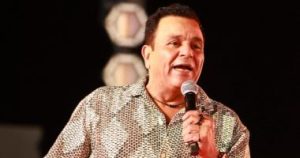
The Arts Hall affiliated with the General Authority for Books and National Documents, headed by Dr. Osama Talaat, is organizing on Wednesday, October 15, a storytelling workshop about the great artist Mohamed El-Kahlawy, on the occasion of his death anniversary. This is part of the Ministry of Culture’s celebrations of Egypt’s artistic icons and in implementation of its directives to revive the heritage of authentic Egyptian art figures.
The workshop will cover the career of the late artist Mohamed El-Kahlawy, one of the prominent figures in singing and cinema in Egypt, known for his distinctive performance of religious and national songs, leaving an everlasting mark on the Egyptian and Arab audience.
The workshop aims to review the milestones of his artistic and human life, highlighting his diverse creations that combined authenticity and innovation, alongside discussing his impact on shaping Egypt’s artistic identity in the twentieth century.
Several researchers and enthusiasts of music and artistic heritage will participate in the workshop in an open meeting that allows exchanging views and memories about the legacy of this great artist.
Mohamed Morsi Abdel Latif was born in Minya El-Qamh, Sharqia Governorate. His mother died during his birth and his father passed away while he was still a child. He was raised in an artistic family, embraced by his uncle, the artist Mohamed Mogahed El-Kahlawy, who was a contemporary of the artist Saleh Abdel Hay and was well-known and famous.
He worked as an employee in the railways and started his artistic career by singing popular mawwals. He left his job and joined the Okasha troupe and worked in radio since its inception. He spent his time between singing and playing football, excelling to become later the captain of the Railway Club team. He also frequently accompanied Zamalek and Tersana clubs on their trips.
His chance came when he was working as an extra in the Okasha troupe and the troupe’s singer Zaki Okasha was late at that time. The event organizer asked El-Kahlawy to sing to entertain the audience, who responded well. He traveled with the Okasha troupe to the Levant without his uncle’s knowledge while still a boy. The troupe returned after two months but he stayed there for eight years in the Levant countries, moving between them to learn authentic Arab singing, mastering Bedouin dialects and rhythms, and singing mawwal and ataba, then returned to Egypt.
The young artist turned to Bedouin singing which he learned well during his travel. Early in his career, he formed a beautiful trio with Bayram Al-Tunsi as writer and Zakaria Ahmed as composer, while he was the singer. El-Kahlawy established the second production company in the Arab world, “The Tribe Film Production Company,” aiming to create Bedouin cinema specializing in Bedouin Arabic films such as “Ahkam Al-Arab,” “A Day in Al-Ali,” “Prisoner of the Eyes,” “Daughter of the Desert,” among others, all of which he also acted in.
He was elected as the head of musicians in 1945 but he gave up the position to the musician Mohamed Abdel Wahab. In his later life, he retired and limited his singing to the art of Prophetic praise. He won the Egyptian acting award for his role in the film “The Great Slip,” and the King Mohammed V Award. In 1967, he received the First Class Order of Sciences and Arts and the State Appreciation Award.
His cinematic works include: Daughter of the Desert, Captain Egypt, Prisoner of the Eyes, Ahkam Al-Arab, A Day in Al-Ali, The Great Slip, Rabha, Bahbah in Baghdad, Groom from Istanbul, Antar Effendi. His songs include: For the Prophet, I Repent and Return to You, Stay with God, Oh My Heart Pray for the Prophet, He is God, Oh Mother of Monotheism, Come to Prayer.

Recommended for you
Al-Jaghbeer: The Industrial Sector Leads Economic Growth
Alternative to UNIFIL Forces
Egypt Post: We Have Over 10 Million Customers in Savings Accounts and Offer Daily, Monthly, and Annual Returns
Talib Al-Rifai Chronicles Kuwaiti Art Heritage in "Doukhi.. Tasaseem Al-Saba"
Exhibition City Completes About 80% of Preparations for the Damascus International Fair Launch
Trump Advisor: Disarming Hamas is Central.. Palestinian Authority to Take Over Gaza After Required Reforms