








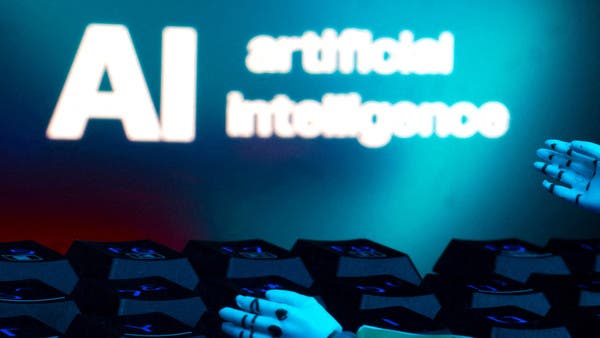
The AI race between the US and China has intensified after a new US government report described Chinese AI models as a “security risk” threatening consumers, developers, and US national security.
The report, issued by the AI Standards and Innovation Center (CAISI) under the National Institute of Standards and Technology (NIST) and the US Department of Commerce, stated that models like “DeepSeek” lag behind their US counterparts in performance, cost, security, and usage rates, despite their growing global popularity.
The report explained that these models are “more vulnerable to hacking” by malicious actors and can be exploited for cybercrime, according to a report published by “scmp” and reviewed by Al Arabiya Business.
It also noted that Chinese government censorship is directly integrated into some models.
Politicization of Chinese Models
According to new standards adopted by the center in cooperation with the US State Department, tests on Chinese models showed greater alignment with Chinese Communist Party narratives compared to US models.
The R1-0528 model from “DeepSeek” was the most aligned at 25.7% when questions were asked in Chinese.
The report responds to former President Donald Trump’s AI plan, which in July called for assessing Chinese models’ capabilities and their connection to Beijing’s official discourse.
Global Download Race
Despite criticism, “DeepSeek” models have helped narrow the gap with the US in AI adoption.
Downloads on the Hugging Face platform for developers have surged nearly 1000% since January, while downloads of Alibaba Cloud’s “Qin” series increased by 135%.
Alibaba Cloud is now close to Meta Platforms — developer of the “Llama” models — to become the world’s second-largest model developer after OpenAI.
The number of models derived from “Qin” surpasses those offered by Google, Meta, Microsoft, and OpenAI combined, reflecting the strong momentum of open-source Chinese models.
Performance and Cost Comparison
According to the report, the operating cost of OpenAI’s GPT-5-mini is 35% lower than DeepSeek’s V3.1 model for similar performance, based on API pricing.
However, the report overlooked a key advantage of Chinese models: DeepSeek allows users to run its open-weight models locally, while US model users must pay access fees via a closed API.
DeepSeek has also released updated models that cut official prices by more than 50% while maintaining comparable performance, according to independent analysis firm Artificial Analysis.
Political and Security Messages
US Commerce Secretary Howard Lutnick wrote on X that the report “proves DeepSeek’s lag in key areas, especially software engineering and cybersecurity,” emphasizing that these findings “reveal the dangers of relying on foreign AI.”
CAISI was established in 2023 during the Biden administration as the “American Institute for AI Safety” before being reorganized under Trump to strengthen US leadership in this strategic sector, with close partnerships with leading US companies like Anthropic and OpenAI.


Recommended for you
Al-Jaghbeer: The Industrial Sector Leads Economic Growth
Alternative to UNIFIL Forces
Egypt Post: We Have Over 10 Million Customers in Savings Accounts and Offer Daily, Monthly, and Annual Returns
Talib Al-Rifai Chronicles Kuwaiti Art Heritage in "Doukhi.. Tasaseem Al-Saba"
Exhibition City Completes About 80% of Preparations for the Damascus International Fair Launch
Trump Advisor: Disarming Hamas is Central.. Palestinian Authority to Take Over Gaza After Required Reforms