









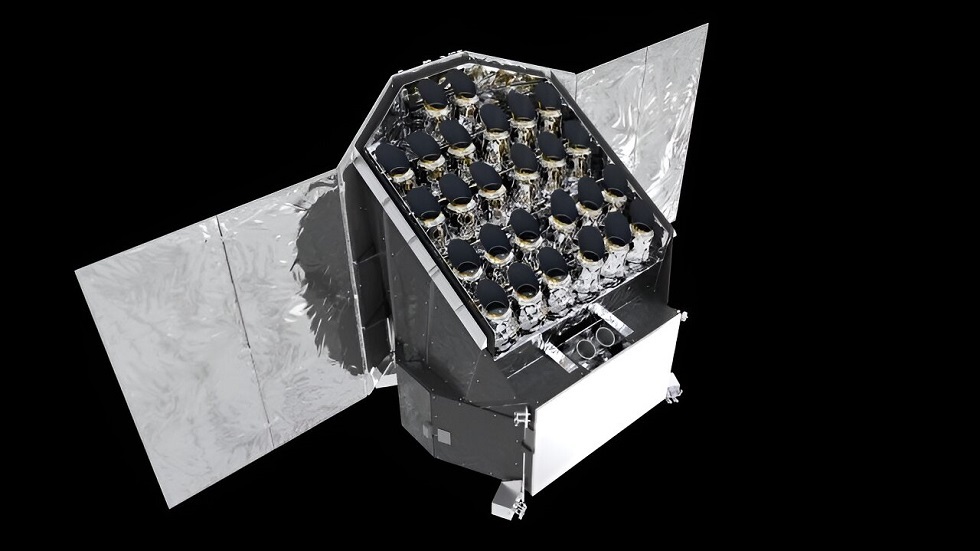
The assembly took place in a specialized clean room where engineers carefully installed the solar panels and the sunshield. Thomas Zaluski, the PLATO project manager at the European Space Agency, explained: “With this process, we have completed the assembly of the space telescope components. The sunshield unit and solar panels were the last major elements installed.”
Anna Heras, a project participant, added: “Seeing the completed spacecraft after years of detailed drawings and simulations is a completely different feeling. PLATO’s design is unique and ensures operational efficiency for its powerful cameras.”
PLATO is designed to observe more than 150,000 bright stars simultaneously with high precision, enabling scientists to search for Earth-like exoplanets. The telescope is equipped with 26 high-tech cameras capable of detecting the smallest changes in star light intensity while maintaining an optimal temperature of -80°C for each camera. The sunshield protects from sunlight, allowing the instruments to be pointed toward deep space and maintain the required cooling throughout the mission.
The structure holding the solar panels and sunshield surrounds the rear of the spacecraft, which faces the Sun in Earth’s orbit. During launch, the panels are folded, then open in space like a pair of wings. The panels underwent deployment tests on September 16 and 22 using a pulley system simulating weightlessness, with a lamp light directed to ensure sufficient electrical power generation.
Before receiving launch approval, PLATO will undergo a series of rigorous tests to confirm its readiness for space operation, while keeping to the planned schedule for its December 2026 launch.




Recommended for you
Al-Jaghbeer: The Industrial Sector Leads Economic Growth
Egypt Post: We Have Over 10 Million Customers in Savings Accounts and Offer Daily, Monthly, and Annual Returns
Alternative to UNIFIL Forces
Talib Al-Rifai Chronicles Kuwaiti Art Heritage in "Doukhi.. Tasaseem Al-Saba"
Exhibition City Completes About 80% of Preparations for the Damascus International Fair Launch
Unified Admission Applications Start Tuesday with 640 Students to be Accepted in Medicine