









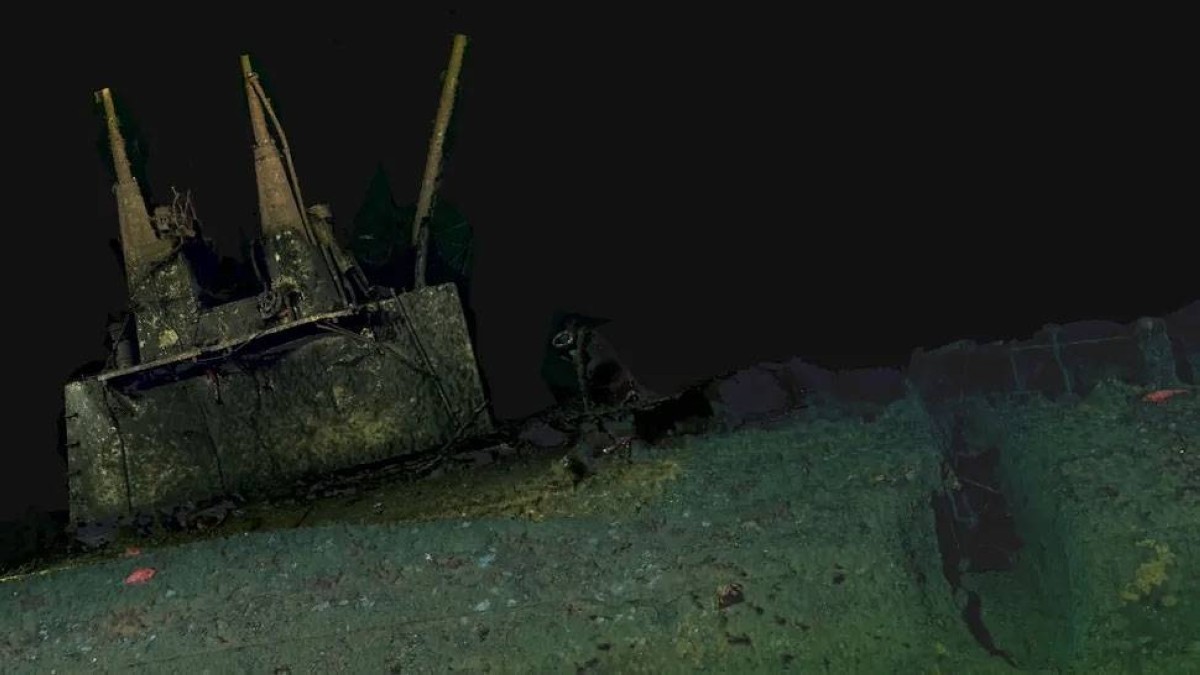
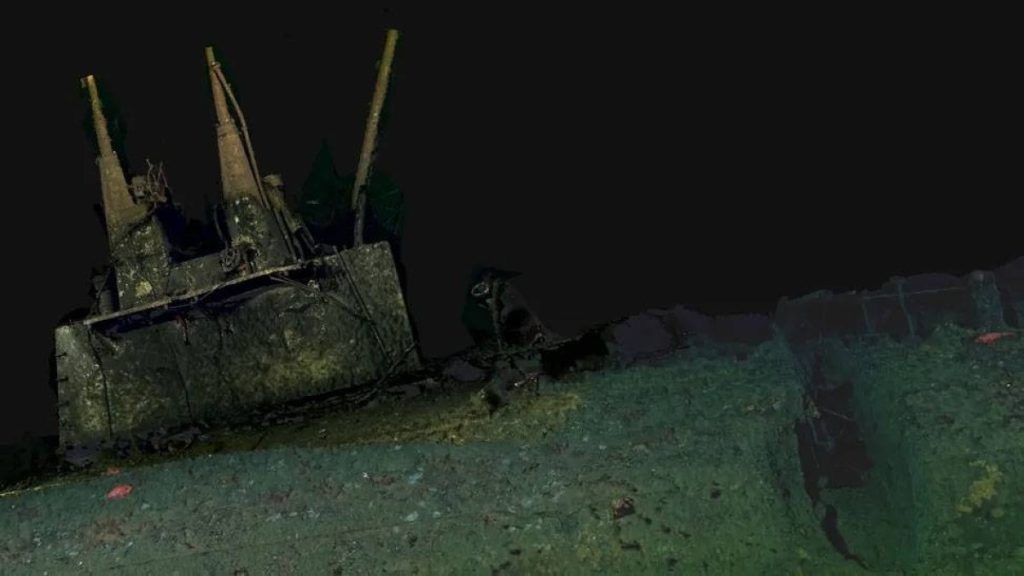
The Woods Hole Oceanographic Institution discovered the wreck of the F-1 submarine at a depth of 1,300 feet beneath the Pacific Ocean surface, more than 100 years after it sank during a training maneuver in 1917, which claimed the lives of 19 sailors.
The wreck of the USS F-1 (SS-20), one of the earliest submarines in the history of the U.S. Navy, was found in good condition despite the passage of time, located about 1,300 feet (around 400 meters) underwater.
The Early Days of the Submarine Era
The U.S. Navy began operating submarines in the early 20th century, with the USS Holland (SS-1) entering service in 1900, opening a new era in naval warfare. It was followed by a series of small submarines, including the F-1, built in 1911 and officially commissioned in 1912.
F-Class submarines were considered among the most advanced innovations at the time but were also highly experimental, making them vulnerable to risks and malfunctions.
A Tragic Incident in San Pedro
On December 17, 1917, during training maneuvers off the coast of San Pedro, California, in the Pacific Ocean, the F-1 collided with the F-3 (SS-22) due to poor coordination during a night exercise.
The F-1 sank in just ten seconds, becoming the first submarine lost by the U.S. Navy during World War I—and the only one lost not in battle but in a tragic training accident.
Of the 24 sailors aboard, only five survived, while 19 perished as the submarine was swallowed by the sea at a terrifying speed.
An Old Discovery… and a Return After Half a Century
The wreck’s location was not entirely a mystery. In October 1975, the oceanographic research vessel USNS De Steiger (T-AGOR-12) was searching for a missing plane off the California coast when it accidentally discovered the F-1 wreck.
However, since the discovery was unrelated to the ship’s mission, no detailed surveys were conducted at the time, and the results were not widely announced, leaving the submarine forgotten for nearly fifty years.
Technology Rewrites History
In 2025, researchers at the Woods Hole Oceanographic Institution (WHOI) used the old 1975 survey data, supported by modern technologies including submersible robots with digital imaging and advanced sonar.
After careful data analysis, the team confirmed the wreck indeed belonged to the USS F-1. High-resolution images showed the submarine’s hull tilted to the right, in relatively good condition after more than a century underwater.
The biggest surprise was the discovery of a Grumman TBF Avenger torpedo bomber near the submarine, a U.S. Navy aircraft lost in 1950. This dual discovery provided a rare opportunity to study two different maritime histories at one site.
A Legacy of Silence and Steel
Although the sinking of the F-1 was not the largest submarine disaster in history, it marked a turning point in the development of safety standards and design within the U.S. Navy.
Its discovery today serves as a window into the early days of military submarines, when technology was in its infancy and every dive was fraught with danger.
The WHOI team says this discovery is not just a scientific achievement but also a memorial to the submarine crew who died in service. The images captured by the robots show the submarine as if it is still silently sailing in the ocean depths, telling a story of courage, innovation, and a lesson in the cost of progress.


Recommended for you
Al-Jaghbeer: The Industrial Sector Leads Economic Growth
Alternative to UNIFIL Forces
Egypt Post: We Have Over 10 Million Customers in Savings Accounts and Offer Daily, Monthly, and Annual Returns
Talib Al-Rifai Chronicles Kuwaiti Art Heritage in "Doukhi.. Tasaseem Al-Saba"
Exhibition City Completes About 80% of Preparations for the Damascus International Fair Launch
Trump Advisor: Disarming Hamas is Central.. Palestinian Authority to Take Over Gaza After Required Reforms