







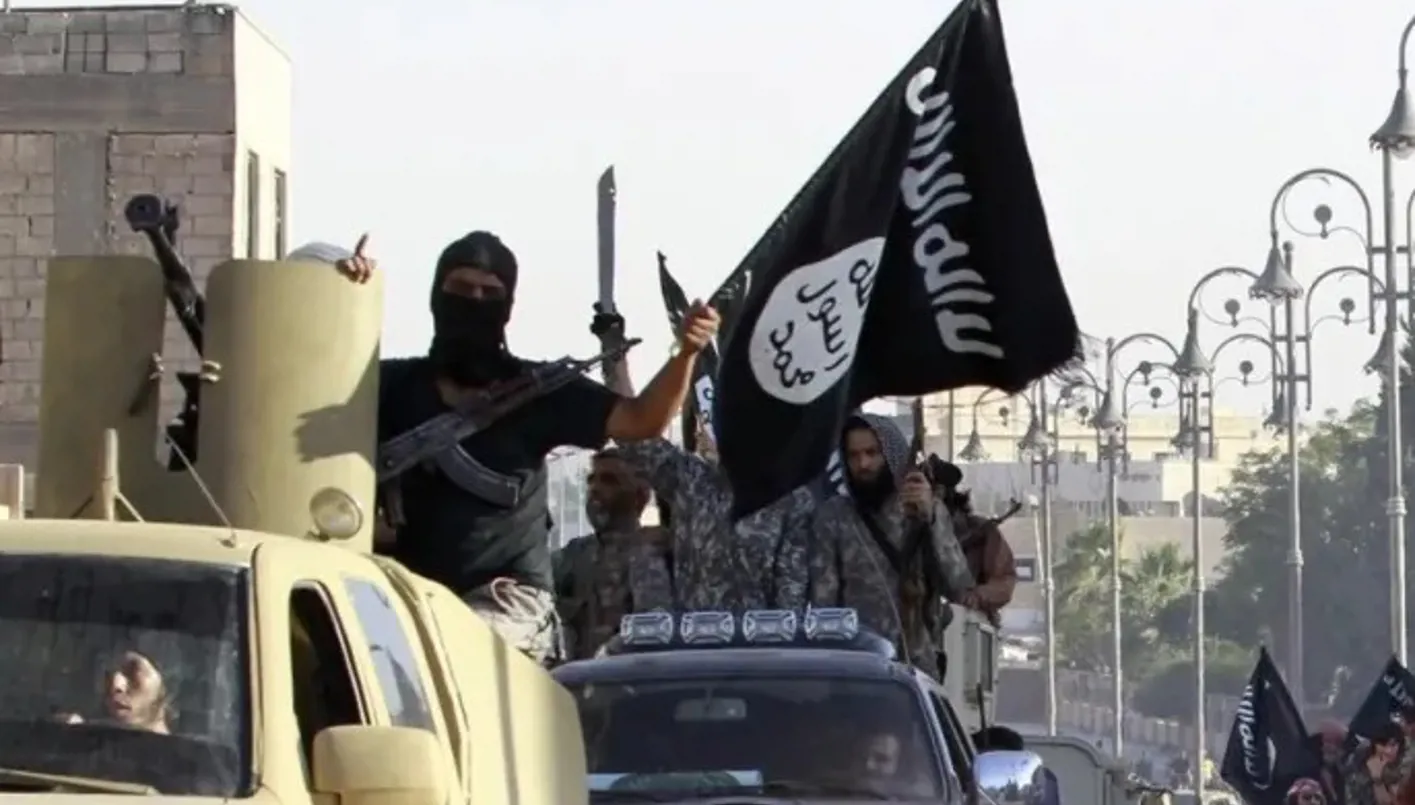
Members of ISIS. (Social media)
Since the fall of the regime, the target bank has expanded from ISIS to the Al-Qaeda environment. The difference is no longer in the flag but in the nodes controlling the networks: money, expertise, and safe havens. The choice of assassination method—whether drone, warplane, or raid—depends on the function of the target, not its name.
When the U.S. Central Command announced the killing of Muhammad Abdul Wahab al-Ahmad, known as “Abu al-Darda al-Kurdi,” the scene appeared as a new episode in the series of “precision strikes” that make no noise but quietly change maps. The strike took place in northwest Syria and targeted a figure affiliated with “Ansar al-Islam al-Mustaqillin”—a name used by its supporters to distinguish their faction from the branch that pledged allegiance to ISIS—a base-rooted environment despite the absence of declared allegiance. This alone reveals the widening circle of targeting after the regime’s fall, indicating Washington’s outreach to every cell that becomes an external threat or accelerates local chaos. The first U.S. targeting of Ansar al-Islam was in September 2024, just before the fall, marking the shift from targeting ISIS alone to a broader Al-Qaeda environment.
Based on this, the following months can be read through a clearly recurring operational structure.
Breaking down the scene reveals a clear thread: three operational tracks. The first track: air/drone strikes targeting leadership from the Al-Qaeda school in the northwest; strikes aimed at the head, not the body. The second track: air-dropped raids when direct intelligence returns are necessary (exemplified by the Al-Bab operation in July). The third track: tracking financiers and planners (as in Atmeh in August). However, this division is incomplete without the human element that gives depth to the picture.
This is the “arrest then assassination” cycle: Abu al-Darda spent six months detained in Idlib (2022), and Abu Abdul Rahman al-Urduni experienced this before his aerial killing (2024). We do not claim an explicit bridge, but the informational impact left by detention—names and devices—makes the subsequent strike akin to closing the circle. It’s as if the echo of the crisis that shook the commission last year has not disappeared after its transition to governance; contact points have expanded and the chances of information leaks increased. Against this backdrop, an additional detail emerged that changed the positioning of the target bank.
At the beginning of the year, Hurras al-Din announced its dissolution, but subsequent strikes on figures from the same environment suggested a formal extinction or a change in title, not in structure. Local and research reports also indicated that some Hurras al-Din leaders took refuge in networks close to Ansar al-Islam, explaining the continued targeting of this environment after the “dissolution.” With this key, the strike on Abu al-Darda is read as targeting an active element from an Al-Qaeda environment inside Idlib, aiming more to disrupt money, expertise, and safe havens than to track organizational names. Hence, the choice of tool becomes a detail dependent on the target’s function, not its name.
The tool varies according to function: drone for a moving target with low noise; a localized raid with confirmed coordinates; a raid to extract information. In Al-Bab, the raid was likely coordinated locally, and in Atmeh, the benefit of extraction was prioritized over bombing. After the fall, this logic became more mobile between the Badia and Idlib depending on the target’s nature. Alongside the tool, the identities of the targets themselves multiply.
The identity of the targets does not flow in one stream. While ISIS remains the largest river, the Al-Qaeda schedule and its branches have become louder than before. The strike on Abu al-Darda—affiliated with Ansar al-Islam al-Mustaqillin and the faction’s general military commander—shows that the hunting map does not stop at the flag but follows the connection nodes: funding routes, arms channels, safe havens, and advocacy and mobilization spaces that reshape networks in small, flexible forms. Based on these paths, the practical selection logic emerges.
If the target is an ISIS leader with expected direct intelligence returns, a raid is preferred. If the target is a base facilitator or a figure from Hurras al-Din where the goal is to quickly extinguish the planning spark, a precise airstrike is favored. This is how the killing of Abu al-Darda is read: a targeted airstrike in a densely loyal environment, avoiding ground contact that could flip the engagement scene. Under all this, the political shadow remains the organizing framework.
In the background looms a political shadow not limited to chasing individuals but shaping the boundaries of the transitional scene: deterrence messages that disable the ability to carry out external attacks, cooling the vacuum so the northwest does not become a haven. This shadow also signals to local actors that nominal solutions or changing banners do not immunize networks from targeting, reassuring partners that counterterrorism continues without sliding into an open war. Thus, effectiveness is not measured by the number of flags lowered but by the number of disrupted circles: dried-up funding, cut-off shelter routes, and aborted operations rooms.



Recommended for you
Al-Jaghbeer: The Industrial Sector Leads Economic Growth
Egypt Post: We Have Over 10 Million Customers in Savings Accounts and Offer Daily, Monthly, and Annual Returns
Alternative to UNIFIL Forces
Talib Al-Rifai Chronicles Kuwaiti Art Heritage in "Doukhi.. Tasaseem Al-Saba"
Exhibition City Completes About 80% of Preparations for the Damascus International Fair Launch
Trump Advisor: Disarming Hamas is Central.. Palestinian Authority to Take Over Gaza After Required Reforms