









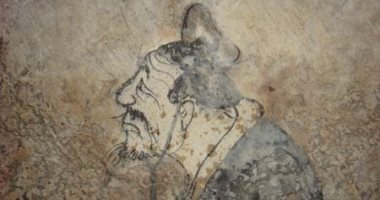
Today marks the anniversary of the birth of the famous Chinese spiritual philosopher Confucius, born on September 28, 551 BCE. He was the first Chinese philosopher to successfully establish a doctrine encompassing all Chinese traditions concerning social and moral behavior. His philosophy is based on personal moral values.
Confucius is known in Chinese culture as the “Great Teacher,” and his intellectual legacy forms the cornerstone of traditional Chinese thought. Although his teachings are usually classified within ethical and social philosophy, some of his contemporaries and later scholars regarded him as a prophet due to the spiritual and reformist tendencies in his ideas.
Confucius never claimed prophecy nor that he received divine revelation, but his repeated references to “Heaven entrusting him with the mission to reform his country” led some to consider him a sent prophet. He expressed confidence that “Heaven would not forsake him” and that only Heaven truly understood him. This spiritual dimension, alongside his reformist nature, pushed his thought beyond philosophy towards a kind of mission.
Confucius emphasized the necessity of moral governance based on virtue and believed that the ruler should be a role model for his people. He advocated a paternalistic authoritarian model where the ruler commands respect through adherence to high values, in exchange for the people’s obedience. This view led some to accuse him of endorsing tyranny by granting a quasi-divine legitimacy to the ruler as the “father” whom subjects obey without objection.
Conversely, others defended Confucius, asserting that he sought to promote justice through widespread education and called for both rulers and subjects to commit to virtue, making authority more responsible and less tyrannical.
Confucius failed to impose his philosophy during his lifetime and faced resistance, especially from the central authority under Emperor Qin Shi Huang, the first unifier of China, who regarded Confucianism as a threat to his rule. Qin ordered the burning of books opposing his “Legalist” philosophy and punished dissenting philosophers by burial or stoning.
However, after the short-lived Qin dynasty ended, Confucianism regained its status and became the fundamental reference for education and governance in China for over two thousand years. Confucius’ sayings were inscribed on temples, structures were erected in his honor, and his status was elevated to that of prophets and even gods in the eyes of some followers.
Confucius’ legacy embodies a unique intersection of philosophy, religion, and politics. While regarded in the West as an ethical philosopher, the Chinese elevated him to the rank of prophet and viewed his thought as a framework for good governance. Through his struggle with authority and the triumph of his ideas posthumously, Confucius became a symbol of the continuity of moral values in the face of political tyranny.




Recommended for you
Al-Jaghbeer: The Industrial Sector Leads Economic Growth
Alternative to UNIFIL Forces
Talib Al-Rifai Chronicles Kuwaiti Art Heritage in "Doukhi.. Tasaseem Al-Saba"
Egypt Post: We Have Over 10 Million Customers in Savings Accounts and Offer Daily, Monthly, and Annual Returns
Exhibition City Completes About 80% of Preparations for the Damascus International Fair Launch
Trump Advisor: Disarming Hamas is Central.. Palestinian Authority to Take Over Gaza After Required Reforms