





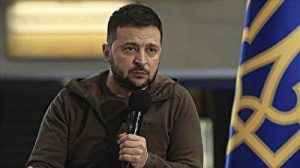




Details and timelines remain unclear in the 20-point plan unveiled at the White House on Monday.
US President Donald Trump’s 20-point ceasefire plan for Gaza includes many vague provisions that could be crucial for the future of Palestine and the region.
Presented at the White House alongside Israeli Prime Minister Benjamin Netanyahu, Trump praised the plan as historic, but defining details of some elements is likely to pose a major challenge for implementation.
First, how will Gaza be governed?
The plan envisions a “temporary transitional rule by a non-political Palestinian technocratic committee” overseeing the sector’s affairs, but it does not specify how the committee will be formed or who will select its members.
Moreover, the plan states that Trump and former British Prime Minister Tony Blair will lead a “Peace Council” supervising the governing committee, but the roadmap does not clarify the nature of the relationship between this council and the Palestinian committee, nor the level at which daily decisions will be made.
Second, will the Palestinian Authority participate?
Trump’s plan states that transitional authorities will control Gaza until the “Palestinian Authority completes its reform program” and can “safely and effectively regain control of Gaza.” However, it remains unclear who will decide if the Palestinian Authority is ready to take control or what criteria must be met for it to manage the sector’s affairs.
There are no timelines, only a vague statement, and the language treats Gaza as if it were an independent entity, not part of Palestine that should be unified with the rest of the occupied Palestinian territories.
Meanwhile, Netanyahu—who announced his approval of the proposal—ruled out the Palestinian Authority’s return to Gaza, saying alongside Trump, “Gaza will be governed neither by Hamas nor by the Palestinian Authority.”
Fourth, how will the international force be formed?
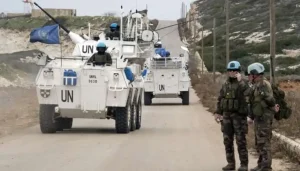
The plan states that security in Gaza will be ensured by a “temporary international stabilization force,” but where this force will come from and what its mission will be remains unclear.
It is unclear which countries are willing to send troops to Gaza or which would be acceptable under the plan.
The proposal also does not clarify the responsibilities and rules of engagement for potential peacekeeping forces.
Will they act as an army, police force, or monitoring force? Will they be tasked with confronting Hamas? Will they be able to fight Israeli forces to protect Palestinians?
When will Israel withdraw?
The proposal states that Israel will withdraw from Gaza “based on disarmament-related criteria, milestones, and timelines.”
Again, the clause does not specify a timetable for Israeli withdrawal or clear criteria for how and when it will occur. Furthermore, the proposal states that Israel will maintain a “security perimeter” in Gaza until the sector is “fully secured from any renewed terrorist threat.”
But there is no information on who will ultimately decide when these conditions are met.
Is a Palestinian state on the table?
During his press conference on Monday, Trump said many allies “foolishly recognized the Palestinian state, but in my opinion, they did so because they are tired of what is happening.”
The proposal hints at the possibility of a Palestinian state behind a thick wall of ambiguity, conditions, and limitations.
It says, “As Gaza’s redevelopment progresses, and when the Palestinian Authority’s reform program is properly implemented, conditions may finally be ripe for a reliable path toward Palestinian self-determination and statehood, which we acknowledge as an aspiration of the Palestinian people.”
Thus, Gaza’s development and Palestinian Authority reforms are set as prerequisites, and even then, Trump used the word “may” to talk about starting negotiations for a Palestinian state, implying it is not guaranteed.
Moreover, the proposal does not recognize the Palestinians’ right to establish a state but acknowledges that statehood is a goal sought by the Palestinians, and like other provisions, this clause is also shrouded in ambiguity and vagueness.

Recommended for you
Talib Al-Rifai Chronicles Kuwaiti Art Heritage in "Doukhi.. Tasaseem Al-Saba"
Exhibition City Completes About 80% of Preparations for the Damascus International Fair Launch
Al-Jaghbeer: The Industrial Sector Leads Economic Growth
Unified Admission Applications Start Tuesday with 640 Students to be Accepted in Medicine
Egypt Post: We Have Over 10 Million Customers in Savings Accounts and Offer Daily, Monthly, and Annual Returns
His Highness Sheikh Isa bin Salman bin Hamad Al Khalifa Receives the United States Ambassador to the Kingdom of Bahrain