








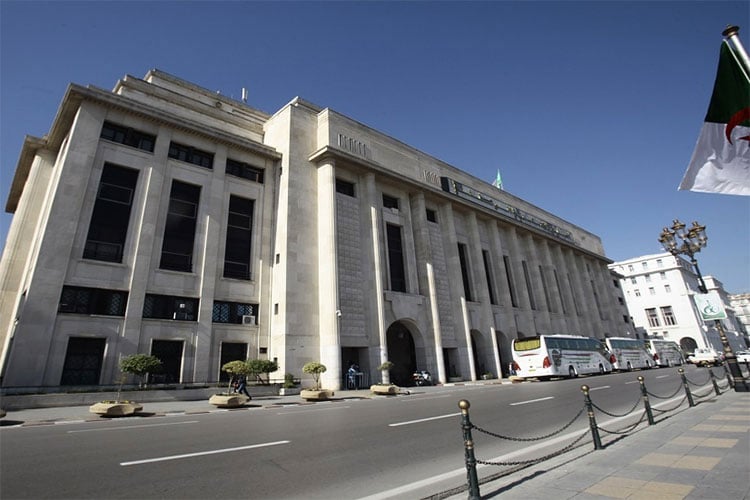
The National People’s Assembly has scheduled a session to vote on the internal regulations of the lower house of parliament next Wednesday, signaling a likely breakthrough in one of the most contentious issues during the ninth legislative term. This comes after the Legal Committee revised the regulations’ articles to address the Constitutional Court’s reservations, canceling about seven articles that did not comply with constitutional provisions.
The Assembly’s presidency appears to be racing against time to save this regulatory document, which has been the center of sharp disputes within the parliament over the past years, involving heavyweight parliamentary blocs such as the National Liberation Front, the Movement of Society for Peace, and the National Construction. After repeated failures to approve it and clear directives from the Constitutional Court, the file has been reopened as the current term nears its end.
Although the internal regulations document comes at the last minute, the presidency’s insistence on finalizing it despite some criticisms confirms its desire to credit this text to the ninth term MPs. It is known that the Assembly’s internal regulations have not changed for 20 years despite previous attempts.
The Legal Committee’s response to the Constitutional Court’s reservations and the submission of a revised version that respects the spirit of the constitution paves the way for passing the document without conflict among MPs, awaiting the outcome of the voting session next Wednesday.
The Assembly Bureau’s decision to schedule the voting session, confirmed by its president Ibrahim Bougali, came after the Legal Committee completed adapting twenty articles that were subject to reservations by the Constitutional Court. The amendments included deleting or rephrasing points deemed inconsistent with constitutional texts, notably Article 7, where the Court demanded removing the word “full” from the paragraph concerning the election of the Assembly president, as the constitution stipulates his election “for a legislative term” only, without additional descriptions.
Regarding Article 93, which stated that Assembly discussions would be held regardless of the number of MPs present, the Constitutional Court clarified that this wording, despite appearing to ensure the continuity of parliamentary work, implicitly permits holding symbolic sessions lacking the required institutional seriousness. Accordingly, the Committee amended the article to read: “General discussion shall not open except in the presence of a sufficient number of MPs to ensure seriousness and representation.”
Similarly, Article 15 was amended following the Assembly Bureau’s instructions by removing the provision allowing the issuance of “instructions” to implement the article’s provisions when necessary, as this procedure turns rules within the internal regulations’ scope into administrative directives issued by the Assembly Bureau, which is inconsistent with the regulatory nature of the internal rules.
The Constitutional Court also decided to repeal Article 94, which allowed holding closed sessions under exceptional circumstances with attendance limited to specific categories of MPs, considering this measure violates the principle of comprehensive parliamentary representation, a cornerstone of parliamentary work.


Recommended for you
Al-Jaghbeer: The Industrial Sector Leads Economic Growth
Talib Al-Rifai Chronicles Kuwaiti Art Heritage in "Doukhi.. Tasaseem Al-Saba"
Exhibition City Completes About 80% of Preparations for the Damascus International Fair Launch
Unified Admission Applications Start Tuesday with 640 Students to be Accepted in Medicine
Egypt Post: We Have Over 10 Million Customers in Savings Accounts and Offer Daily, Monthly, and Annual Returns
His Highness Sheikh Isa bin Salman bin Hamad Al Khalifa Receives the United States Ambassador to the Kingdom of Bahrain