










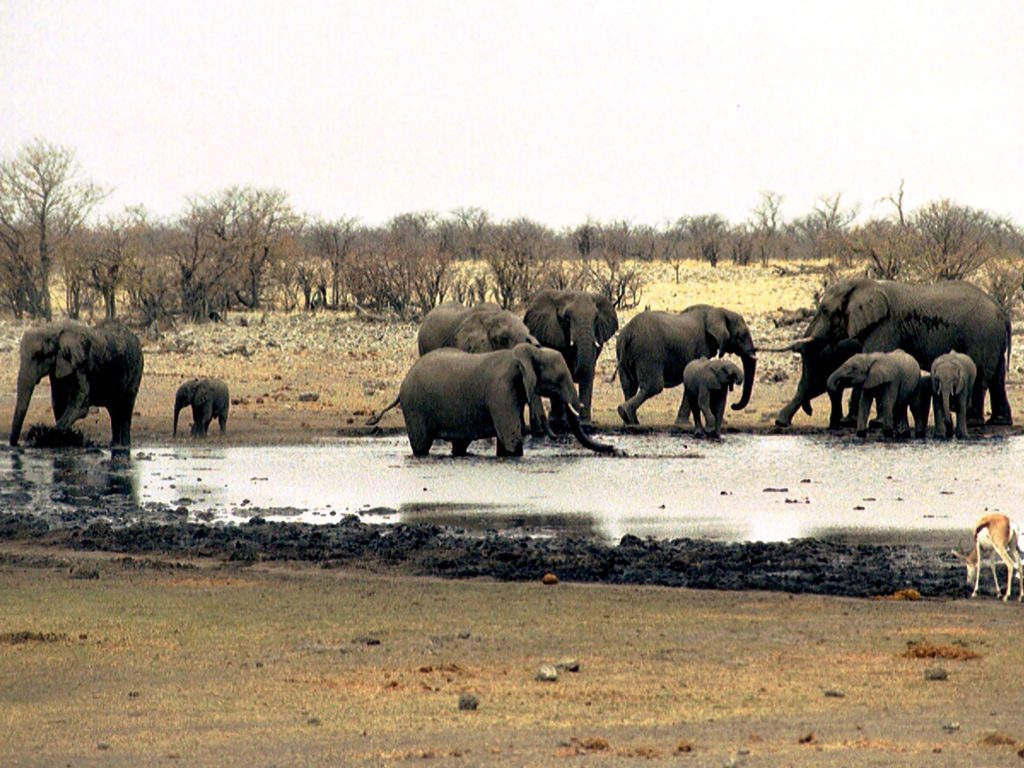
Namibia has deployed over 500 soldiers to assist firefighters, police, and volunteers battling a fire that has engulfed one-third of Etosha National Park, one of Africa’s largest nature reserves, according to Prime Minister Tertius Ndjamba Tjiriange on social media.
The fire started on September 22 and spread rapidly due to strong winds and dry vegetation, causing severe environmental damage by burning approximately 34% of the park’s 775,163 hectares. The park, located in the northern arid region, is home to 114 mammal species including the endangered black rhinoceros and is a major tourist destination.
The government sent two helicopters on Sunday to support firefighting efforts, joining the 40 soldiers who arrived Saturday to assist police, local residents, farmers, and private companies already combating the blaze. The presidency confirmed the fire has extended to some settlements but reported no human casualties, though an unknown number of wild animals have died.
Defense Minister Frans Kapofi stated that additional forces were deployed from various regions to cover all affected areas. The Ministry of Environment suspects the fire was caused by charcoal production activities on commercial farms adjacent to the park.
Namibia’s President Hage Geingob addressed the United Nations General Assembly last week, stating climate change is burning lands and drying rivers, and called for support of Namibia’s declaration to strengthen the UN Convention to Combat Desertification. Last July, the International Court of Justice ruled that countries must fulfill their climate commitments, and failure to do so could violate international law, opening the door for affected nations to seek compensation in future legal cases.
Recent reports from the World Meteorological Organization highlight that wildfires increasingly degrade air quality as climate change causes more frequent fires, with smoke traveling long distances across countries and continents. Research from the Global Weather Attribution organization also revealed that fires devastating hundreds of thousands of hectares in Portugal and Spain were worsened by climate change.



Recommended for you
Talib Al-Rifai Chronicles Kuwaiti Art Heritage in "Doukhi.. Tasaseem Al-Saba"
Exhibition City Completes About 80% of Preparations for the Damascus International Fair Launch
Al-Jaghbeer: The Industrial Sector Leads Economic Growth
Unified Admission Applications Start Tuesday with 640 Students to be Accepted in Medicine
Egypt Post: We Have Over 10 Million Customers in Savings Accounts and Offer Daily, Monthly, and Annual Returns
His Highness Sheikh Isa bin Salman bin Hamad Al Khalifa Receives the United States Ambassador to the Kingdom of Bahrain