








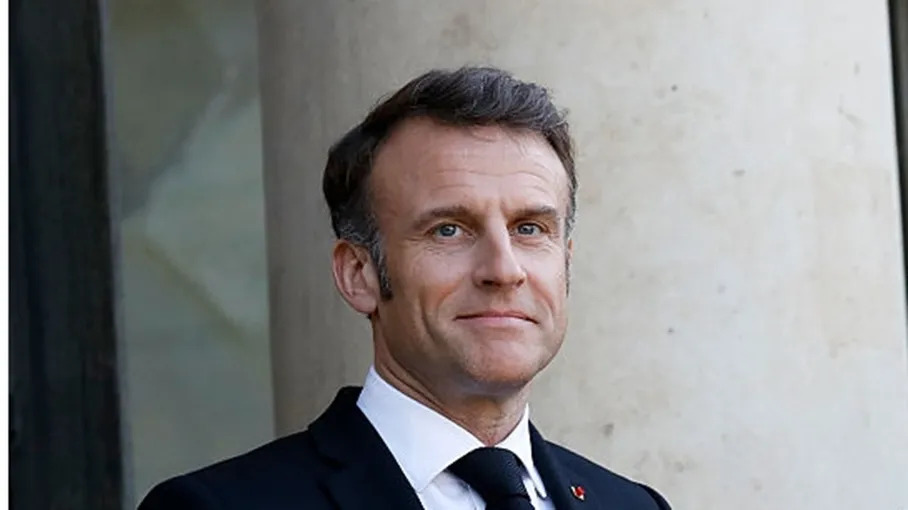
French President Emmanuel Macron renewed his support for the two-state solution at the opening of an international conference on the Middle East conflict, while warning against further Israeli settlement construction in the West Bank.
Macron stated that U.S. President Donald Trump had set an ambitious path toward a comprehensive regional agreement, adding, “This commitment is crucial, and we are here to support this vision, primarily a permanent ceasefire and stability in the Gaza Strip, which can provide security for all through a political solution based on a Palestinian state, and ultimately, achieving peaceful coexistence in the region.”
He emphasized that to achieve this, preparatory work must be done to establish governance in Gaza that includes the full Palestinian Authority but completely excludes Hamas.
Macron explained that short-term humanitarian aid alone will not suffice, adding, “We must immediately support the Palestinian Authority, which is facing a severe financial crisis, to stabilize its governance, provide essential services, and maintain security.”
The French president also warned Israel against building more settlements in the West Bank, saying, “The acceleration of settlement construction in the West Bank poses an existential threat to the State of Palestine.”
He affirmed that this is “not only unacceptable and contrary to international law but also fuels tension, violence, and instability.”
Macron added that there is no need to create another conflict alongside the one currently being addressed.
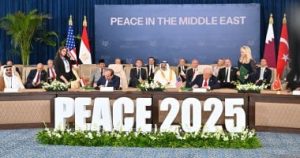
The ceasefire agreement between Hamas and Israeli occupation, signed in Sharm El-Sheikh under Egyptian, Qatari, and Turkish auspices, sparked wide international welcome amid calls for immediate implementation of its terms and lifting restrictions on humanitarian aid to Gaza.
UN Secretary-General António Guterres welcomed the agreement, describing it as a “crucial diplomatic breakthrough after a devastating two-year war,” urging all parties to fully comply with its terms and ensure unhindered aid flow to civilians.
In the first European response, British Prime Minister Keir Starmer expressed “deep relief at reaching the agreement,” noting that “intensive diplomatic efforts by the U.S., Qatar, Egypt, and Turkey were decisive in achieving this breakthrough.”
Starmer added that implementing the terms “without delay” and lifting humanitarian restrictions represent “a real test of the parties’ seriousness in ending the war and paving the way for lasting peace.”
EU Foreign Policy Chief Kaya Kallas said that Israel and Hamas’s approval of the first phase of the U.S. plan on Gaza represents important progress and a real opportunity to end the war and release all hostages.
She described the agreement as a “major diplomatic achievement,” adding that “the European Union will do its utmost to support its implementation.”

Recommended for you
Talib Al-Rifai Chronicles Kuwaiti Art Heritage in "Doukhi.. Tasaseem Al-Saba"
Exhibition City Completes About 80% of Preparations for the Damascus International Fair Launch
Al-Jaghbeer: The Industrial Sector Leads Economic Growth
Unified Admission Applications Start Tuesday with 640 Students to be Accepted in Medicine
Egypt Post: We Have Over 10 Million Customers in Savings Accounts and Offer Daily, Monthly, and Annual Returns
His Highness Sheikh Isa bin Salman bin Hamad Al Khalifa Receives the United States Ambassador to the Kingdom of Bahrain