









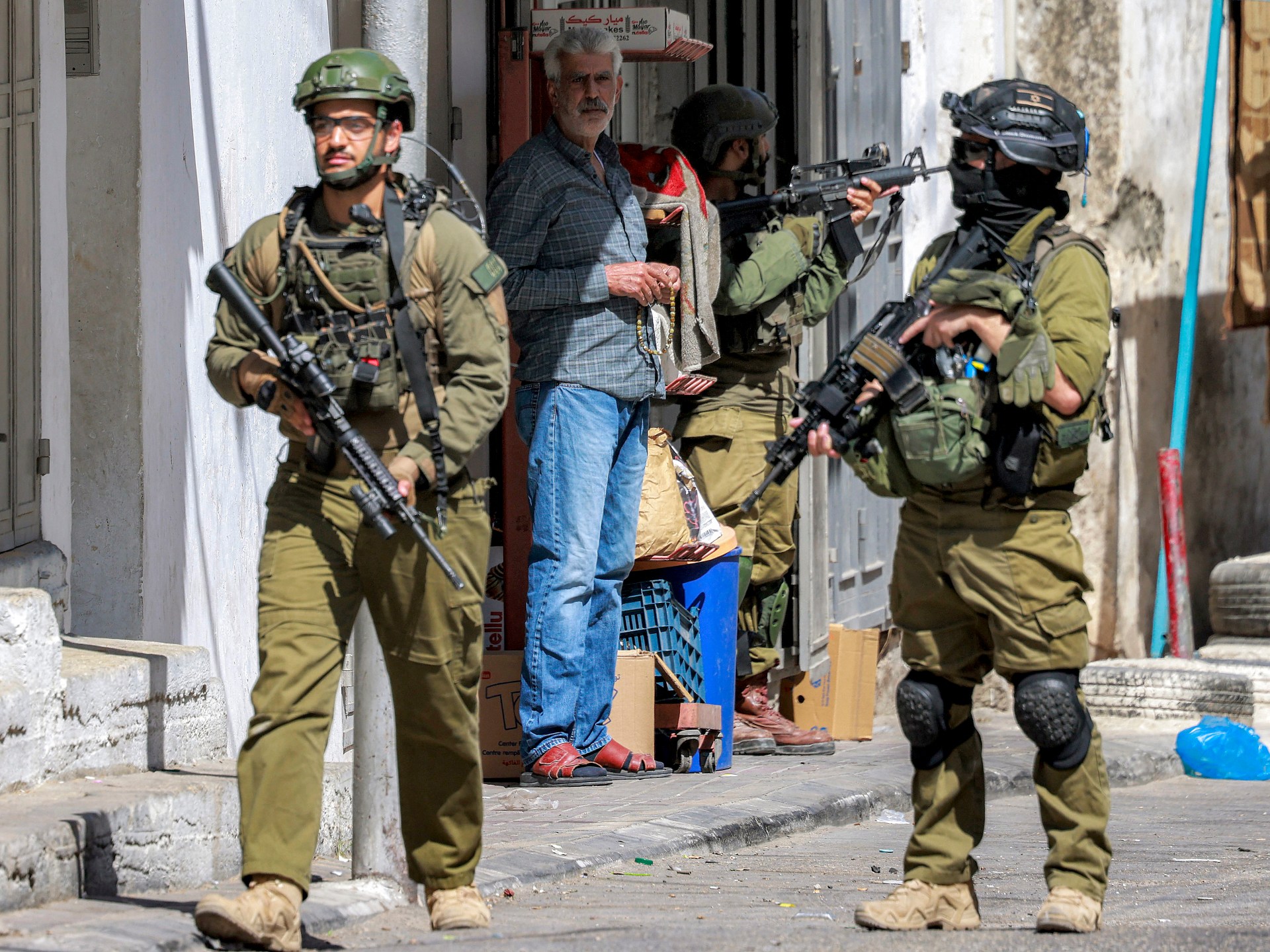
Avner Ben-Amos, a historian of education at Tel Aviv University, stated that education in Israel ignores, through textbooks and maps, topics such as settlement, occupation, the Oslo Accords, and everything after 1967, effectively “erasing” the existence of Palestinians.
The Israeli historian, author of the book “Israel… The Making of National Identity,” explained in a detailed interview with Julie Conan for La Croix newspaper how the Israeli-Palestinian conflict is understood within Israel, especially after the October 7, 2023 attacks.
In his critical perspective, the historian highlighted the absence of historical awareness, the use of education and media to justify the occupation, and the dehumanization of Palestinians, warning of the political and moral consequences for Israeli society.
He explained that the October 7 attacks were presented in Israel through two powerful metaphors: the Holocaust and the pogroms—anti-Jewish massacres in Europe—with the idea that a weak minority was targeted, where innocent Jewish civilians were killed by a violent mob. Since then, members of Hamas have been considered Nazis and anti-Semites.
However, Ben-Amos rejects this view, clarifying that Israel is not a “weak minority” but an advanced nuclear military power, and points out that this narrative framework is used to justify violent Israeli reactions, while ignoring the broader political and historical context preceding the attacks.
He emphasizes that the Israeli education system plays a key role in removing the historical context from the conflict, especially after the occupation of the West Bank and Gaza in the 1967 war. Textbooks do not mention settlements, occupation, the Oslo Accords, the emergence of the Palestinian Authority, or the intention to establish an independent Palestinian state.
School maps show only the Mediterranean Sea and the Jordan River, with small spots around Palestinian cities in the West Bank, implying that the entire land “belongs to Israel” and erasing the suffering of the population living under occupation, especially in the West Bank, officially called “Judea and Samaria” in Israel today.
Since the prevailing image of Palestinians before October 7 was that they were “potential terrorists,” Ben-Amos believes the attacks confirmed this perception for many Israelis.
The historian points to a poll showing that 64% of Israelis do not believe there are “innocents” in Gaza, reflecting the extent of demonization and dehumanization of Palestinians, and the legitimization of all forms of collective punishment against them, including systematic destruction of infrastructure in Gaza, which he calls “ethnic cleansing” and “genocide.”
Despite the destruction and suffering in Gaza, Ben-Amos notes widespread refusal within Israeli society to use the term “genocide” because it is associated in collective consciousness solely with the Holocaust. The lack of a humanitarian view of Palestinians makes it difficult for Israelis to see what is happening as a collective crime against a people.
The historian recalls that the traditional Zionist discourse, which marginalizes everything that happened between Jewish sovereignty and their exile, especially the existence of Palestinians as a people on the land, was reinforced after 1967 and became part of the national narrative.
Israel is no longer a true democracy despite holding elections, because the opposition is marginalized, and the media and culture are under great economic and political pressure, freedom of expression is threatened, and education is monitored.
Ben-Amos spoke about the deliberate confusion between criticizing Israel or Zionism and anti-Semitism, which he considers “dangerous and misleading,” affirming that anyone has the right to criticize Israeli policy without being accused of anti-Semitism.
At the end of the interview, Ben-Amos expressed his support for recognizing a Palestinian state, considering that this serves Israel’s own survival, as maintaining a single state from the sea to the river under Israeli control would lead to a permanent civil war within Israeli society. Continued occupation will lead to the internal disintegration of Israeli society.
The historian concludes with a warning that Israel is no longer a true democracy despite elections, because the opposition is marginalized, media and culture are under heavy economic and political pressure, freedom of expression is threatened, education is monitored, and majority rule is used as a pretext to silence minorities, all leading to a shift toward dictatorship.



Recommended for you
Talib Al-Rifai Chronicles Kuwaiti Art Heritage in "Doukhi.. Tasaseem Al-Saba"
Exhibition City Completes About 80% of Preparations for the Damascus International Fair Launch
Al-Jaghbeer: The Industrial Sector Leads Economic Growth
Unified Admission Applications Start Tuesday with 640 Students to be Accepted in Medicine
Egypt Post: We Have Over 10 Million Customers in Savings Accounts and Offer Daily, Monthly, and Annual Returns
His Highness Sheikh Isa bin Salman bin Hamad Al Khalifa Receives the United States Ambassador to the Kingdom of Bahrain