









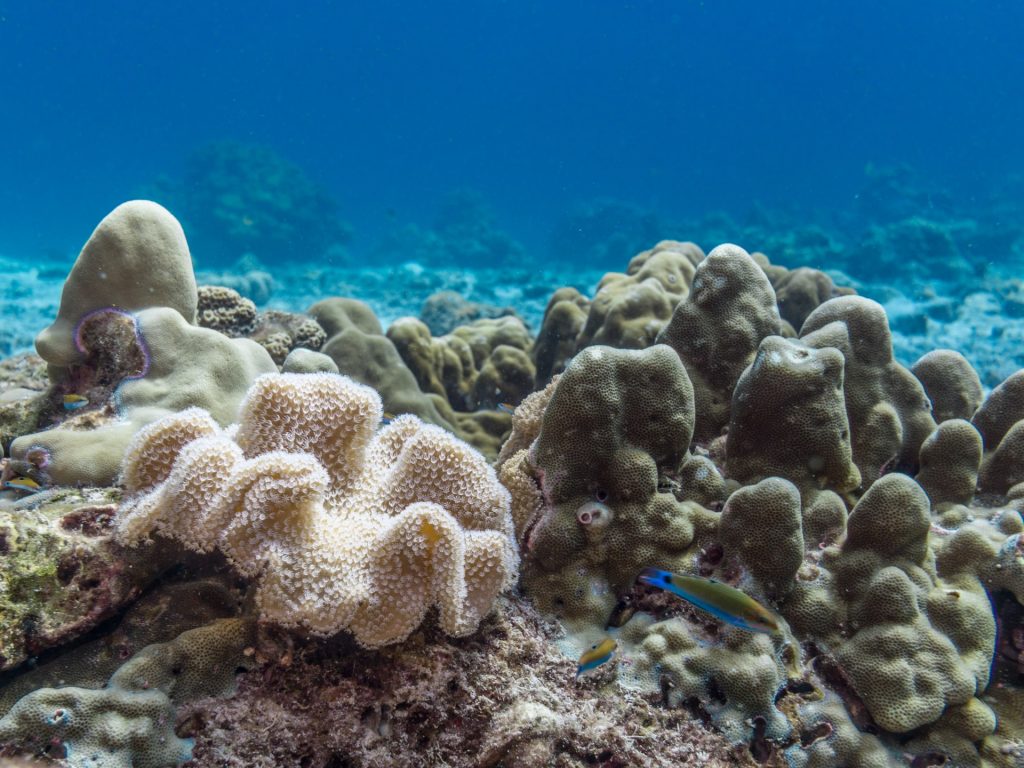
A new report indicates that Earth has reached its first catastrophic tipping point linked to greenhouse gas emissions, with warm-water coral reefs now facing a critical tipping point threatening the livelihoods of hundreds of millions of people.
The “Global Tipping Points” report, contributed to by 160 scientists from 87 institutions across 23 countries, warns that coral reefs worldwide are now in an almost irreversible state of death, described by scientists as the first “tipping point” in ecosystem collapse due to climate change.
The report also confirms that the world is “on the brink” of other critical tipping points, including the death of the Amazon rainforest, collapse of major ocean currents, and loss of ice sheets.
The report states: “If we do not return to the global surface temperature average of 1.2°C, and ultimately to at least 1°C as soon as possible, we will not be able to maintain warm coral reefs on our planet at any reasonable scale.”
Scientists define tipping points as moments when a major planetary ecosystem reaches a point where severe degradation becomes inevitable.
Coral reefs worldwide are home to about a quarter of all marine species and provide natural coastal protection by acting as wave barriers, but they are among the ecosystems most vulnerable to global warming.
They have been suffering from a global bleaching event since January 2023, the fourth and worst ever, with about 84% of coral reefs in more than 80 countries affected by extreme ocean temperatures and water acidification. Scientists say this event has pushed coral reefs into an “unknown stage.”
Coral death, manifested by their whitening, occurs due to increased water temperature and acidification, which leads to the expulsion of “zooxanthellae” algae that provide coral with nutrients and its vibrant color. If high temperatures persist, the coral deteriorates and dies.
Scientists warn that without rapid and unexpected reductions in greenhouse gas emissions, temperature rise could reach the maximum of 1.5°C within the next decade.
Professor Tim Lenton from the Global Systems Institute at the University of Exeter said: “We can no longer talk about tipping points as a future risk. The first widespread warm-water coral reef death tipping point has already begun.” He added that this is already affecting hundreds of millions of people who depend on coral reefs.
The report points to the “collapse” of coral reefs in the Caribbean region due to marine heatwaves, biodiversity loss, and disease outbreaks.
Professor Peter Mumby, a leading coral reef scientist at the University of Queensland, Australia, acknowledges that coral reefs are “in decline,” but confirms emerging evidence that some can adapt and remain viable even with a 2°C rise in Earth’s temperature.
He expressed concern that society might “give up on coral reefs” if people believe they can no longer be saved.
Dr. Mike Barrett, Chief Scientific Adviser at the World Wide Fund for Nature UK and co-author of the report, states that this “shows that coral reef conservation is now more important than ever. The game has changed, and the response must be extremely urgent.”
Scientists suggest that to recover coral reefs, climate action must be radically intensified to reverse temperatures to just 1°C above pre-industrial averages.
Regarding climate tipping points, the report confirms that the rainforest system itself is now at risk of collapse once the global average temperature rises just above 1.5°C, based on current deforestation rates.
Of particular concern, the report warns of the threat to disrupt the major ocean current called the Atlantic Meridional Overturning Circulation (AMOC). Tim Lenton, an ecologist at the University of Exeter and lead author of the report, said: “Change is happening rapidly now, tragically, in parts of the climate and biosphere.”




Recommended for you
Talib Al-Rifai Chronicles Kuwaiti Art Heritage in "Doukhi.. Tasaseem Al-Saba"
Exhibition City Completes About 80% of Preparations for the Damascus International Fair Launch
Al-Jaghbeer: The Industrial Sector Leads Economic Growth
Unified Admission Applications Start Tuesday with 640 Students to be Accepted in Medicine
Egypt Post: We Have Over 10 Million Customers in Savings Accounts and Offer Daily, Monthly, and Annual Returns
His Highness Sheikh Isa bin Salman bin Hamad Al Khalifa Receives the United States Ambassador to the Kingdom of Bahrain