





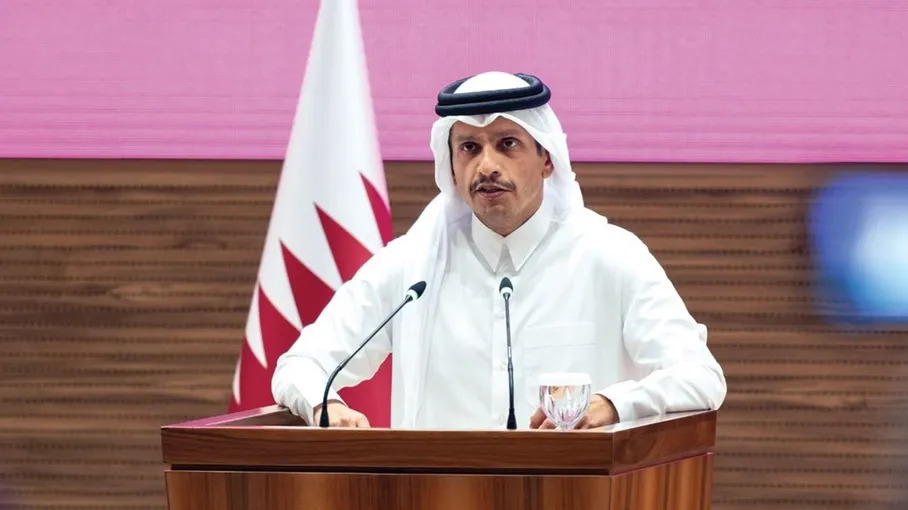
Mohammed bin Abdulrahman Al Thani, the Qatari Prime Minister and Foreign Minister, stated that mediators decided to postpone discussing the most complex issues in the Gaza negotiations due to the parties involved not being ready to handle them at this stage.
He added in an interview with The New York Times that seeking comprehensive negotiations from the start would have hindered the progress made so far.
Al Thani explained that gradual handling of the files helped achieve tangible results, notably the ceasefire and the release of prisoners.
He pointed out that a fundamental question still raised is the future of Hamas’s weapons, saying, “There is a fundamental difference between Hamas handing over its weapons to a Palestinian authority or to another entity.”
The Qatari Prime Minister also emphasized that the next step should be to discuss forming an international stabilization force, noting that Hamas is open to discussing how it would not pose a threat to Israel.
On Saturday, a Hamas leader told AFP that the release of 48 prisoners, both alive and deceased, mostly Israelis, in Gaza would begin Monday morning.
Osama Hamdan said in an interview with AFP, “According to the signed agreement, the exchange is scheduled to start Monday morning as agreed, and there are no new developments on this matter.”
After the prisoners return from Gaza, the Israeli occupation state will begin releasing about two thousand Palestinian detainees from its prisons, according to the terms of the first phase of the ceasefire agreement signed by both parties under American mediation.
At the same time, Hamas member Hossam Badran said on Saturday that the movement is ready to fight if the Israeli occupation resumes its war on Gaza, and indicated that negotiations for the second phase of the war-ending agreement may be more complicated.
Badran told AFP that no observers expected this war to last two years, but the resistance, including the Al-Qassam Brigades, remained capable of enduring, resisting, and striking the occupation army.
He continued, “We hope not to return to this stage, but undoubtedly if this battle is imposed, Hamas will confront it and exert all its capabilities to repel this aggression.”
Regarding the resistance’s weapons, Badran said, “It should be noted that it is not only Hamas’s weapon. Today we are talking about a weapon that belongs to the entire Palestinian people. Weapons in the Palestinian case are natural and part of history, present, and future.”
He explained that “Hamas insists on not giving up its weapons. Hamas will not give up its weapons. This is the natural situation for any people living under occupation,” noting that the weapons held by Hamas and the resistance are individual weapons for defending the Palestinian people.
About his expectations for the second phase of negotiations, Badran said they will not be “as easy as the first phase,” adding that the second phase “clearly involves many complications and difficulties according to points in former U.S. President Donald Trump’s plan, requiring possibly longer negotiations but also a Palestinian national dialogue to reach a national Palestinian response.”
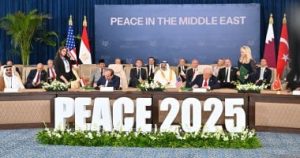
Badran noted that Hamas is indirectly involved in the negotiations through mediators and that it “will not participate in the signing process (in Sharm El-Sheikh). Only mediators and American and Israeli officials will.”

Recommended for you
Al-Jaghbeer: The Industrial Sector Leads Economic Growth
Egypt Post: We Have Over 10 Million Customers in Savings Accounts and Offer Daily, Monthly, and Annual Returns
Alternative to UNIFIL Forces
Talib Al-Rifai Chronicles Kuwaiti Art Heritage in "Doukhi.. Tasaseem Al-Saba"
Exhibition City Completes About 80% of Preparations for the Damascus International Fair Launch
Trump Advisor: Disarming Hamas is Central.. Palestinian Authority to Take Over Gaza After Required Reforms