









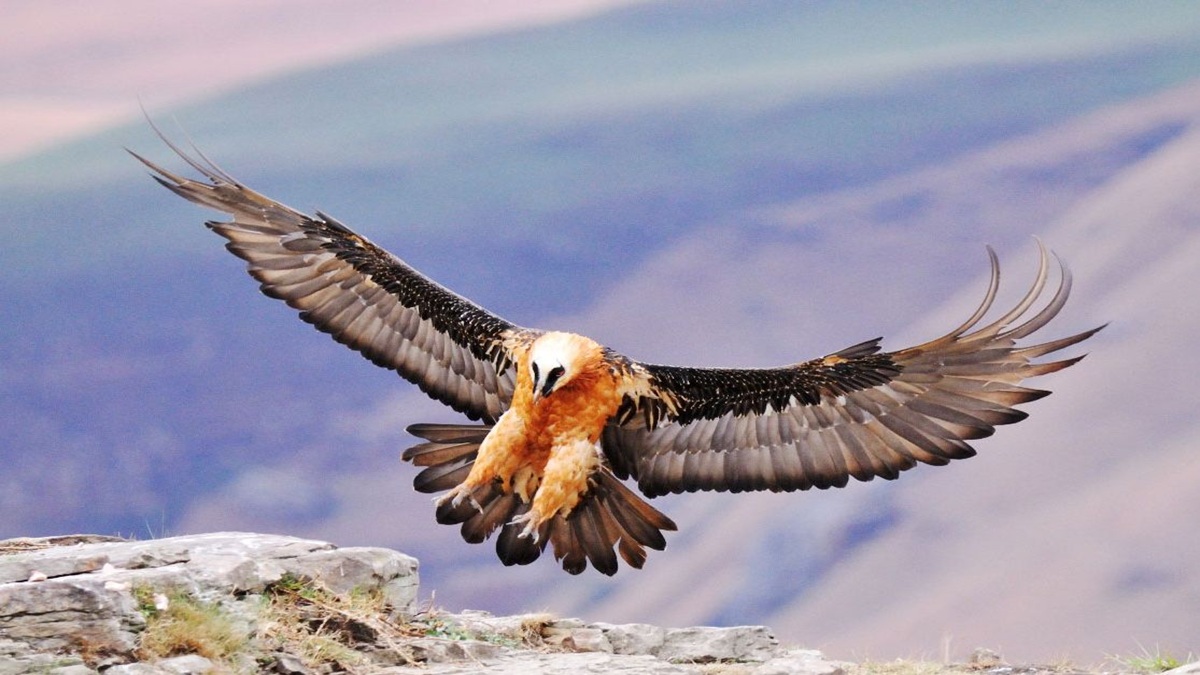
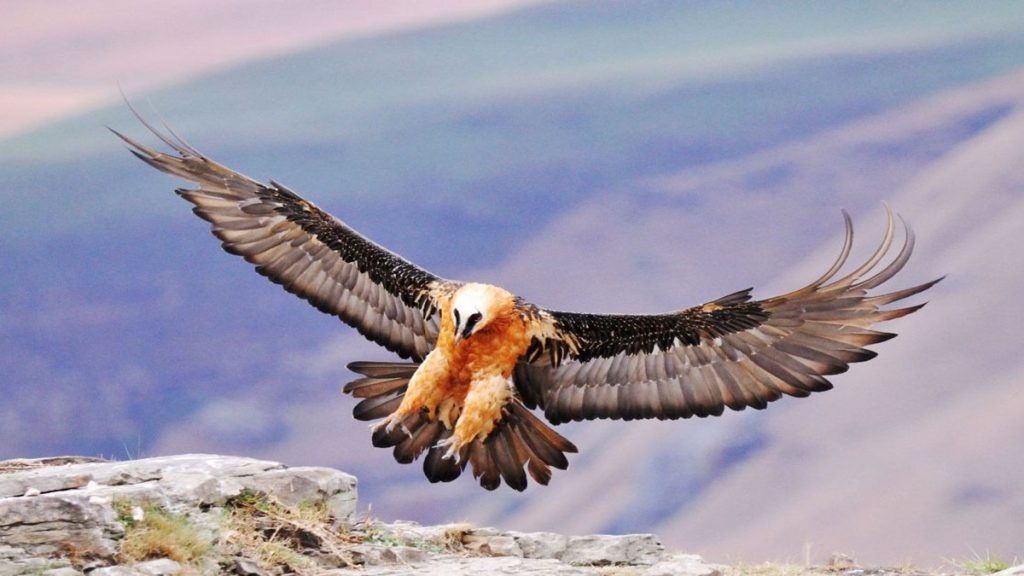
A new archaeological study in southern Spain revealed that eagles, unintentionally, kept a collection of human-made items for centuries while building nests for their young.
Researchers, during their study published in the journal “Ecology,” discovered 12 ancient nests of bearded vultures containing artifacts dating back centuries, including a 750-year-old espadrille shoe made from natural materials, leather belts, bow and arrow nails, slingshots, and even fragments of baskets made from burlap grass—the same grass still used in modern espadrille shoes.
The vultures became extinct in that southern Spanish region over 70 years ago, but during their presence, they used nearby cliff caves for many generations, carefully weaving their nests using bones, tree branches, and everything they stole from humans. Anthony Margalida, a co-researcher, described these nests as “authentic natural museums.”
The nests were filled with human-made objects, with over 9% of them stolen by the vultures from humans. Archaeologists assume the vultures likely scavenged discarded materials left outdoors. If a farmer’s sandal fell, the vulture would pick it up and take it to make part of the nest their offspring would call home.
None of the materials deteriorated much over time, as the caves have a stable, dry local climate ideal for preserving organic materials for hundreds of years. Radiocarbon dating indicates the grass shoe is about 750 years old.
Clearly, this behavior is not new and has not stopped. The only change is the type of items the birds take from us. Nowadays, researchers find various types of human-made waste lining bird nests, from random plastic trinkets to candy wrappers.
In 2021, a team of researchers found a polystyrene clamshell container from a McDonald’s McChicken dating back to 1996 in a bird’s nest.

Recommended for you
Talib Al-Rifai Chronicles Kuwaiti Art Heritage in "Doukhi.. Tasaseem Al-Saba"
Exhibition City Completes About 80% of Preparations for the Damascus International Fair Launch
Unified Admission Applications Start Tuesday with 640 Students to be Accepted in Medicine
Al-Jaghbeer: The Industrial Sector Leads Economic Growth
Egypt Post: We Have Over 10 Million Customers in Savings Accounts and Offer Daily, Monthly, and Annual Returns
His Highness Sheikh Isa bin Salman bin Hamad Al Khalifa Receives the United States Ambassador to the Kingdom of Bahrain