







An Emirati research study revealed the role of artificial intelligence technologies in early prediction of natural disasters, noting that integrating them with geographic information systems and remote sensing enables authorities to identify risk areas before floods occur.
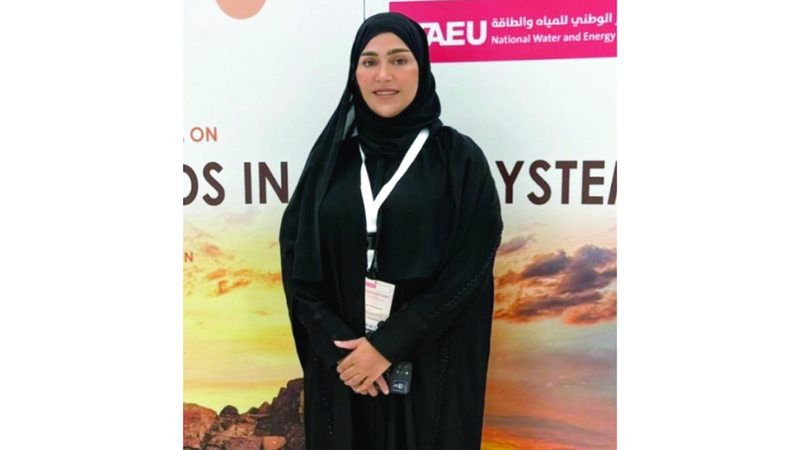
Researcher Fatima Al-Hantoubi confirmed that these technologies represent a qualitative leap in managing climate risks in the UAE, especially after the experience witnessed in Fujairah Emirate in 2022, when unprecedented rainfall amounts were recorded, the highest in over 25 years.
Al-Hantoubi told “Emarat Al-Youm” that her study titled “Smart Assessment of Flood Risks in the UAE Using Artificial Intelligence,” conducted at the British University in Dubai under the supervision of Dr. Maria Papadaki, aligns with the national trend of adopting smart solutions to confront the effects of climate change, and contributes to building a national scientific system capable of accurately mapping risk and directing field response during natural disasters.
She added that the experience in Fujairah during the heavy rains in 2022 was the “real turning point” to reveal the magnitude of the challenge posed by sudden climatic phenomena, explaining that the rainfall amount that day reached about 221.8 mm within a few hours, causing damage to facilities and properties and disrupting movement in some neighborhoods, which necessitated developing new methods to monitor and analyze weather phenomena using AI.
She pointed out that AI technologies can analyze millions of climate data moment by moment through deep learning algorithms that predict storm paths, rainfall rates, and surface runoff intensity, noting that combining these technologies with geographic information systems allows authorities to have an accurate view enabling them to make immediate decisions regarding evacuation, road closures, or raising the readiness of drainage networks.
The study relied on an extensive scientific review of global research and reports between 2015 and 2024 on disaster management in advanced countries such as Japan and the Netherlands, which have central data platforms for real-time geospatial information exchange, confirming that the UAE has the digital capabilities and technical infrastructure to apply a similar model, even developing it to suit its terrain and climate.
Results showed that geographic information systems and remote sensing enable the creation of interactive risk area maps that can be updated instantly, while AI integrates data from satellites, weather stations, and drones into a single predictive model capable of prioritizing interventions and estimating the risk level in each area.
Al-Hantoubi confirmed that one of the main challenges facing the application of these technologies in the region is the lack of accurate data and weak institutional coordination among concerned entities, calling for the establishment of a unified national flood risk database that includes all geographic, environmental, and climatic information, alongside launching specialized training programs to qualify national cadres in AI and geospatial data analysis.
She also emphasized the importance of raising community awareness about flood risks and extreme weather phenomena through awareness campaigns targeting schools, universities, and local communities, so that every individual becomes part of the prevention and response system, stressing that technology alone is not enough without community awareness that translates knowledge into practical behavior during crises.
Al-Hantoubi added that the National Emergency, Crisis, and Disaster Management Authority has an advanced early warning systems infrastructure, confirming that integrating it with AI algorithms will enhance its accuracy and speed of warnings, making it more capable of predicting atmospheric instability cases before they occur.
She believes that AI is no longer a scientific luxury but a national necessity to protect lives and property amid accelerating climate changes, noting that the UAE is confidently moving towards building a pioneering regional model in climate resilience and “smart disaster management.”
4 Recommendations
Researcher Fatima Al-Hantoubi stated that the study concluded with four main recommendations: establishing an integrated national database, enhancing institutional cooperation through a central information exchange platform, training local experts in AI and geographic information systems, and launching comprehensive awareness programs on natural disaster management.


Recommended for you
Talib Al-Rifai Chronicles Kuwaiti Art Heritage in "Doukhi.. Tasaseem Al-Saba"
Exhibition City Completes About 80% of Preparations for the Damascus International Fair Launch
Unified Admission Applications Start Tuesday with 640 Students to be Accepted in Medicine
Al-Jaghbeer: The Industrial Sector Leads Economic Growth
Egypt Post: We Have Over 10 Million Customers in Savings Accounts and Offer Daily, Monthly, and Annual Returns
His Highness Sheikh Isa bin Salman bin Hamad Al Khalifa Receives the United States Ambassador to the Kingdom of Bahrain