









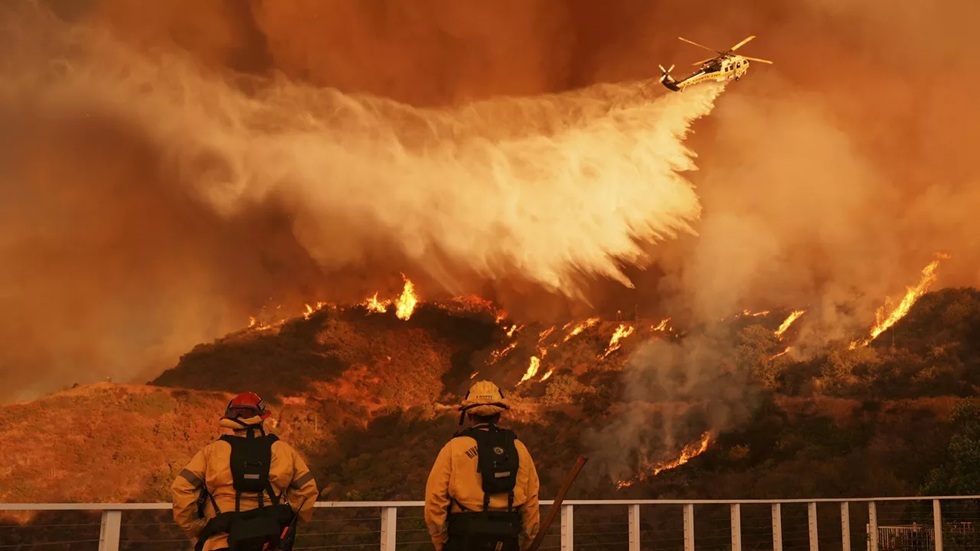
The fire broke out at 9 PM on October 8, 1871, in a small barn attached to a house belonging to the “O’Leary” family located behind DeKoven Street.
As flames spread in the barn, neighbors rushed to try to extinguish the fire and save the home’s residents, while the fire department did not sound the alarm until forty minutes later. At that time, strong southern winds pushed the flames into the heart of Chicago.
The fire quickly spread to nearby buildings and homes. The hot, strong winds carried the fierce flames northeast. By midnight, the fire had crossed the south branch of the Chicago River.
The densely packed wooden houses, ships moored along the river, wooden docks, and coal warehouses helped the fire spread rapidly.
The outside temperature was so intense that a six-story building was completely engulfed in flames on average within six minutes. In such heat, even marble began to melt and hot stones fell.
The fire destroyed hotels, shops, churches, the opera house, and theaters in downtown Chicago.
As the fire continued to spread, residents fled to the northern part of the city after crossing bridges over the north branch of the Chicago River. However, the fire chased them and soon reached there, consuming luxury homes in the northern section.
By the evening of the next day, the winds finally calmed and a light rain began to fall. The fire was extinguished after claiming about 300 lives and completely destroying 48 buildings.
The city had a population of 300,000, of whom 90,000 lost their homes. Some buildings survived the fire, especially the Chicago Water Tower. This tower still stands today as an unofficial monument witnessing this tragedy.
Blaming a Cow for the Disaster:
The most famous story blamed a cow for the greatest disaster in Chicago’s history. This story claimed that a cow belonging to the “O’Leary” family accidentally knocked over a kerosene lamp in the barn.
This tale initially spread as rumors on the day of the fire, then circulated among residents and reached the pages of the “Chicago Tribune” newspaper. Later, its editor Michael Ahern admitted that he fabricated this entertaining story.
A disaster historian named Richard Palis found another culprit in the Great Chicago Fire besides the cow. His investigations concluded that a man named Daniel Sullivan, who was the first to report the fire, set fire to the hay after stealing milk from the barn.
Among many stories, a strange one was proposed by several researchers. They observed four massive fires breaking out on the same day around Lake Michigan. Based on the simultaneous fires in one area, a hypothesis was proposed about the fall of comet debris to the ground.
Some supported this story by claiming they saw “fire falling from the sky” with their own eyes. However, this hypothesis was never confirmed and no evidence was found to support it.
In the end, the cause of the fire was never revealed, and the “cow” practically remained the main suspect in the case.




Recommended for you
Talib Al-Rifai Chronicles Kuwaiti Art Heritage in "Doukhi.. Tasaseem Al-Saba"
Exhibition City Completes About 80% of Preparations for the Damascus International Fair Launch
Al-Jaghbeer: The Industrial Sector Leads Economic Growth
Unified Admission Applications Start Tuesday with 640 Students to be Accepted in Medicine
Egypt Post: We Have Over 10 Million Customers in Savings Accounts and Offer Daily, Monthly, and Annual Returns
His Highness Sheikh Isa bin Salman bin Hamad Al Khalifa Receives the United States Ambassador to the Kingdom of Bahrain