







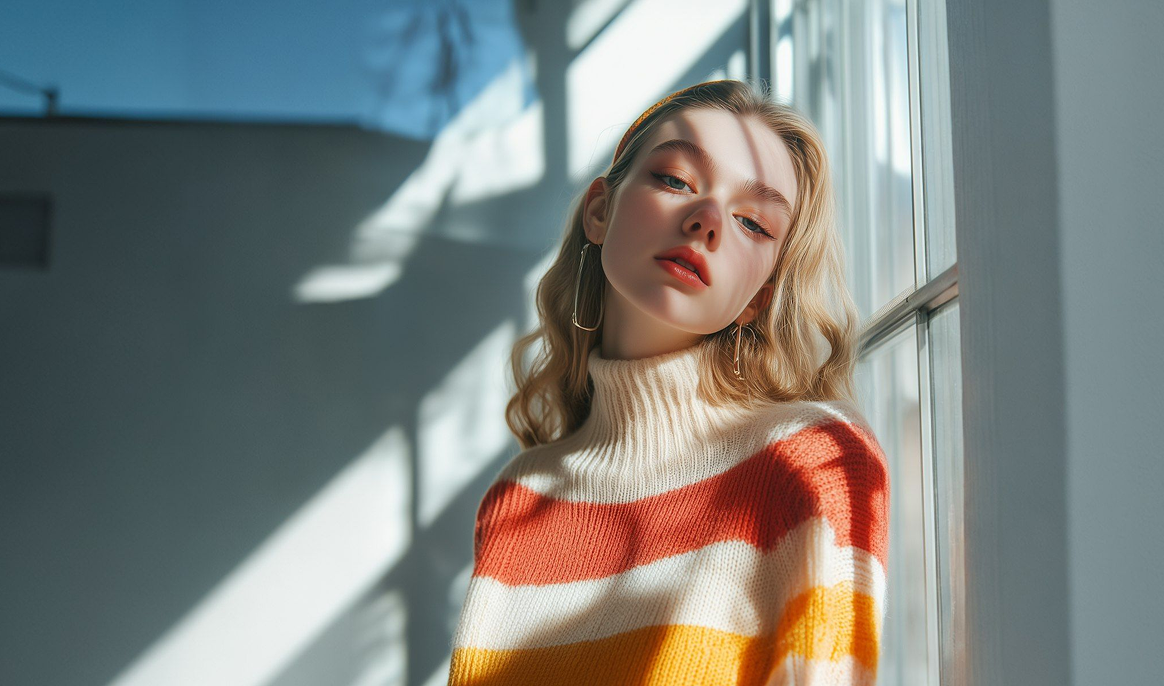
A virtual character named Tilly Norwood, a fully AI-created actress, has sparked widespread debate in Hollywood and beyond after she began appearing on social media as a rising star aiming to enter the film industry.
Rising Star or Digital Fantasy?
Tilly appears as a typical young Gen Z woman with wavy brown hair, clear skin, and an active digital presence on Instagram, where she posts photos and videos suggesting she is auditioning and awaiting her big break.
However, reports revealed that she is not human but a project created by an AI startup led by a team of programmers and designers.
They describe her as a “digital art piece” not intended to replace real actors, yet many actors see this as more than an artistic experiment, viewing it as a direct threat to their profession.
Anger in Hollywood
According to CNN, among the critics, actress Sophie Turner, star of “Game of Thrones,” posted on X expressing her displeasure with “Wow… no thanks,” while actor Cameron Cuperthwaite called the project “reckless and annoying,” hoping “this trend backfires on its creators.” Actor Ralph Ineson was even harsher, summing up his stance with “Go to hell.”
Despite the outrage, Tilly continues her digital life as if nothing happened; in one of her sarcastic posts, she wrote: “In 20 seconds, I fought monsters, escaped explosions, sold a car, and almost won an Oscar, all in one day!”
Is AI Stealing Human Efforts?
The objection is not only emotional from actors; many critics and artists pointed out that these synthetic models are not built from nothing but trained on human works like thousands of films and performances without permission or compensation to their owners.
Actress Mara Wilson, star of “Matilda,” summarized it saying: “You didn’t make this; hundreds of real workers, photographers, and actors made this. You took their work and pretended it was yours.”
An Old Dispute Renewed
According to The Guardian, these concerns are not new. The use of AI in entertainment was central to the 2023 Hollywood strikes when writers and actors insisted on including restrictions and safeguards to limit studios’ use of smart technologies in scriptwriting or reproducing artists’ faces and voices.
Despite agreements, the emergence of projects like Tilly shows the path remains full of challenges, especially with major companies like Disney and Warner Bros entering legal battles against AI firms accused of using their protected characters to train models.
Where Is Cinema Heading?
Some critics believe the solution is not to fight technology but to counter this trend with artistic movements that restore value to simplicity and human acting, like the “Dogme 95” movement in the 1990s, which called for a return to basics away from artificial effects.
Between Fantasy and Reality
Tilly Norwood may be just a clever publicity stunt that will soon disappear or perhaps a sign of a new phase in cinema where humans and algorithms share roles on screen and stage, and maybe one day the idea of awarding an Oscar to AI will actually be proposed.


Recommended for you
Al-Jaghbeer: The Industrial Sector Leads Economic Growth
Alternative to UNIFIL Forces
Talib Al-Rifai Chronicles Kuwaiti Art Heritage in "Doukhi.. Tasaseem Al-Saba"
Egypt Post: We Have Over 10 Million Customers in Savings Accounts and Offer Daily, Monthly, and Annual Returns
Exhibition City Completes About 80% of Preparations for the Damascus International Fair Launch
Trump Advisor: Disarming Hamas is Central.. Palestinian Authority to Take Over Gaza After Required Reforms