







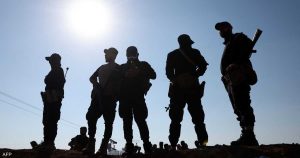

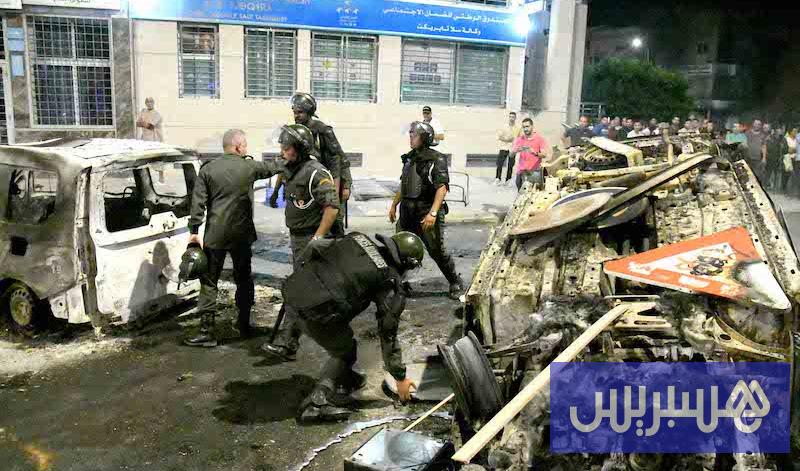
A heavy toll was added to the incidents of riots and systematic vandalism recorded on Wednesday, October 1, following those documented the previous Tuesday night. Surveillance cameras captured some of these acts in public spaces, but no official announcement has yet been made regarding the “bill of losses” across 23 provinces and prefectures.
According to an analysis by Hespress of official figures and data available, especially those from the Ministry of Interior and the Public Prosecutor’s Office up to Thursday afternoon, there is no total financial value for the losses caused by violence, vandalism, and riots. Banks, commercial stores, private vehicles, and properties near the crime scenes were all affected, with estimated losses likely reaching tens of millions of Moroccan dirhams at least.
On Thursday, the Ministry of Interior, through its official spokesperson, announced the number of damaged vehicles and the types of targets severely vandalized (banks, shops, public buildings, and private properties), but did not release a detailed list or financial assessment of the losses.
According to the Ministry, following the “Wednesday-Thursday night events,” 354 people were injured with varying degrees of severity, including 326 public security forces personnel responsible for maintaining order. There was “severe material damage to 271 vehicles belonging to public forces and 175 privately owned cars,” in addition to attacks, vandalism, and looting affecting about 80 administrative, health, security, communal facilities, bank branches, and commercial stores across 23 provinces and prefectures.
Preliminary estimates of potential material losses, based on official data, indicate they may exceed tens of millions of dirhams in “the most moderate scenarios,” while they could rise to over 200 million dirhams depending on the severity of the presumed damages, ranging between approximately 25 million and 210 million dirhams.
The Ministry of Interior warned in a Thursday statement to the media that the violence and riots witnessed in several regions of the kingdom yesterday “unfortunately took on more serious and dangerous dimensions in scattered areas, with rioters engaging in attacks using bladed weapons and storming and sweeping through state-owned buildings and security offices, as occurred in El Kelaa in the province of Inezgane Ait Melloul.”
It is noted that “official figures may increase if other losses not directly mentioned but harming the commercial and financial interests of those affected by the riots and vandalism are added. These may include: disruption of commercial activity, inventory losses for stores, damage to local community infrastructure, costs of cleaning and temporary maintenance, financial losses for banks due to looting/burning of ATMs or buildings, insurance and compensation costs.”
In connection with emerging youth protests, it is worth noting and reminding that besides youth of Generation “Z” representing more than a quarter of Morocco’s population pyramid, they pose a very heavy cost both for public finances and in terms of “opportunity cost” for public policies in education and employment, according to an academic scientific study published in mid-August 2024.
In addition to being the subject of official reports in the last five years, Moroccan youth who are neither employed nor in education or training (known scientifically as “NEET”) were the focus of a new research study published as a scientific article in a peer-reviewed multidisciplinary journal on research and policies for the care of vulnerable children and youth.
The study’s results and calculations applied to the year 2019 (alone due to the availability of complete data) concluded that “the total cost of youth not enrolled in education, employment, or training in Morocco was estimated at over 60 billion Moroccan dirhams in terms of public finance (specifically 60,592,858,600 dirhams), and more than 55 billion dirhams (55,043,899,000 dirhams) in terms of opportunity cost.”



Recommended for you
Talib Al-Rifai Chronicles Kuwaiti Art Heritage in "Doukhi.. Tasaseem Al-Saba"
Exhibition City Completes About 80% of Preparations for the Damascus International Fair Launch
Al-Jaghbeer: The Industrial Sector Leads Economic Growth
Unified Admission Applications Start Tuesday with 640 Students to be Accepted in Medicine
Egypt Post: We Have Over 10 Million Customers in Savings Accounts and Offer Daily, Monthly, and Annual Returns
His Highness Sheikh Isa bin Salman bin Hamad Al Khalifa Receives the United States Ambassador to the Kingdom of Bahrain