









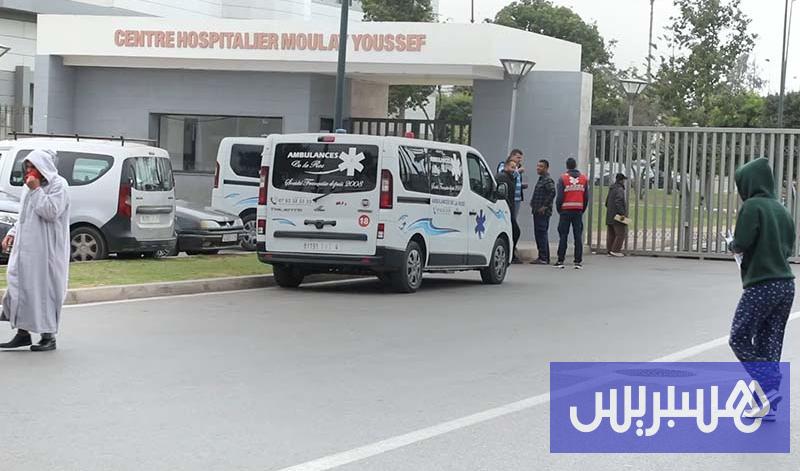
The National Office of the Independent Nurses’ Union sent a report to Amine Tahraoui, Minister of Health and Social Protection, regarding the recurring issues faced by health professionals during the transfer of patients between healthcare and hospital institutions across various regions of the kingdom.
The report, obtained by Hespress, highlighted the transfer of patients and pregnant women in critical conditions, given the precise medical care, advanced technical equipment, and tight coordination required between departure and receiving institutions.
The document noted that this situation burdens healthcare staff who provide this vital service amid a lack of deserved financial and moral appreciation, as local, regional, and provincial administrations resort to makeshift solutions at the expense of workers’ rights, under the pressure of the status quo and the threat of legal action in case of refusal or request for support.
The Independent Nurses’ Union also criticized what it considered negligence by local officials in establishing effective plans for managing emergencies and disasters, despite the provisions of articles 47, 65, and 90 of the hospital internal regulations.
The union recorded non-compliance by several officials with ministerial memos regulating patient transfers between hospitals, notably memo No. 100/72 dated February 26, 2001, memo No. 16 issued on February 25, 2010, supplemented by memo No. 141 dated September 16, 2010, concerning procedures for transferring pregnant women for emergency obstetric treatments, as well as memo No. 2020/20 related to COVID-19 emergency cases.
The correspondence confirmed that this laxity in implementing ministerial directives, alongside weak human resources, fragile ambulance equipment, and increased risk of accidents during transport, turns the health transfer file into a “ticking bomb,” whose legal and professional repercussions worsen, as nurses and health technicians face personal legal proceedings due to structural failures stemming from the overall poor management of the health sector.
The source added that the most affected groups by the health transfer dysfunctions include midwives, nurses specialized in anesthesia and resuscitation, emergency and intensive care nurses, multi-specialty nurses, as well as mental health workers. These professionals suffer from many administrative problems, notably the difficulty of signing “mission order” papers outside official working hours, the absence of signed therapeutic protocols, and exclusion from on-call and duty rosters, forcing them to leave their workplaces without official memos and under threat of legal follow-up, recording overtime due to long distances and delays in receiving hospitals.
The union also recalled the imposition of the status quo policy and pressure on nurses responsible for transfers by hospital administrations, despite these tasks requiring specialized medical competencies to handle critical cases during transport, alongside poor coordination between institutions, lack of safety standards and basic equipment in ambulances, reliance on patchwork repairs without specifications or seat belts, and the collection of illegal transport fees in cases that should be free, leading to conflicts with patients’ families and exposing health staff to insults and violence.
The correspondence emphasized that nursing staff assigned to health transfers face complex legal problems that increase their professional vulnerability, such as the absence of medical prescriptions and direct medical supervision during these tasks; this limits the nurse’s intervention in critical cases, as they are not legally authorized to prescribe medications or make immediate therapeutic decisions based on the patient’s health condition.
It also noted that nurses are forced to accompany patients in vehicles belonging to local authorities or the private sector without any legal backing and under the threat of prosecution for “refusal to assist a person in danger,” a criminal offense, which constitutes a form of professional intimidation.
The union also cited ministerial circular No. 10.2/DHSA/17 issued on October 1, 2025, which stresses the necessity of adhering to the régulation médicale (medical regulation) procedure before transferring any patient and emphasizes the responsibility of medical teams to prepare the patient and ensure accompaniment by a qualified person when needed, without specifying whether this person should be a doctor or a nurse.
In this regard, the Independent Nurses’ Union pointed out that this circular did not present any notable updates, merely reiterating provisions of two previous circulars from 2011 and 2018, without addressing the legal and professional issues faced by nurses or stipulating their legal protection during transfer tasks. This crucial point remains vague and completely unmentioned despite repeated demands for clarification and regulation.
The union stressed that this circular has yet to recognize that health transfer is essentially a nursing transfer requiring qualified nursing competencies responsible for patient safety during the treatment journey; therefore, the circular focused on organizing the transfer process and protecting patients but completely ignored protecting nurses and improving their legal and professional status.
The Independent Nurses’ Union confirmed the necessity of a real response to this issue by issuing a clear regulatory text defining the roles and responsibilities of each party in the health transfer process, stipulating legal protection for nurses during their duties, improving ambulance equipment, and providing qualified staff to accompany critical cases.
They also called for the establishment of integrated health transfer units with a special compensation system considering road risks and working conditions, involving the Independent Nurses’ Union in consultations related to health transfer regulatory policies, and organizing specialized training courses on safe transfer and nurses’ legal responsibilities.




Recommended for you
Al-Jaghbeer: The Industrial Sector Leads Economic Growth
Alternative to UNIFIL Forces
Egypt Post: We Have Over 10 Million Customers in Savings Accounts and Offer Daily, Monthly, and Annual Returns
Talib Al-Rifai Chronicles Kuwaiti Art Heritage in "Doukhi.. Tasaseem Al-Saba"
Exhibition City Completes About 80% of Preparations for the Damascus International Fair Launch
Trump Advisor: Disarming Hamas is Central.. Palestinian Authority to Take Over Gaza After Required Reforms