









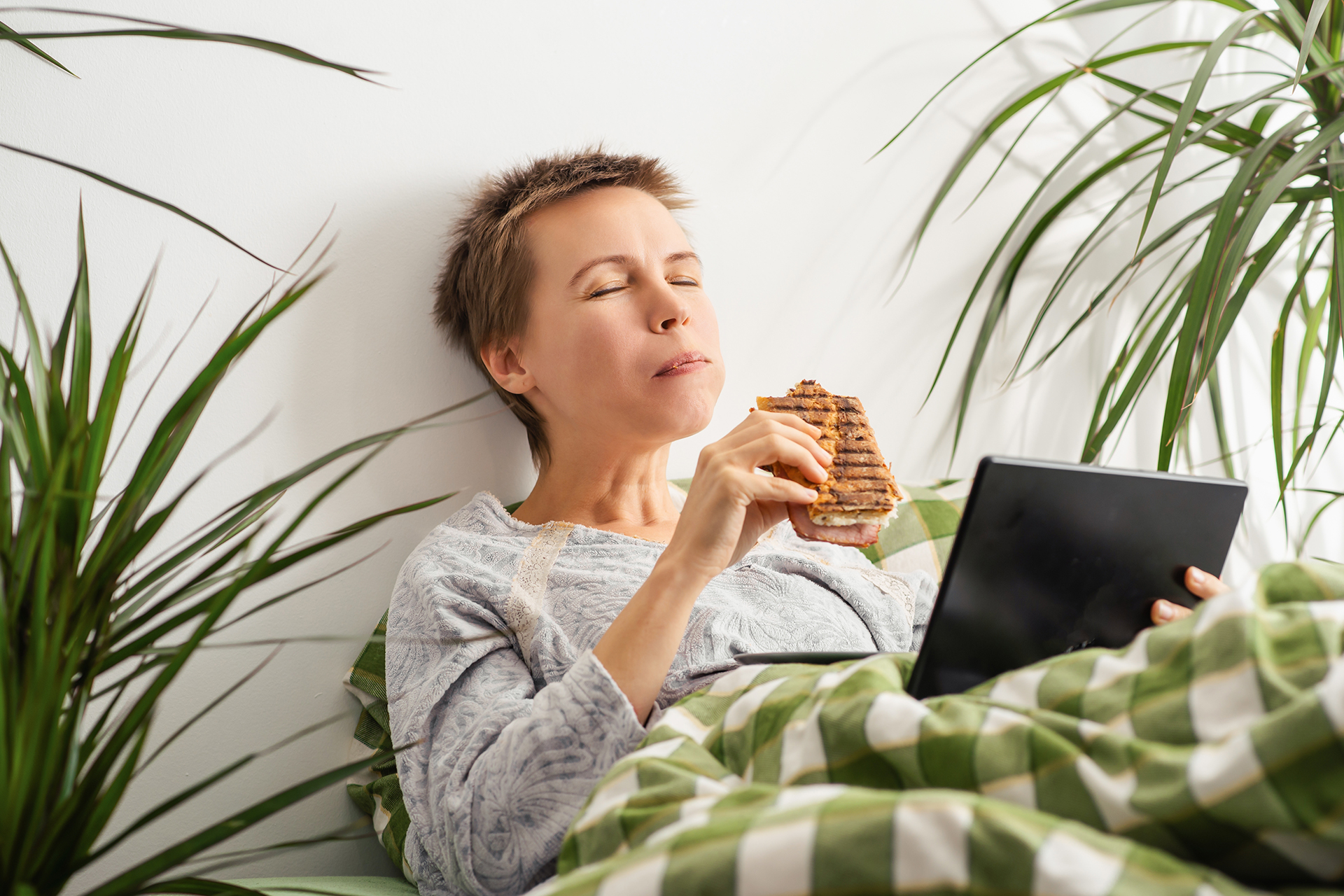
In an era where social media has become an essential part of our daily lives, a new term has sparked much debate and caught the attention of millions: “Bed Rotting.” Although the name might sound strange at first, its meaning is simple: spending long hours in bed without sleeping, instead engaging in light activities such as scrolling on the phone, watching movies, listening to music, or eating snacks.
This behavior, which began as an individual practice, quickly turned into a global cultural phenomenon fueled by platforms like TikTok, where users proudly share their daily “bed rotting” routines as a new form of self-care. For many, the bed becomes a safe haven that allows them to temporarily pause life’s race and regain some comfort and calm. It is simply a silent message saying, “I deserve to rest.”
The term “bed rotting” was not part of our daily language before but emerged as a spontaneous expression for staying in bed for long hours without a specific purpose. With the rise of social media platforms, especially TikTok, it quickly became a notable phenomenon. There, users share short clips documenting their bed routines: scattered pillows, warm blankets, glowing phone screens, and scattered snacks. These scenes, often shown with soft lighting and calm music, gave “bed rotting” a visual appeal that made it a desirable experience.
TikTok played a pivotal role in cementing this phenomenon, where it was not just about sharing personal moments but also promoted as a form of “simple luxury.” Repeated comments like “Bed rotting day is my best way to recharge” or “Self-care starts from my bed” reveal how the perception of this behavior has shifted: from mere laziness to a conscious choice for rest and regaining balance.
Undoubtedly, the “bed rotting” phenomenon carries controversy about whether it represents a form of self-care or just an escape from reality. Supporters see it as a way to relieve psychological pressure in a society that glorifies productivity and demands individuals to always be “on.” Allocating a day to stay in bed seems like a small rebellion against this culture.
Jeffrey Gardier, a clinical psychology professor at Touro University in the United States, says the phenomenon is particularly popular among Generation Z, many of whom suffer from continuous exhaustion and pressures due to study, work, or social relationships.
Courtney DeAngelis, a psychologist at New York Presbyterian Hospital, explains that dedicating a short time in bed may help calm the body and reduce stress.
However, some believe this behavior may be more than just a break for those overwhelmed by social expectations and could turn into a hidden trap that enhances isolation.
Ryan Sultan, an assistant professor of psychiatry at Columbia University, warned that the phenomenon could become problematic if it lasts more than a day or two: “If bed rotting becomes a habit, it may be a sign of depression or deeper psychological issues.”
Although “bed rotting” may seem like a comfortable and enjoyable experience on the surface, it has potential implications for physical and mental health. Physically, spending long hours without movement can cause problems such as back pain, muscle weakness, and weight gain. Also, eating snacks in bed, especially those rich in fats and sugars, may reinforce unhealthy eating habits.
On the psychological level, effects vary significantly; while some find spending a whole day in bed a way to restore energy and improve mood, others may face adverse effects, as it can reinforce feelings of isolation or frustration if the bed becomes the only refuge that gives them a sense of security.
If “bed rotting” has become part of our digital culture, how can we enjoy it without falling into the trap of unhealthy habits?
Dr. Ryan Sultan suggests several tips if you wish to join the trend without harm:
- Set a specific time: Allocate a set time for resting in bed, such as a few hours on weekends, instead of making it a daily habit.
- Incorporate movement: Even if you are in bed, try light exercises like stretching or deep breathing to avoid inactivity.
- Vary activities: Instead of focusing only on the phone, try activities like reading or creative writing to stimulate the mind.
- Social interaction: Try to communicate with friends or family, even if by phone call, to avoid isolation.
- Monitor mental health: If you feel the desire to stay in bed is linked to sadness or anxiety, it may be good to consult a specialist.
In the end, “bed rotting” is more than just a passing fad; it reflects our human need for rest in a noisy world and at the same time reminds us of the importance of balance. Whether you choose to spend a day in bed with a cup of coffee and your favorite series or decide to go out for fresh air, the important thing is to listen to your needs and find your own way to take care of yourself.




Recommended for you
Al-Jaghbeer: The Industrial Sector Leads Economic Growth
Alternative to UNIFIL Forces
Egypt Post: We Have Over 10 Million Customers in Savings Accounts and Offer Daily, Monthly, and Annual Returns
Talib Al-Rifai Chronicles Kuwaiti Art Heritage in "Doukhi.. Tasaseem Al-Saba"
Exhibition City Completes About 80% of Preparations for the Damascus International Fair Launch
Trump Advisor: Disarming Hamas is Central.. Palestinian Authority to Take Over Gaza After Required Reforms