






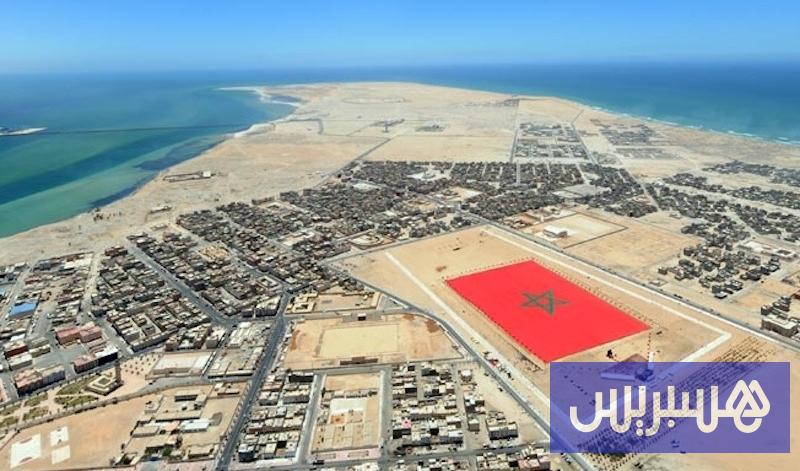
As the 50th anniversary of the Green March approaches, a dynamic wave of recognition of Morocco’s sovereignty over its Sahara is unfolding, with official announcements from several major countries supporting their companies’ investments and directing capital towards the southern provinces of the kingdom; which have become an investment destination as competitive and developed as other regions of Morocco.
This coincides with an increasing engagement of major powers, including permanent members of the UN Security Council, in supporting development and investment projects in the Moroccan Sahara.
Following the United States’ announcement last September of its full support for investment in the southern provinces and opening economic partnership prospects in Dakhla and Laayoune, this momentum is now reinforced by France’s choice, through the French Business Confederation (MEDEF), to organize a “High-Level Economic Forum” in Dakhla on October 9; a clear indicator of Paris’ desire to rebuild its economic relations with Rabat on new foundations based on trust, strategic integration, and practical recognition.
The choice of Dakhla city represents a “dual” strategic and economic dimension; the region is a living model of Morocco’s developmental dynamism and economic capabilities through major structural projects, especially the Atlantic Dakhla Port (under construction) and its regional and continental openness. It will be an opportunity for French entrepreneurs to discover a promising market that combines national investment appeal and its location as a bridge between Europe and Africa.
Christophe Lecourtier, French Ambassador to Morocco, did not hide that his country “aspire to be a partner in the development of the southern provinces of the Kingdom of Morocco, benefiting the population looking forward to a brighter future under the leadership of King Mohammed VI.”
The French diplomat, in an interview with the Moroccan News Agency before the Dakhla business forum between the two countries, confirmed that the southern provinces represent a new horizon for multidimensional cooperation between France and Morocco.
In this context, Lecourtier pointed to the opening of new French educational institutions in these provinces, a future cultural center, a visa application center, alongside expanding the scope of the French Development Agency’s work to include these areas.
According to the ambassador in Rabat, this event, held to discuss “Morocco’s Southern Provinces: Towards New Horizons for Developing the Morocco-France Economic Partnership,” will address “the various wonderful opportunities offered by Dakhla and the surrounding areas,” in his words.
Youssef Kraoui El Filali, an economic expert and head of the Moroccan Center for Governance and Management, said that attracting investments in the Moroccan Sahara frames the new dynamic witnessed in Moroccan-French economic relations, noting that this “establishes a promising strategic phase of bilateral cooperation, embodying the shared desire to consolidate sustainable investment partnerships between economic actors in both countries.”
According to Kraoui El Filali in a statement to Hespress, the choice of Dakhla to host this economic forum sends “a deep symbolic message that goes beyond the economic dimension to touch political and developmental aspects, confirming the status of the southern provinces as a real growth engine and an advanced gateway for Morocco’s openness to Africa and the world.”
The economic analyst added: “The success of the development model in the southern provinces has become a visible reality today through major projects in infrastructure, renewable energy, and the construction and public works sector, reflecting the wise royal vision of making the Moroccan Sahara a space for production, investment, and innovation.”
He interpreted this as “strengthening Morocco’s national gains diplomatically and politically, amid growing international support for the autonomy initiative as the serious and realistic framework for resolving the artificial dispute over the Moroccan Sahara, and recognition by several major powers of the credibility of Morocco’s developmental approach in these provinces.”
The economic expert cited the Atlantic Dakhla Port project as a cornerstone of this developmental vision, as it forms a strategic platform to enhance regional economic integration and is directly linked to the royal initiative aiming to launch an Atlantic initiative making Dakhla a gateway connecting Africa to the Atlantic Ocean, “with the prospect of democratizing ocean access and enabling Central African countries to have open and sustainable economic partnerships.”
He concluded: “The Morocco-France economic forum or the support of American officials for investments in the region cannot be considered a turning point as much as it represents an acceleration of the existing cooperation between Rabat and the decision-making capitals in the Security Council; from which the populations of the three southern regions will benefit by providing permanent job opportunities and strengthening territorial economic competitiveness.”
Recommended for you
Talib Al-Rifai Chronicles Kuwaiti Art Heritage in "Doukhi.. Tasaseem Al-Saba"
Exhibition City Completes About 80% of Preparations for the Damascus International Fair Launch
Al-Jaghbeer: The Industrial Sector Leads Economic Growth
Unified Admission Applications Start Tuesday with 640 Students to be Accepted in Medicine
Egypt Post: We Have Over 10 Million Customers in Savings Accounts and Offer Daily, Monthly, and Annual Returns
His Highness Sheikh Isa bin Salman bin Hamad Al Khalifa Receives the United States Ambassador to the Kingdom of Bahrain