









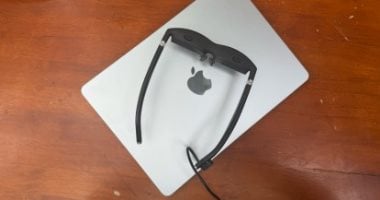
Following the disappointing response to the Vision Pro device, Apple has decided to rethink its strategy in the extended reality market. Instead of focusing on developing a cheaper and lighter version of the Vision Pro headset, the company is now moving towards creating smart augmented reality glasses that can be worn daily with ease, resembling the Ray-Ban glasses developed by Meta.
According to a report by Mark Gurman from Bloomberg, Apple has temporarily halted its project for a lighter version of the Vision Pro and started redirecting resources towards developing new smart glasses. This move represents a significant strategic shift, as Apple bets that smart glasses will be the future of augmented reality technology due to their lightness, ease of use, and lower cost compared to traditional mixed reality headsets.
The second generation of Apple’s smart glasses is expected to feature built-in displays and operate in two distinct modes. When connected to a Mac, they will run a full version of visionOS to provide a comprehensive desktop augmented reality experience including rich notifications, content sharing, and hands-free control. When connected to an iPhone, they will run a lightweight version of the system offering basic functions such as hands-free calling and messaging, along with AI-powered features.
While Meta’s smart glasses with displays suffer from limited app support, Apple excels thanks to its vast ecosystem that includes millions of apps compatible with iOS and macOS. This gives Apple a major advantage in delivering a seamless and diverse user experience that surpasses what Meta currently offers.
For users, these glasses could be an accessible gateway to the world of augmented reality, especially for those who found the Vision Pro’s price high. Apple’s new glasses will provide a similar experience at a lower cost, with smooth integration with other Apple devices, allowing easy management of calls and messages without needing to take the phone out of the pocket.
Reports indicate that Apple is currently preparing to launch a range of devices equipped with the M5 chip, including new iPad Pro and MacBook models. The first smart glasses are expected to be released between 2026 and 2027, followed by a second generation with built-in displays, directly competing with Meta and its product line in this field.




Recommended for you
Al-Jaghbeer: The Industrial Sector Leads Economic Growth
Egypt Post: We Have Over 10 Million Customers in Savings Accounts and Offer Daily, Monthly, and Annual Returns
Alternative to UNIFIL Forces
Talib Al-Rifai Chronicles Kuwaiti Art Heritage in "Doukhi.. Tasaseem Al-Saba"
Exhibition City Completes About 80% of Preparations for the Damascus International Fair Launch
Trump Advisor: Disarming Hamas is Central.. Palestinian Authority to Take Over Gaza After Required Reforms