








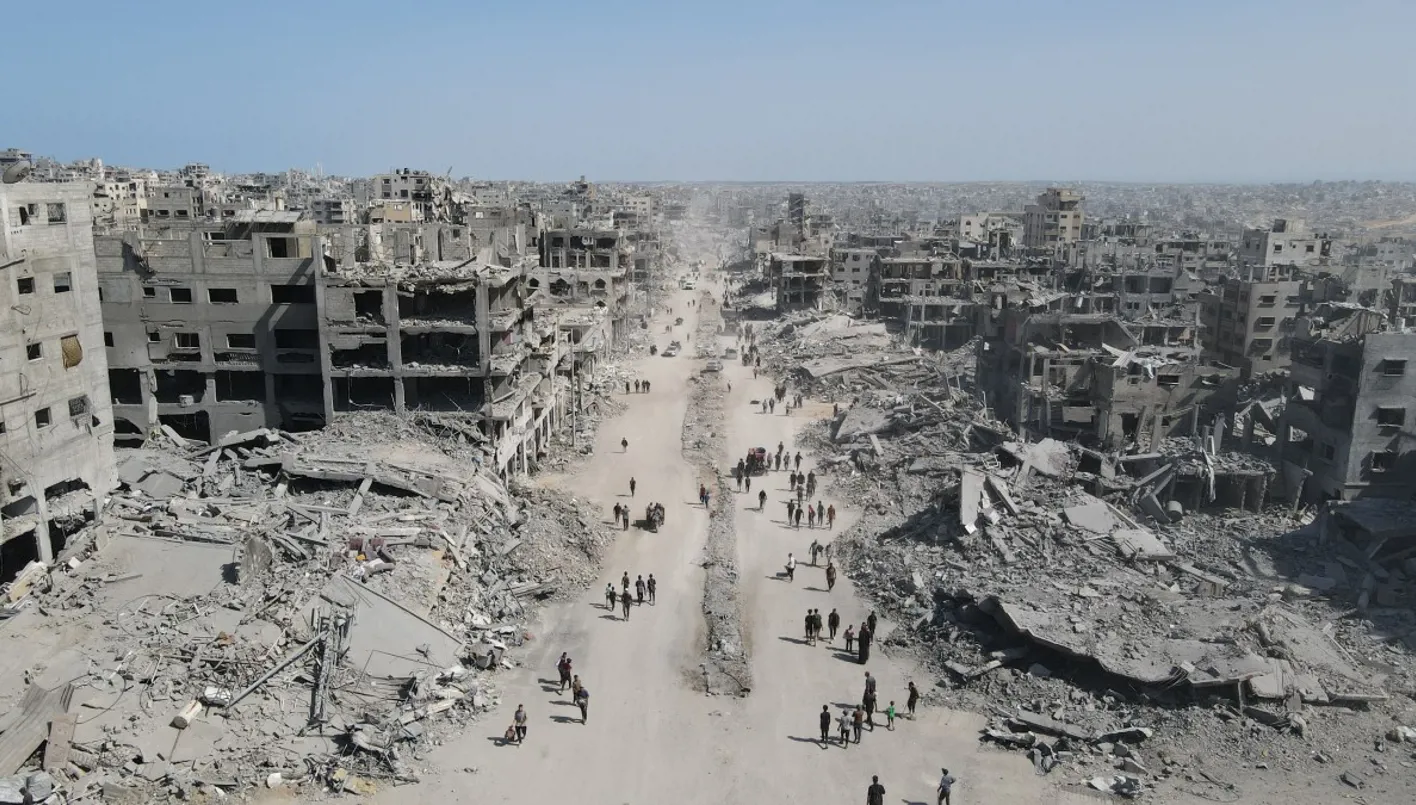
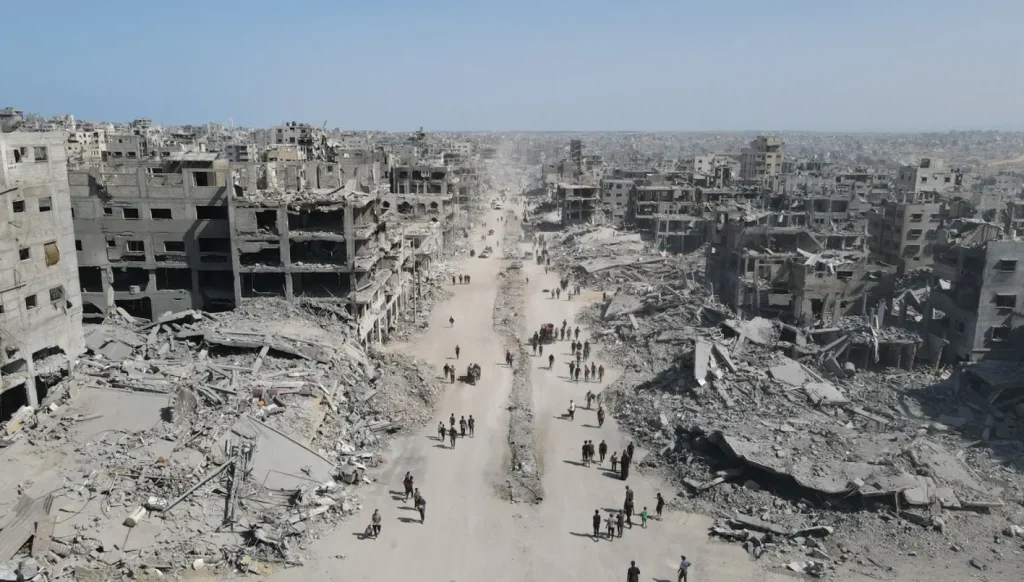
Massive destruction in Gaza City caused by the war between Israel and Hamas. (AFP)
Despite more than two years since the Gaza war and hostage-taking, no real and tangible progress toward a serious peace agreement had been made until now, raising painful questions: Why did it take so long to reach an agreement while previous opportunities were wasted? Could a deal have been made earlier when more hostages were alive and before tens of thousands of Palestinians were killed?
Historians may debate for years whether the war could have ended a year ago when Israel killed Hamas leader and architect of the October 7 attack, Yahya Sinwar. Or, alternatively, whether Israel and Hamas wasted the chance to build on the ceasefire left by President Joe Biden and his aides before Donald Trump returned to the White House.
In this regard, US Secretary of State under Biden, Antony Blinken, told The New York Times: “This is a different moment; we didn’t have then what Trump has now. Hamas was defeated as a military organization, diplomatically isolated, lost its supporters—Iran, Hezbollah, and the Houthis—and Gaza’s public support for it declined.”
Indeed, several factors and explanations led to the agreement, the release of all hostages, and possibly a new beginning for Gaza at this particular time.
Much has changed in Israel’s favor this year. Sinwar’s death caused a leadership crisis in Hamas, and Israeli military pressure increased as the group’s ammunition ran out. The New York Times reported that “after the war with Iran, Hamas realized the state that funded and armed it could no longer be relied upon.”
Additionally, coordinated pressure led Hamas to accept an agreement it did not want. The Wall Street Journal reported that when Hamas leader Khalil al-Hayya first saw the plan, his immediate reaction was rejection. Officials familiar with the discussions said the group informed Arab mediators two days later of its acceptance, especially after Egypt and Qatar told al-Hayya that the deal was his last chance to end the war, according to officials. They pressured Hamas to understand that holding hostages had become a strategic burden, giving Israel legitimacy to continue fighting. Turkey also warned Hamas that if it did not agree to the plan, it would be stripped of all political and diplomatic cover, and Qatar and Turkey would no longer host its political leadership.
Internally, Hamas faced increasing pressure, suffering from shortages of ammunition and funds, barely able to continue guerrilla warfare against Israeli forces that had taken most of Gaza, while facing a Palestinian population suffering from hunger and destruction.
Trump also played a prominent role; he is known for lacking patience for traditional diplomacy and negotiating as he did in real estate deals: with broad concepts, leaving details to others. Also indicating the importance of the agreement to Trump was the return of his son-in-law Jared Kushner to the diplomatic scene, especially after he refused a position in the US administration during Trump’s second term. Kushner was the negotiator of the Abraham Accords in the first term, which Trump considers one of his greatest diplomatic achievements.
Imad Abu Awad, a researcher on Israeli-Palestinian affairs, told An-Nahar: “The delay in reaching an agreement on the hostages and ceasefire resulted from multiple factors. The right-wing Israeli government sought to prolong the war to achieve strategic goals in Gaza, including displacement and settlement, benefiting from international support early in the war. But over time, Israel faced internal pressures, political divisions, economic deterioration, and a decline in its global image. Regionally, the Arab environment began to see Israel as a threat, and normalization opportunities decreased.”
He added: “Trump came pushed by an American current that sees the need to restrain Israel to protect itself, imposing an agreement that serves its interests, stops the extermination without ending the occupation or siege. Hamas, on the other hand, wanted to stop the war from the start but bet on the hostage card to gain more. With the escalating humanitarian disaster, it retreated from some conditions, allowing the chance to reach the agreement. Calculations changed for both sides, but the agreement came at a time serving Israel and reflecting the tragedy’s scale in Gaza.”
Political writer and researcher Dr. Murad Harfoush told An-Nahar: “Many factors finally led to a change in the US position, which pressured Israel to stop the fire, including recognition of the Palestinian state and discussions of imposing sanctions on Israel, creating a feeling in America that Israel has become isolated today.”
He added: “Moreover, public opinion increasingly views Israel as conducting a war of extermination that must be stopped, especially with widespread images showing the killing of Palestinians in international media,” continuing: “In my opinion, the Israeli army’s strike attempting to assassinate Hamas leaders in Qatar accelerated Washington’s desire to reach a ceasefire.”
Indeed, the event that accelerated the negotiations and was exploited by Trump to rally Arab countries around his plan was the Israeli attack targeting Doha, where it attempted to kill Hamas negotiators.



Recommended for you
Al-Jaghbeer: The Industrial Sector Leads Economic Growth
Egypt Post: We Have Over 10 Million Customers in Savings Accounts and Offer Daily, Monthly, and Annual Returns
Alternative to UNIFIL Forces
Talib Al-Rifai Chronicles Kuwaiti Art Heritage in "Doukhi.. Tasaseem Al-Saba"
Exhibition City Completes About 80% of Preparations for the Damascus International Fair Launch
Unified Admission Applications Start Tuesday with 640 Students to be Accepted in Medicine