







On Sunday evening, television programs covered many important issues and topics occupying the minds of Egyptian citizens and public opinion.
Fayez Farhat: Sharm El-Sheikh Summit a Historic Moment Crowning Egypt’s Efforts in Supporting the Palestinian Cause
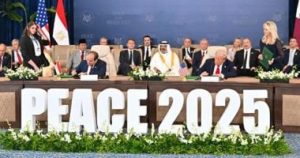
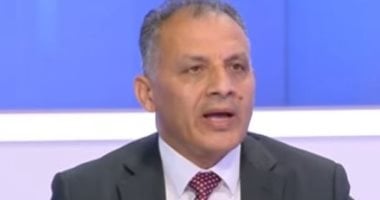
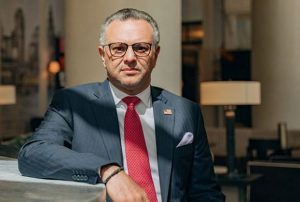
Dr. Mohamed Fayez Farhat, Chairman of Al-Ahram Foundation, confirmed that the Sharm El-Sheikh summit scheduled for tomorrow represents a historic moment crowning intense Egyptian political and diplomatic efforts that began since the outbreak of the Gaza crisis. He pointed out that what will be signed during the summit is the beginning of a complex political path requiring continuous protection by moderate forces in the region.
Farhat explained during his interview on the 6 O’clock program broadcast on Al-Hayat channel that the Egyptian effort was not born in the last hours but is an extension of a comprehensive diplomatic movement that started from the early days of the crisis, led by the Egyptian political leadership and all state institutions. He affirmed that Egypt succeeded in making the Sharm El-Sheikh summit a launchpad for a new peace process aiming to establish an independent Palestinian state on the borders of June 4, 1967, with East Jerusalem as its capital.
Farhat indicated that Egypt’s success was not limited to reaching this moment but also included building an international coalition supporting the Egyptian vision in dealing with the Palestinian cause. He explained that the world has gradually begun to free itself from the Israeli narrative that tried to obscure the cause and justify violations in Gaza amid attempts to impose a new reality aimed at ending the Palestinian presence.
He added that the American position witnessed a qualitative shift in recent weeks after Washington realized that supporting the Egyptian vision to achieve a just and comprehensive settlement serves the interests of the United States and the region’s long-term stability.
The Chairman of Al-Ahram Board confirmed that the most dangerous thing that could have happened was for the international community to get used to the Gaza tragedy, as happens in other global crises like the Russia-Ukraine war. He pointed out that the continuous Egyptian action prevented this scenario and kept the Palestinian cause at the forefront of international attention, which is one of the most important achievements of Egyptian diplomacy in recent years.
Farhat concluded by emphasizing that what has been achieved was not a coincidence but the result of a clear and firm Egyptian vision towards the necessity of achieving a historic settlement that ensures stability in the Middle East and preserves the rights of the Palestinian people. He pointed out that the next phase will witness an escalation in diplomatic efforts to protect the new political path that will start from Sharm El-Sheikh.
Ambassador Mohamed Hegazy on Last Word: Egypt Insists on the Role of the Palestinian Authority in Gaza Management
Ambassador Mohamed Hegazy, former Assistant Minister of Foreign Affairs, said that the current vision for managing Gaza after the war depends on forming a council comprising a group of Palestinian technocratic experts who are non-factional, under the name Community Support Council or Community Assistance Council, which would be politically and legally affiliated with the Palestinian National Authority.
Hegazy explained during a video call with journalist Ahmed Salem on the “Last Word” program aired on ON channel that there will be a security supervisory mission responsible for control and oversight of the sector, alongside organizing border crossings to restore the system that existed before 2007, where the Palestinian National Authority is responsible for the Palestinian side of the Rafah crossing.
He pointed out that the arrival of President Mahmoud Abbas (Abu Mazen) to Sharm El-Sheikh tomorrow clearly reflects Egypt’s firm position supporting the Palestinian Authority as the sole legitimate representative of the Palestinian people. He confirmed that Egypt treats Gaza, the West Bank, and East Jerusalem as “one geographical unit” under the umbrella of the Palestinian National Authority.
Hegazy added that the plan of former U.S. President Donald Trump already included this proposal within what was called the “Framework Agreement,” which allows flexibility in negotiating each item. He explained that ongoing dialogues between parties regarding prisoner lists and the Palestinian security role come within this framework agreement.
The ambassador confirmed that Egypt sees the necessity of the Palestinian National Authority’s presence in the next phase as a fundamental guarantee for achieving stability. He pointed out that Cairo has trained Palestinian forces at the highest level to undertake security and supervisory tasks, while discussions are ongoing about a limited international supervisory or monitoring role, similar to the model that Tony Blair participated in during previous ceasefire periods.
Wagdy Zein El-Din to Al-Hayat Al-Youm: Peace Summit a Global Testimony to Egypt’s Pivotal Role
Journalist Dr. Wagdy Zein El-Din praised the role led by the Egyptian presidential diplomacy under President Abdel Fattah El-Sisi, culminating in success in ending the war in Gaza and opening the door to peace in the region.
He began his talk during an interview with journalist Lubna Asal on the Al-Hayat Al-Youm program on Al-Hayat channel, saying: “In this great scene, we must say ‘Bravo’ to the Egyptian presidential diplomacy.”
He explained that the Sharm El-Sheikh peace summit represents a turning point that came after two years of struggle and confrontation, proving that Egypt is a strong and capable state with wise and great diplomacy able to restrain anyone threatening Egypt’s national security.
He added that the great Egyptian stance, manifested in the firm rejection of forcibly displacing Palestinians, proved to the world that Egypt rejects any attempt to impose the status quo by force or reshape the region at the expense of its security and constants.
Zein El-Din considered that the wide international participation in the summit, with more than 20 countries attending, is not only a guarantee for the implementation of the agreement but primarily a testimony to the pivotal and important role Egypt has played recently. He confirmed that this presence places Egypt in the spotlight of the entire world and reflects its confidence in its leadership.
He pointed out that the Egyptian will is strong and solid and no force can overcome it, as embodied in achieving a ceasefire and delivering aid to the occupied Palestinian people.
He stressed that these efforts confirm the Egyptian state’s keenness not to liquidate the Palestinian cause and the necessity of activating a comprehensive and important political process leading to a two-state solution according to international legitimacy.
Noha Abdel Aziz on “Set Setat”: Now Dialogue and Friendship Are the Most Important Between Parents and Children
Media personality Noha Abdel Aziz said that the concept of upbringing has completely changed from one generation to another, confirming that the old method based on strictness and punishment is no longer dominant in raising children today, where concepts like positive parenting, dialogue, and friendship between parents and children have become more widespread.
She added during an episode of the “Set Setat” program aired on DMC channel that upbringing in the past was based on awe and absolute obedience, saying: “In the past, punishment was essential, the father had his prestige, and the mother’s word was never questioned, but now the world has completely changed.”
Abdel Aziz continued: “Now we hear about positive parenting, dialogue with our children, and being their friends, not just parents. The question we raise in the episode: Which is better? The old generation raised on obedience? Or today’s generation with more freedom who might be smarter and more clever?”
She pointed out that the next episode of the program will address the differences in parenting styles between generations and how to combine the strictness of the past with the flexibility of the present in raising children, saying: “Let’s open this file together and see how upbringing was in the past and where it has gone now.”

Recommended for you
Al-Jaghbeer: The Industrial Sector Leads Economic Growth
Alternative to UNIFIL Forces
Egypt Post: We Have Over 10 Million Customers in Savings Accounts and Offer Daily, Monthly, and Annual Returns
Talib Al-Rifai Chronicles Kuwaiti Art Heritage in "Doukhi.. Tasaseem Al-Saba"
Exhibition City Completes About 80% of Preparations for the Damascus International Fair Launch
Trump Advisor: Disarming Hamas is Central.. Palestinian Authority to Take Over Gaza After Required Reforms