









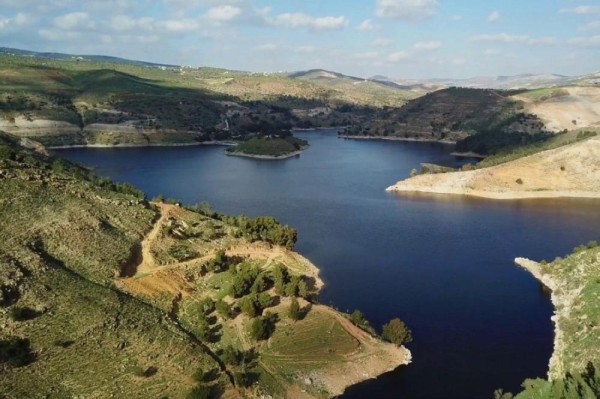
Amid increasing challenges facing the Middle East, particularly regarding shared water resources, the Jordanian Cabinet recently approved joining the 1992 Helsinki Convention on the Protection and Use of Transboundary Watercourses and International Lakes. This marks a pivotal step reflecting a qualitative shift in Jordan’s water policy and diplomacy.
The accession represents a strategic development that strengthens Jordan’s regional and international standing by adopting legal diplomatic tools that protect national water interests and enhance its role as a key player in one of the century’s most sensitive issues.
This decision comes as the Kingdom faces severe water challenges due to climate change impacts and heavy reliance on shared watercourses with neighboring countries, notably the Jordan River, Yarmouk River, and the Disi groundwater basin, making cross-border cooperation a necessity.
Jordan’s approval to join the convention reflects growing awareness of investing in soft power through commitment to international legal frameworks, using them as negotiation tools to safeguard rights and support fair and balanced water resource management.
This approach is supported by the Blue Peace initiative, funded by the Swiss government, which views Jordan’s decision as a significant step toward consolidating cooperation in managing transboundary waters. The convention provides a framework that enhances regional coordination, encourages knowledge exchange, and promotes joint solutions to water challenges transcending political borders.
Water diplomacy expert and Blue Peace management committee member, engineer Mayson Al-Zoubi, expressed pride in the initiative’s support for Jordan during the accession process.
She confirmed that international agreements form a binding legal reference for managing shared water resources, ensuring fair and reasonable use, and strengthening cooperation among riparian states.
She added that the convention serves as an umbrella allowing bilateral or multilateral agreements, enhancing Jordan’s position and enabling it to claim its fair share of water.
The initiative maintained direct communication with relevant Jordanian authorities and shared experiences with Iraqi officials, noting Iraq as the first Arab country to join the convention.
Following Cabinet approval, an official delegation from the Ministry of Water and Irrigation is expected to visit Geneva, supported by the Swiss Agency for Development and Cooperation, to complete formal accession procedures.
Joining the Helsinki Convention grants Jordan legal legitimacy based on principles of equity, no harm, and cooperation. These principles can be effectively employed in bilateral and multilateral negotiations, enhancing Jordan’s image as a responsible party and active partner in sustainable water resource management.
Practically, accession will enable Jordan to benefit from technical and financial support tools provided by the convention, such as data exchange, joint project funding, and capacity building, strengthening joint monitoring of water resources with neighboring countries, especially Syria and Saudi Arabia, and opening prospects for regional projects in desalination and reuse.
Diplomatically, accession consolidates Jordan’s position as a leading force in Arab water diplomacy, granting it a pivotal role in representing regional interests in international water security forums and enabling it to mediate efforts to encourage regional states to adopt cooperation frameworks based on international law rather than political polarization.
This step is a new achievement in Jordan’s diplomatic and environmental record, reflecting its serious commitment to enhancing regional water security and achieving sustainable resource management for current and future generations.



Recommended for you
Al-Jaghbeer: The Industrial Sector Leads Economic Growth
Alternative to UNIFIL Forces
Egypt Post: We Have Over 10 Million Customers in Savings Accounts and Offer Daily, Monthly, and Annual Returns
Talib Al-Rifai Chronicles Kuwaiti Art Heritage in "Doukhi.. Tasaseem Al-Saba"
Exhibition City Completes About 80% of Preparations for the Damascus International Fair Launch
Trump Advisor: Disarming Hamas is Central.. Palestinian Authority to Take Over Gaza After Required Reforms