








The Ministry of Supply and Internal Trade and the General Authority for Supply Commodities played a major role in securing the country’s needs for food commodities and maintaining a strategic stockpile of wheat sufficient for more than six months during the glorious October War. The authority, in cooperation with relevant bodies, provided food commodities to citizens in various governorates during the October 1973 war and helped supply products to citizens in markets at reasonable prices.
The Ministry of Supply ensured the inclusion of 82% extraction local bread within the support quotas. The General Authority for Supply Commodities imported goods that the state could not produce to fill the import gap, added industrial snacks and legumes to the ration card commodities, and distributed many products on ration cards at subsidized rates, such as 1 kg of sugar for 10 piasters, 200 grams of subsidized oil for 15 piasters, 40 grams of subsidized tea for 5.5 piasters, and 15 grams of free tea for 2.5 piasters. Additional goods included 1 kg of fava beans at 7.5 piasters, 1 kg of lentils at 10 piasters, washing soap at 2.5 piasters, 1 kg of industrial ghee at 16 piasters, 5 meters of cotton fabric at 16 piasters per meter, and 1 liter of kerosene gas at 5 piasters.
With the onset of winter, the ministry introduced 60 million meters of cotton fabric in markets in early October at 6 meters per person to be distributed across all governorates through public and private sector shops. More than 4 million meters of fabric for school aprons, ready-made clothes, shoes, 750,000 local and imported blankets priced from 155 to 293 piasters, and 850,000 pullovers priced from 150 to 475 piasters for jackets were also provided.
To tighten market control and counter any violations that could harm food security, the Ministry of Supply issued several decisions, including banning the slaughter of female animals, enforcing compulsory pricing of goods, ensuring the availability of basic goods throughout the war, setting food prices during circulation, combating attempts to sell above announced prices, preventing monopolies, issuing ration cards to eligible citizens, banning rice storage, setting prices for all goods traded by the General Authority for Supply Commodities, and prohibiting the transport of barley and white rice outside governorates without prior approval. The storage of barley rice was banned by Decision No. 346 of 1973, and traders storing it outside designated warehouses faced imprisonment of up to three months and fines of at least 100 Egyptian pounds. The transport of barley and white rice outside governorates was banned by Decision No.
348 of 1973 until mid-February 1974, with violators facing imprisonment of up to three months and fines of at least 50 Egyptian pounds.
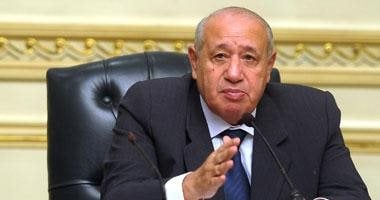
Securing the home front included several aspects such as ensuring the availability of all goods and services without exploitation of the country’s conditions during the October War and price hikes. This was confirmed by Dr. Mohamed Abu Shadi, former Minister of Supply and Internal Trade, who noted that for the first time in the history of wars, the country’s interior was unaffected by military operations due to state efforts to provide food commodities and ensure their delivery to citizens in various governorates. The success of the armed forces in achieving a historic accomplishment during the October War was a strong spark for the unity of the Egyptian people and their determination to lead the country to a better future.
Dr. Mohamed Abu Shadi also pointed out that securing the home front included securing roads, transportation, and vital facilities such as railways, with the Ministry of Interior managing this file to protect state facilities, gold shops, food warehouses, government agencies including ministries and diplomatic missions, as well as detaining dangerous offenders to prevent unlawful acts.
The Ministry of Supply and Internal Trade and the General Authority for Supply Commodities played an important role in providing subsidized goods to ration card holders and regularly distributing them to beneficiaries of the support system, in addition to maintaining a stockpile of basic goods for the country of no less than three months, while the wheat allocated for producing subsidized bread reached six months to secure the country’s needs during and after the war.
Monitoring the operation of production sites for strategic products and goods was one of the main tasks of the Ministry of Supply and Internal Trade according to Dr. Mohamed Abu Shadi. The ministry ensured the regular operation of municipal bakeries across the republic’s governorates and the provision of wheat to mills which produce flour and distribute it to bakeries to maintain the production of subsidized bread. The ministry also created a suitable environment for the operation of vital facilities related to strategic goods by providing raw materials, all production requirements, and organizing work schedules, which contributed to the absence of crises in goods and their availability to citizens.
On another front, and in implementation of political leadership directives, the Ministry of Supply and Internal Trade continued to implement the national plan to build modern silos and increase storage capacity to ensure the safety and storage of wheat allocated for producing subsidized bread. The transport fleet capacity for silo companies increased from 44 trucks to 104 trucks. The national project aims to increase silo storage capacity to 6 million tons, expand silo reception and dispatch through river transport from 3 to 7 sites, expand reception and dispatch through railway lines from 10 to 16 sites, and complete the program to localize silo manufacturing in Egypt relying on local products to save foreign currency by establishing an Egyptian company in cooperation with the private sector to produce all silo components.

Recommended for you
Al-Jaghbeer: The Industrial Sector Leads Economic Growth
Alternative to UNIFIL Forces
Egypt Post: We Have Over 10 Million Customers in Savings Accounts and Offer Daily, Monthly, and Annual Returns
Talib Al-Rifai Chronicles Kuwaiti Art Heritage in "Doukhi.. Tasaseem Al-Saba"
Exhibition City Completes About 80% of Preparations for the Damascus International Fair Launch
Trump Advisor: Disarming Hamas is Central.. Palestinian Authority to Take Over Gaza After Required Reforms