




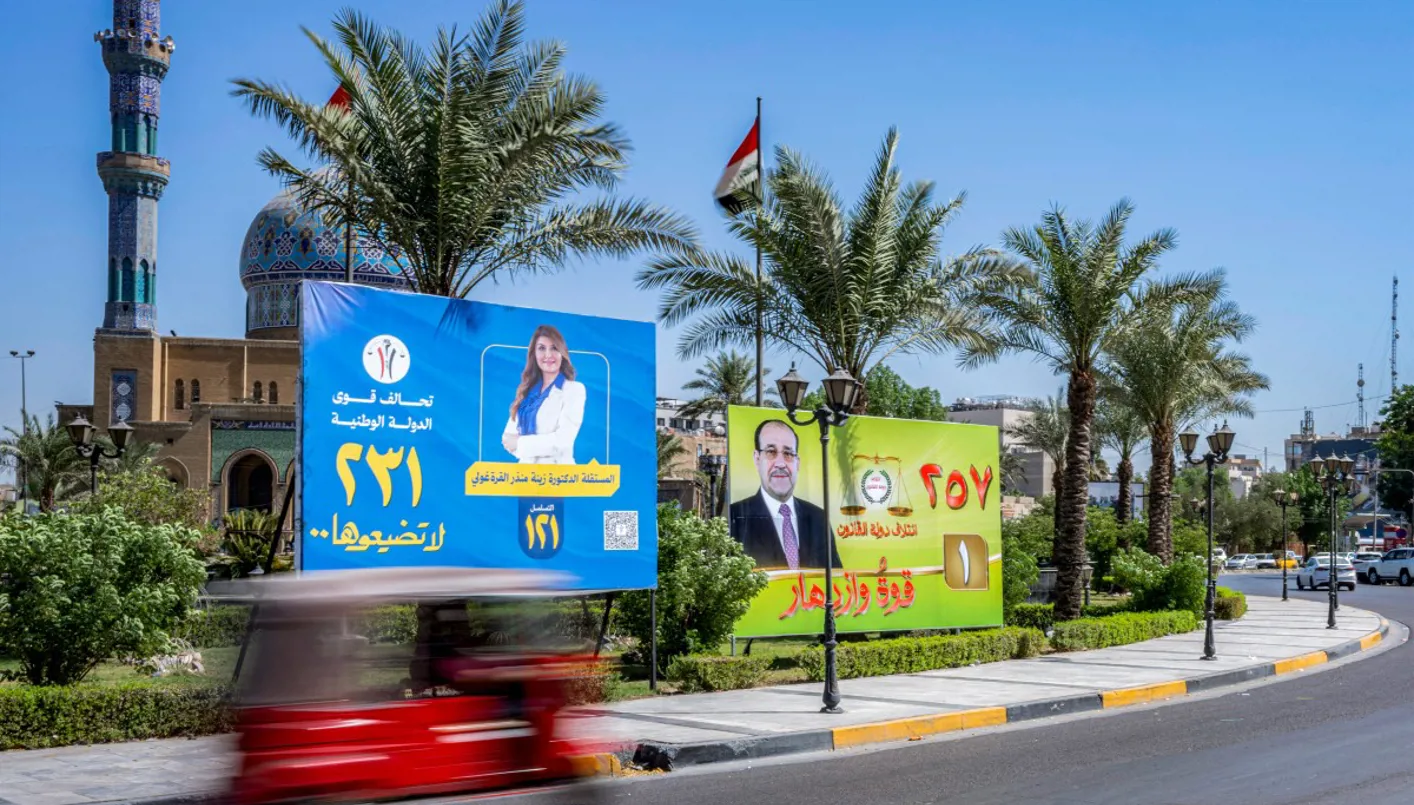
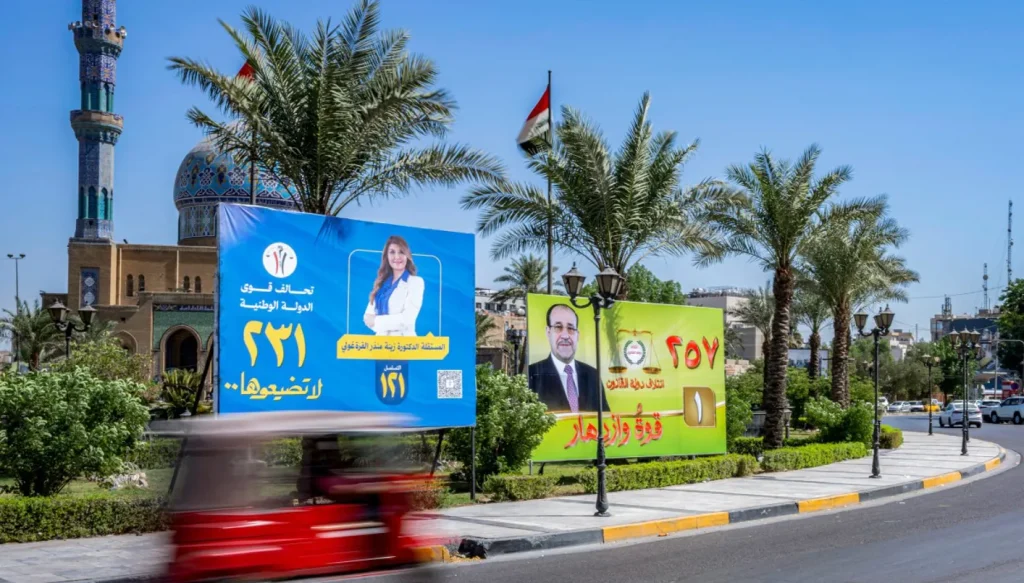
The electoral programs of Kurdish parties outside the official boundaries of the Kurdistan Region take on a nationalistic character. (AFP)
The election campaigns for the Iraqi Parliament in the Kurdistan Region provinces started without much momentum, as the elections scheduled in about a month do not attract wide attention from the Kurdish street. Most voters know that the “Kurdish seats” are fixed and known, and that the Kurdish role in the federal parliament has become almost stable.
The “Kurdish seats” usually range between 55 and 65 out of 329 seats, of which 46 seats are allocated to the four provinces of the region, while Kurdish parties gain additional seats in Kirkuk, Mosul, and Diyala provinces, which are classified as disputed areas between the federal government and the regional government.
Al-Nahar approached several candidates from various political currents in the region and asked about their electoral programs. All agreed on the impossibility of presenting service-oriented programs specific to these elections, as the responsibility for public services, including education, health, and economic development, lies with the local government in the region, which is elected by the local parliament, not the federal one. Therefore, candidates’ programs focus on core issues pending between the region and the federal authority, such as disputed areas, salaries of security personnel, the oil and gas law, and the region’s share of the central budget.
In areas outside the official boundaries of the region, in the provinces of Mosul, Kirkuk, and Diyala, the electoral programs of Kurdish parties take on a nationalistic character, emphasizing the implementation of Article 140 of the constitution that determines the fate of those areas, demanding compensation for Kurds affected by Arabization and exclusion policies, and commitment to national rights in education, upbringing, and administrative symbols.
Traditionally, the two main parties in the region, the Democratic Party and the Patriotic Union of Kurdistan, manage to secure about 45 seats, while the remaining seats go to opposition parties that do not achieve similar results in local elections, due to the nature of nationalistic electoral behavior in the federal parliament, compared to the service and executive nature in local elections.
Kurdish parties complain about underrepresentation in the federal parliament, as the percentage of voters from the region’s population is 14.8% of the total voters, while the seats allocated to the region’s provinces do not exceed 13.3%, which is less than their share in the general budget of 13.69%.
Political writer and researcher Amir Manadi explains the political atmosphere in the region in an interview with Al-Nahar, saying: “Two big questions have occupied political corridors since the start of the election campaign, and the results will answer them. First, will the Kurdish forces side with the bloc linked to the Coordination Framework close to Iran, or will they support the bloc linked to Prime Minister Mohammed Shia’ Al Sudani? The other issue concerns the possibility of alliance with either of the two main Sunni forces, the Progress Party bloc led by Mohammed Al-Halbousi, or the Azm bloc led by Khamis Al-Khanjar.”
He adds: “Both issues must be resolved to frame the Kurdish negotiating paper in forming the next government, which Kurdish parties want to be decisive on longstanding issues that have persisted for years, perhaps decades.”

Recommended for you
Al-Jaghbeer: The Industrial Sector Leads Economic Growth
Alternative to UNIFIL Forces
Egypt Post: We Have Over 10 Million Customers in Savings Accounts and Offer Daily, Monthly, and Annual Returns
Talib Al-Rifai Chronicles Kuwaiti Art Heritage in "Doukhi.. Tasaseem Al-Saba"
Exhibition City Completes About 80% of Preparations for the Damascus International Fair Launch
Trump Advisor: Disarming Hamas is Central.. Palestinian Authority to Take Over Gaza After Required Reforms