






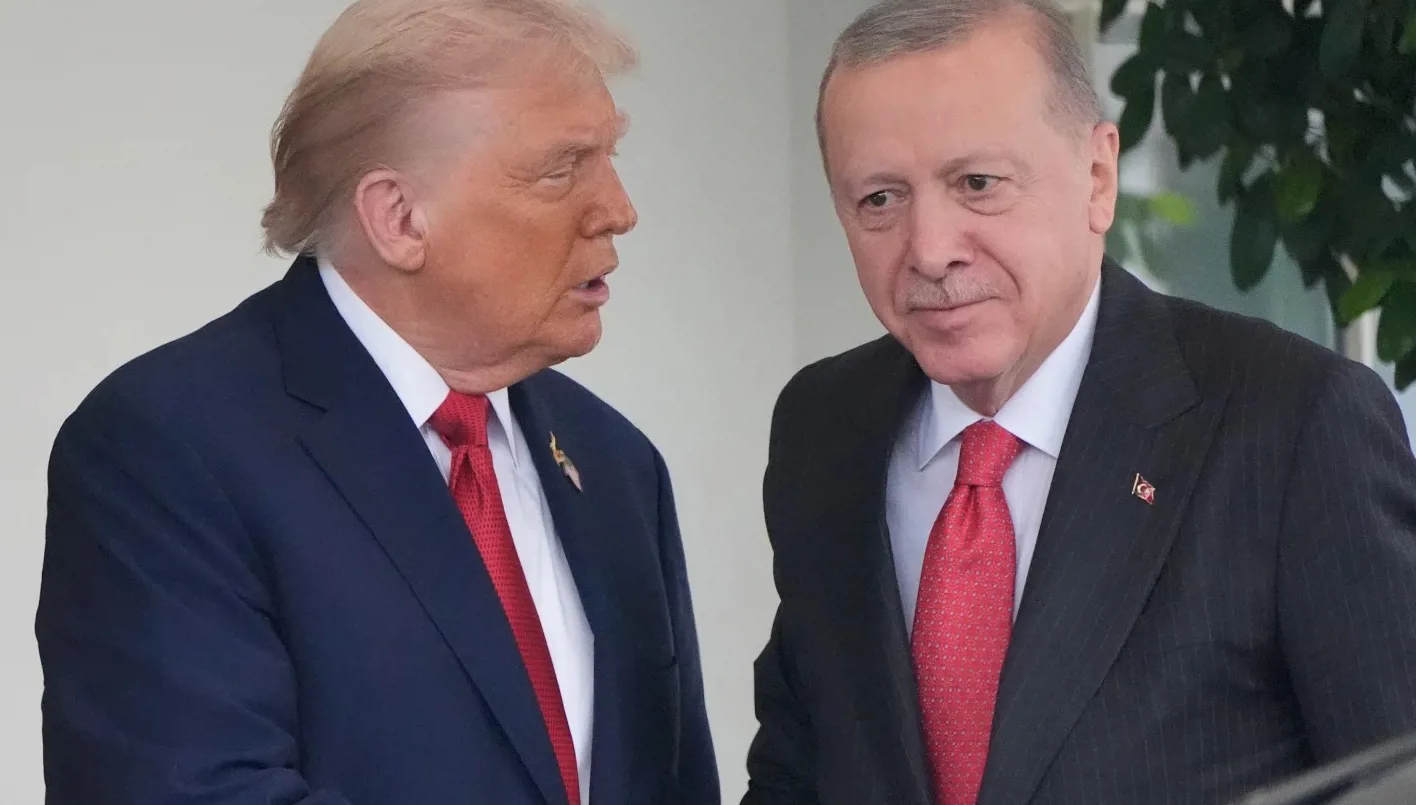

US President Donald Trump welcomes his Turkish counterpart Recep Tayyip Erdoğan, September 2025 (AP)
“Apparently, Turkey took the lead in the trigger mechanism… It beat the Westerners. It’s unbelievable. 18 companies? By decision of (Turkish President Recep Tayyip) Erdoğan?… What is the Foreign Ministry’s opinion?”
The comment by Abdullah Ganji, former editor-in-chief of the Iranian newspaper “Javan,” reflected the angry domestic reactions to Turkey’s announcement on October 1 to comply with UN sanctions after activating the “trigger mechanism.”
Earlier, Iranian President Masoud Pezeshkian announced on September 30 that Tehran should prioritize “expanding trade with neighboring countries” in response to recent measures.
This largely explains Iran’s anger over Turkey’s participation in the sanctions. Ankara froze the assets of dozens of entities and individuals on its soil linked to the nuclear program. The Iranian Foreign Ministry’s spokesman Esmail Baqaei responded on Monday, calling Turkey’s move “unnecessary” and “illegal.” However, he downplayed the repercussions, saying the sanctioned Iranian organizations did not have assets in Turkey.
Ankara’s new policy represents a particular disappointment for Iranians, after potential cooperation on sensitive issues. According to the US Manhattan District Attorney’s Office, the state-majority-owned Turkish bank “Kalk” was involved in helping Iran circumvent sanctions. The prosecution accused the bank of transferring about $20 billion of frozen assets and converting oil revenues into gold and cash between 2012 and 2013 under the scheme. The bank denies the accusation. The case has been ongoing since 2019, and on Monday the US Supreme Court refused to hear the bank’s claim for immunity. The bank also denies that part of the funds passed through the US financial system.
If convicted, the bank could face a $2 billion fine, but it stated in a release that “initiatives to find a legal agreement (between the two countries) continue positively.” Reuters reported on Tuesday that two sources said Turkey proposed last month a $100 million settlement, provided the bank admits no guilt. This came during Erdoğan’s visit to the White House on September 25 with a ministerial delegation.
Meanwhile, the recent trade volume between the two countries points to Turkey’s aspirations beyond its Iranian neighbor. For example, in 2023, Iran accounted for only 0.65 percent of Turkey’s total imports.
Turkey also seeks to resolve its exclusion from the F-35 fighter jet project after purchasing Russian S-400 missiles despite NATO objections. Moreover, it likely wishes to prevent Iran from regaining influence in Syria after Assad’s fall. Ankara wants to support the Zangzur corridor project, which has Washington’s blessing.
In other words, Turkey finds itself today in a different position than about a decade ago, and thus needs to get closer to the Americans to benefit from potential opportunities.
Meanwhile, Iran is considering sending hundreds of thousands of Afghan refugees to Iraq and Turkey in response to the return of UN sanctions and the recent Israeli war against it. The potential dispute between Turkey and Iran does not prevent Tehran from using some pressure tools that Ankara used at the height of its tensions with the West.


Recommended for you
Al-Jaghbeer: The Industrial Sector Leads Economic Growth
Egypt Post: We Have Over 10 Million Customers in Savings Accounts and Offer Daily, Monthly, and Annual Returns
Alternative to UNIFIL Forces
Talib Al-Rifai Chronicles Kuwaiti Art Heritage in "Doukhi.. Tasaseem Al-Saba"
Exhibition City Completes About 80% of Preparations for the Damascus International Fair Launch
Trump Advisor: Disarming Hamas is Central.. Palestinian Authority to Take Over Gaza After Required Reforms