









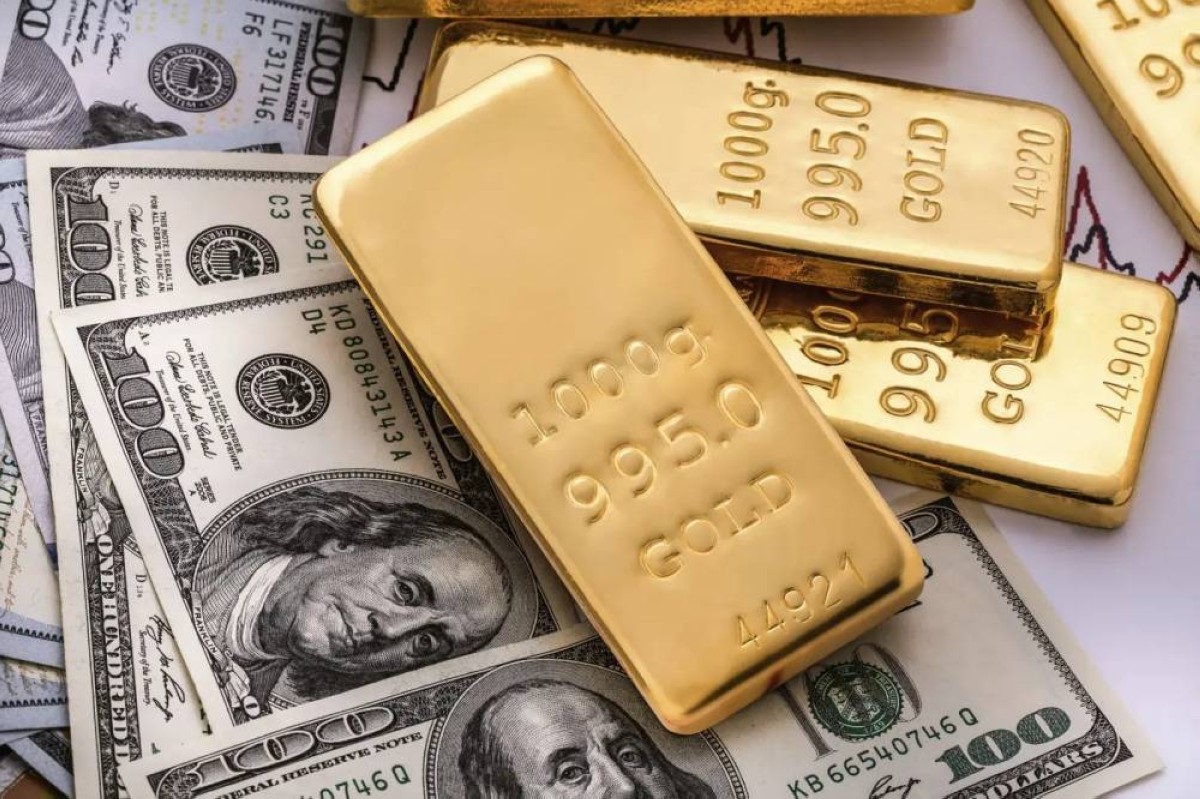
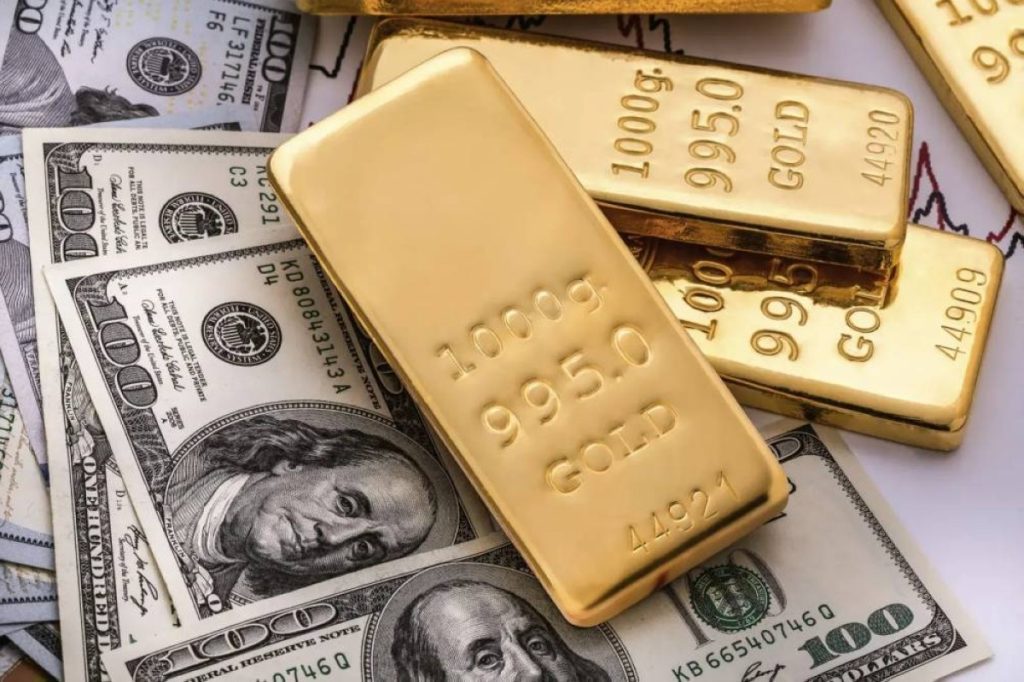
Gold has experienced a historic year full of achievements, breaking the $4,000 per ounce barrier, an economic indicator that cannot be overlooked; such a rapid rise in gold is usually a red flag flashing during times of global turmoil, when investors feel the world is on the brink of disaster.
However, the paradox today is that this crazy surge is happening alongside a booming stock market, driven by the artificial intelligence bubble. This contradiction leads experts to warn that money is flowing into safe havens to escape economic anxiety and stubborn inflation.
The strongest driver of this phenomenon is not just anxiety, but the weakening dollar and increasing geopolitical fears, which have pushed central banks and investors to seek an asset not tied to any single government, in a clear move towards “de-dollarization” globally.
The gains made by this precious metal in 2025 are historic, surpassing previous turbulent periods such as after the September 11 attacks, the 2008 financial crash, or even the pandemic period.
Gold has risen by 54% so far this year and is on track for its best performance since 1979, according to FactSet.
This temporal similarity is striking; the period in 1979 saw the United States struggling with double-digit inflation and a comprehensive energy crisis, reinforcing the notion that gold is the primary safe haven during economic pressure and inflation fears.
What is unusual about the current gold rise is that it coincides with a thriving stock market, whereas stocks and gold usually move in opposite directions.
But today, driven by fascination with AI capabilities, investors have flocked heavily to a few major tech companies leading the S&P 500 index upwards.
Different Rhythms
This sharp contrast suggests that capital is split into two parts: one chasing high-risk growth driven by technological innovation, and another fleeing in search of absolute safety.
David Kotok, co-founder of Cumberland Advisors, commented: “The stock market and gold are beating to entirely different drumbeats.”
The rise in gold reflects concerns about the economy and ongoing inflation worries, which have lingered above the Federal Reserve’s 2% target for more than four years. This anxiety is exacerbated by trade tensions; the United States has raised tariffs to their highest level since the Great Depression, while Japan’s incoming prime minister supports monetary policies that increase borrowing.
Against this backdrop, investors are flocking to an asset not tied to any single government: gold. Kristalina Georgieva, the IMF’s managing director, confirms “worrying signs” that a global resilience test may be coming, pointing to increased global demand for gold.
One of the biggest drivers of this rise is that the US dollar is experiencing one of its worst years in decades, raising questions about the greenback’s status as a global safe haven.
The dollar’s weakness has led investors to question its safe haven status, a doubt that has reached the highest levels; central banks worldwide are heavily contributing to gold accumulation.
This trend gained momentum after Washington and its allies sanctioned Russia by freezing its assets, raising further questions among foreign officials about where to keep their funds.
Structural Strategic Shift
Data from the World Gold Council (WGC) showed that central banks purchased the largest amount of gold ever in 2024, driven by China, India, and other countries’ desire to diversify reserves away from the dollar, confirming that this trend is a structural strategic shift and not just transient market noise.
Goldman Sachs, the international financial and investment institution, forecasted gold to reach $4,900 per ounce by the end of next year, citing strong buying from central banks, retail investors, and expected interest rate cuts.
Billionaire Ken Griffin also expressed deep concern that investors have begun to see gold as a safer bet than the dollar, noting “a massive asset inflation away from the dollar” and people’s actual move to “de-dollarization,” which poses an existential challenge to US economic dominance.



Recommended for you
Al-Jaghbeer: The Industrial Sector Leads Economic Growth
Alternative to UNIFIL Forces
Egypt Post: We Have Over 10 Million Customers in Savings Accounts and Offer Daily, Monthly, and Annual Returns
Talib Al-Rifai Chronicles Kuwaiti Art Heritage in "Doukhi.. Tasaseem Al-Saba"
Exhibition City Completes About 80% of Preparations for the Damascus International Fair Launch
Trump Advisor: Disarming Hamas is Central.. Palestinian Authority to Take Over Gaza After Required Reforms