









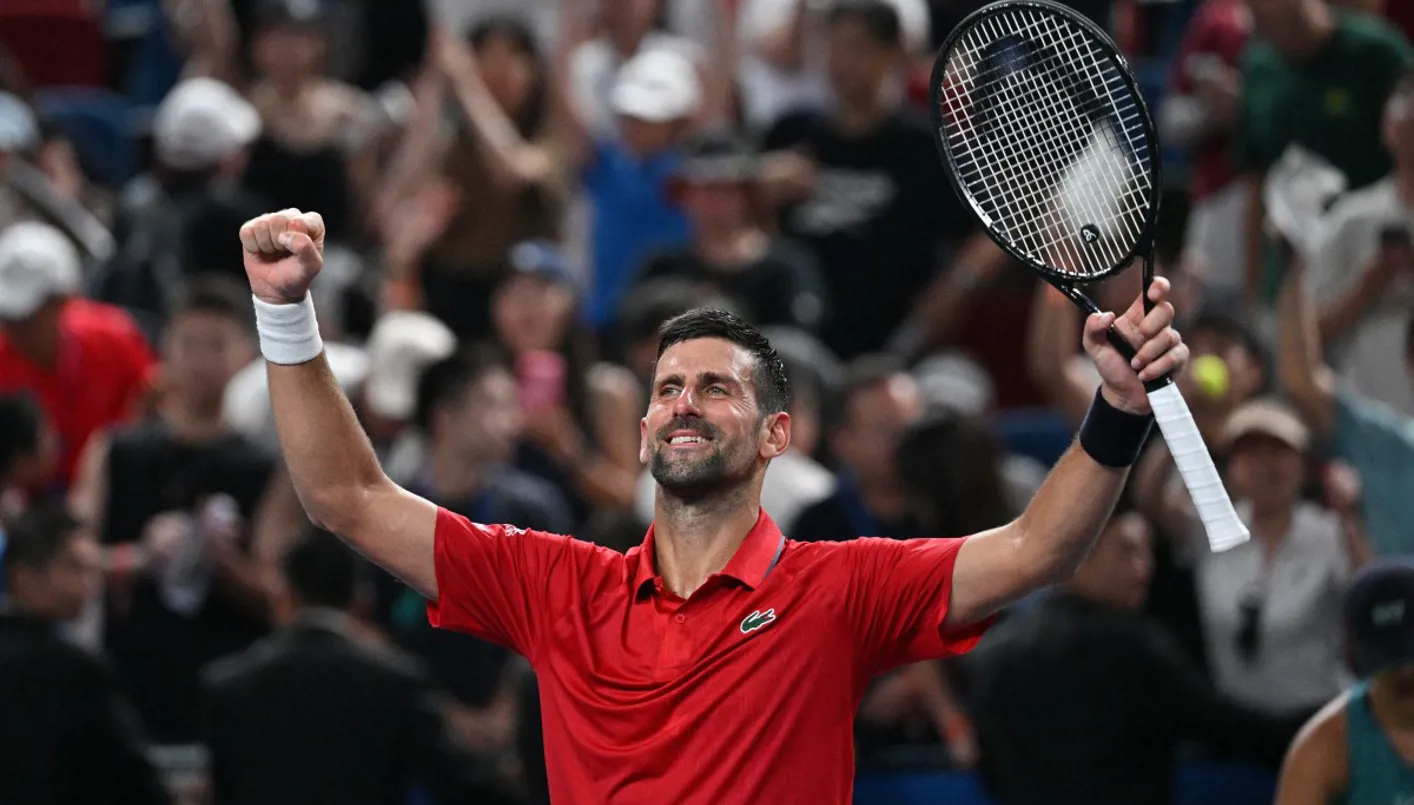
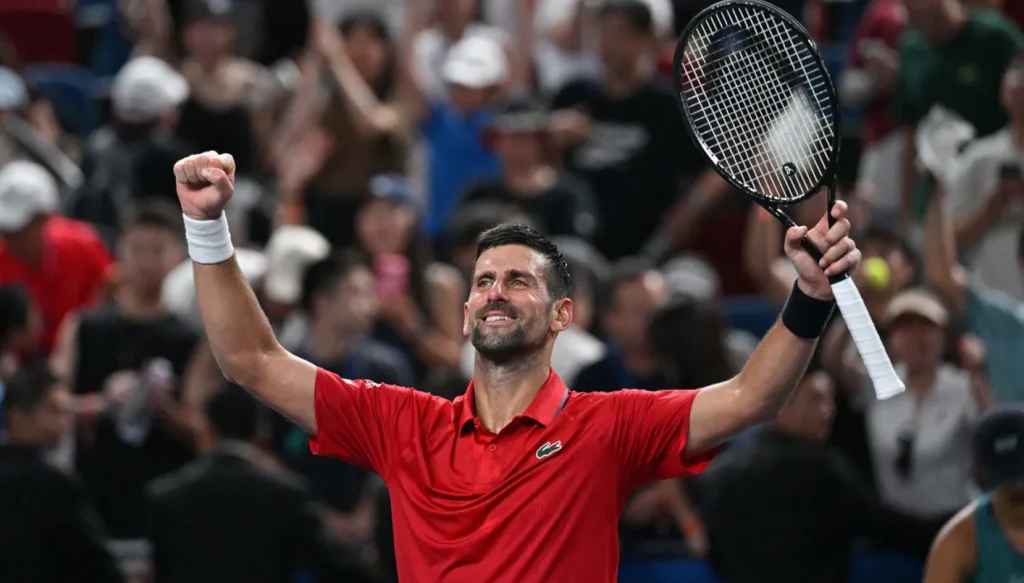
Serbian Novak Djokovic vomited, sweat poured from German Alexander Zverev’s shoe, and British Emma Raducanu withdrew from her match due to dizziness, as the scorching weather in China continues this week for the world’s top tennis players.
Danish player Holger Rune described the temperatures exceeding 30°C and humidity over 80% at the Shanghai Masters as “extremely harsh.”
Rune was heard saying under these tough conditions, “Do you want a player to die on the court?”
Djokovic, a 24-time Grand Slam champion, called the conditions a “major physical challenge” on Tuesday after facing the heat and a minor ankle injury to reach the quarterfinals.
The 38-year-old Serbian appeared exhausted, bending over multiple times between points against Spaniard Jaume Munar before vomiting beside the court.
After an unforced error, “Nole” fell to the ground and lay down before a medic intervened, but he later regained his balance and narrowly won the match.
Djokovic’s path to the title was eased after world No.1 Carlos Alcaraz withdrew before the tournament to rest, and defending champion Italian Jannik Sinner pulled out on Sunday due to muscle cramps.
Zverev, ranked third globally, lost on Monday after stopping mid-match to change his shoe because of sweat pouring from it.
Fans in the stands waved fans and placed cooling packs on their foreheads to cope with the intense humidity.
The main stadium in Shanghai is equipped with a roof but is left open and only closed in case of rain, which is not expected for the rest of the tournament days.
On Tuesday, Rune called on the ATP to adopt a special heat rule for tournaments like the Shanghai Masters.
The ATP said in a statement that player safety is its top priority and that it is considering implementing a policy on the matter. It added that decisions related to weather impact, including heat, “are made by the on-site supervisor in coordination with medical teams and local authorities.”
On Wednesday in Shanghai, conditions seemed slightly less harsh, but forecasts still indicated temperatures rising to 29°C, with expectations of 32 to 33°C on Sunday, the final match day.
French player Arthur Rinderknech, who reached the quarterfinals on Wednesday, said the suffering was not limited to players only: “It was tough for ball boys, the umpire, and fans, everyone was like that, blowing air on their faces because the heat was suffocating.”
“Better Than Dying”
Conditions were also harsh in Wuhan, central China, where top female players compete.
Temperatures in both cities are higher than usual for this time of year, while scientists continuously warn that climate change caused by human activities leads to more extreme and severe weather events worldwide.
The difference between Wuhan and Shanghai is that the Women’s Tennis Association (WTA) has a clear policy for dealing with heat.
At the Wuhan Open on Tuesday, two former Grand Slam champions, British Emma Raducanu and Latvian Jelena Ostapenko, withdrew from their matches.
Raducanu underwent blood pressure and other checks before withdrawing from the first round due to dizziness.
World No.2 Polish player Iga Swiatek urged organizers to consider player safety when scheduling matches on uncovered outdoor courts.
The 24-year-old six-time major champion said, “I think the situation in the main stadium is a bit better thanks to air conditioning, but I hope other matches are scheduled at times when young players can compete instead of dying on the court.”
Temperatures above 30°C led organizers to activate the heat rule on Monday, suspending play on outdoor courts, with partial application continuing on Tuesday.
This rule allows players a 10-minute break between the second and third sets and permits organizers to partially or fully close the main stadium roof to protect players.
This rule is expected to be applied several times this week in Wuhan, where temperatures are forecast to remain above 30°C throughout the week, including Sunday, the final day.




Recommended for you
Al-Jaghbeer: The Industrial Sector Leads Economic Growth
Alternative to UNIFIL Forces
Egypt Post: We Have Over 10 Million Customers in Savings Accounts and Offer Daily, Monthly, and Annual Returns
Talib Al-Rifai Chronicles Kuwaiti Art Heritage in "Doukhi.. Tasaseem Al-Saba"
Exhibition City Completes About 80% of Preparations for the Damascus International Fair Launch
Trump Advisor: Disarming Hamas is Central.. Palestinian Authority to Take Over Gaza After Required Reforms