









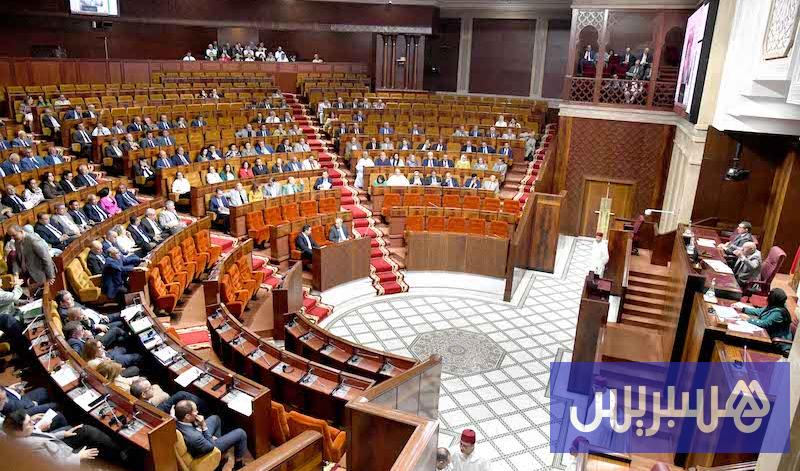
A senior source inside the Moroccan House of Representatives confirmed today, Thursday, that “the first parliamentary chamber is ready to undertake the role of mediation between those involved in the recent youth protests in Morocco and the government, aiming to find a collective solution that ensures the response to the demands presented on the national stage.”
The same source told Hespress that the youth movement known as “Gen Z 212” (GEN Z 212) is called upon to “provide clear spokespersons and official representatives capable of carrying the demands and negotiating seriously and responsibly with institutional parties,” stressing that “this phase requires engagement in dialogue and avoiding slipping into the unknown.”
The spokesperson explained that “the demands raised by a broad segment of youth remain legitimate overall, and they are the same issues discussed by the nation’s deputies under the parliamentary dome, mainly concerning social and economic matters, foremost among them social justice, equal opportunities, and improving health and education services as vital sectors.”
The same source, who preferred to remain anonymous, added that “the parliament, as a constitutional institution representing all Moroccans, makes itself available for any initiative that could bridge the divide, within the rights guaranteed by the constitution and the mechanisms of mediation and rapprochement,” considering that “this is the role of the parliament with its two chambers, and other constitutional institutions with the authority that must move specifically in this circumstance to contain a situation that no longer promises any good.”
Responding to a Hespress question about the lack of trust in institutions and the possibility of legal accountability for protest leaders despite their legitimate demands acknowledged by all, including the government, the source emphasized that “many guarantees will precede this matter,” noting that “this will confirm whether the spark of these protests comes from inside or outside,” according to his expression.
He pointed out that in “various protest dynamics in Morocco, including the February 20 movement, the state had interlocutors,” considering that “the transition from street protests to institutional interaction, through clear and responsible channels, is itself capable of bringing demands closer to their realistic implementation path and curbing dangerous excesses that occur.”
Others believe that the ball is now in the institutions’ court, primarily the parliament, the institution of the Ombudsman, and other spaces that can transfer the protest from the street and create new listening formats capable of keeping pace with changes in forms of expression and protest, especially amid what is now known as “digital generation protests,” where traditional organizational frameworks are absent.
Some leftist voices consider that “the movement, which reflects widespread social concern, cannot be isolated from the major choices and economic and political transformations the country is witnessing, and the rising local demand for social and economic rights and ensuring decent living amid ongoing difficulties caused by inflation, rising prices, and deteriorating living conditions.”



Recommended for you
Al-Jaghbeer: The Industrial Sector Leads Economic Growth
Egypt Post: We Have Over 10 Million Customers in Savings Accounts and Offer Daily, Monthly, and Annual Returns
Alternative to UNIFIL Forces
Talib Al-Rifai Chronicles Kuwaiti Art Heritage in "Doukhi.. Tasaseem Al-Saba"
Exhibition City Completes About 80% of Preparations for the Damascus International Fair Launch
Unified Admission Applications Start Tuesday with 640 Students to be Accepted in Medicine