








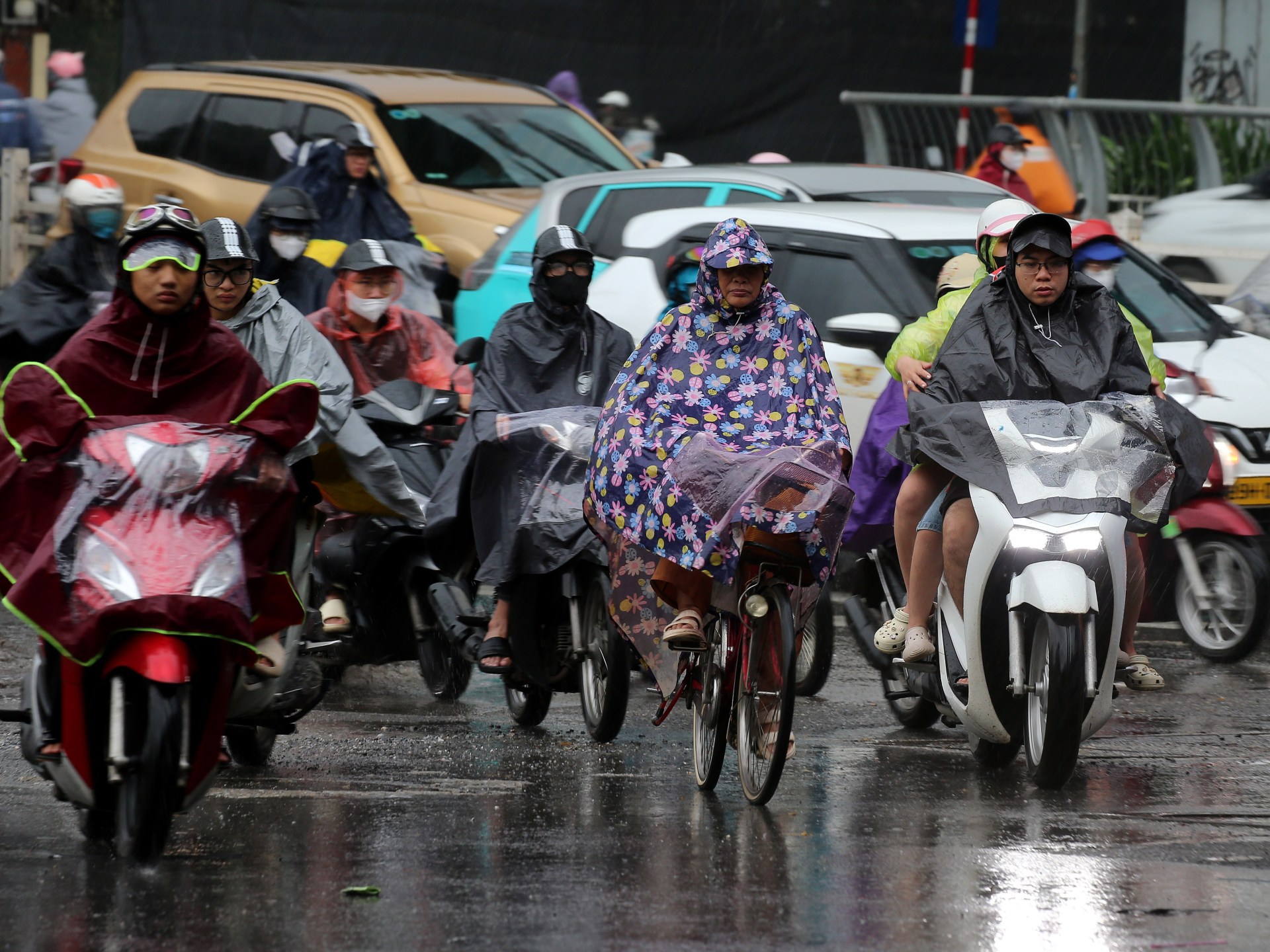
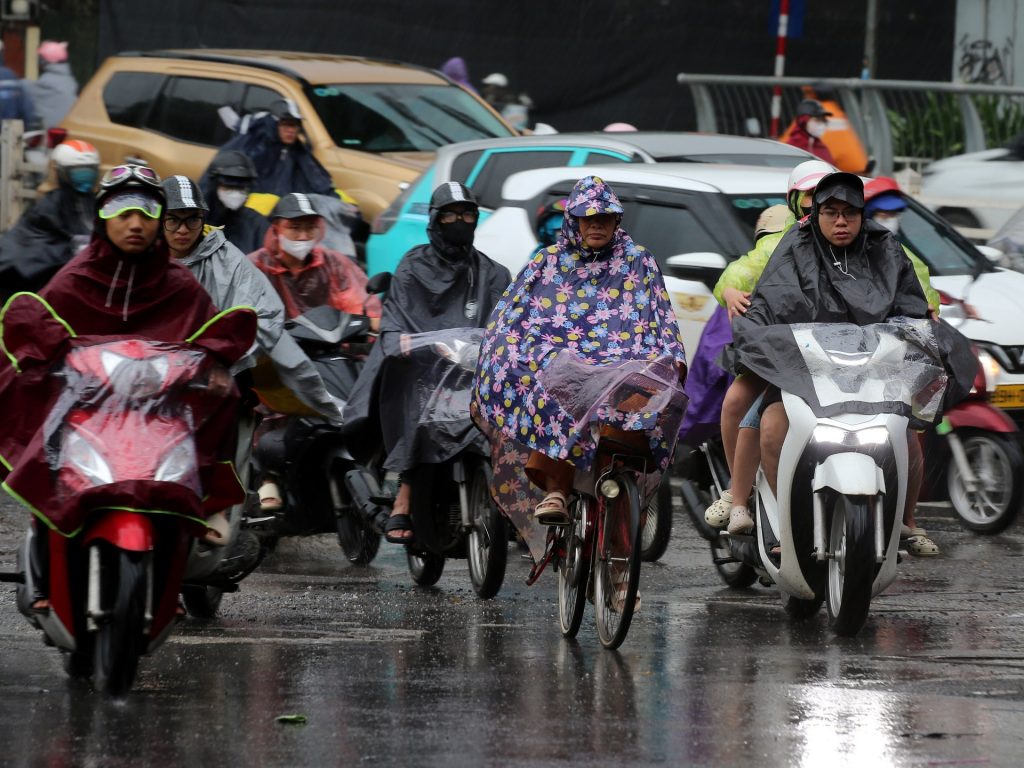
Vietnam evacuated thousands of people from central and northern provinces as Typhoon Bualoi made landfall early Monday, causing damage to homes and power grids, with at least one death reported and 12 fishermen missing.
The storm reached land in the northern coastal province of Ha Tinh and is expected to move inland before weakening, heading northwest toward the mountainous areas of Ha Tinh and neighboring Nghe An province.
More than 347,000 households lost electricity due to the storm, which is the tenth to hit Vietnam this year. Strong winds tore off corrugated metal roofs along the highway and toppled concrete poles.
In Phong Nha township, about 45 kilometers from Dong Hoi, residents described “terrible” storms with heavy rain. The city of Da Nang plans to relocate over 210,000 people, while Hue is preparing to move more than 32,000 coastal residents to safer areas.
Over 15,000 residents of Ha Tinh, a mining center, were moved to schools and medical centers converted into shelters. Civil aviation authorities suspended operations at four coastal airports, including Da Nang International Airport, rescheduling many flights.
About 117,000 military personnel were mobilized. Four national airports were closed, and all fishing boats in the storm’s path were ordered to return to ports.
Meteorologists warned of continued heavy rainfall until October 1, increasing the risk of flooding and landslides in northern and central regions.
Thanks to its long coastline facing the South China Sea, Vietnam is prone to typhoons often forming east of the Philippines.
Officials said Typhoon Bualoi caused at least 20 deaths in central Philippines since last Friday, mostly due to drowning and falling trees, and forced about 23,000 families to evacuate to more than 1,400 emergency shelters.
Bualoi was the second major storm threatening Asia within a week. Typhoon Ragas, one of the strongest storms in years, killed at least 28 people in northern Philippines and Taiwan before weakening over Vietnam last Thursday.
Experts say global warming is making storms like Wipha last July stronger and wetter because warmer oceans provide tropical storms with more energy, resulting in stronger winds and heavier rainfall.




Recommended for you
Al-Jaghbeer: The Industrial Sector Leads Economic Growth
Alternative to UNIFIL Forces
Talib Al-Rifai Chronicles Kuwaiti Art Heritage in "Doukhi.. Tasaseem Al-Saba"
Egypt Post: We Have Over 10 Million Customers in Savings Accounts and Offer Daily, Monthly, and Annual Returns
Exhibition City Completes About 80% of Preparations for the Damascus International Fair Launch
Trump Advisor: Disarming Hamas is Central.. Palestinian Authority to Take Over Gaza After Required Reforms