









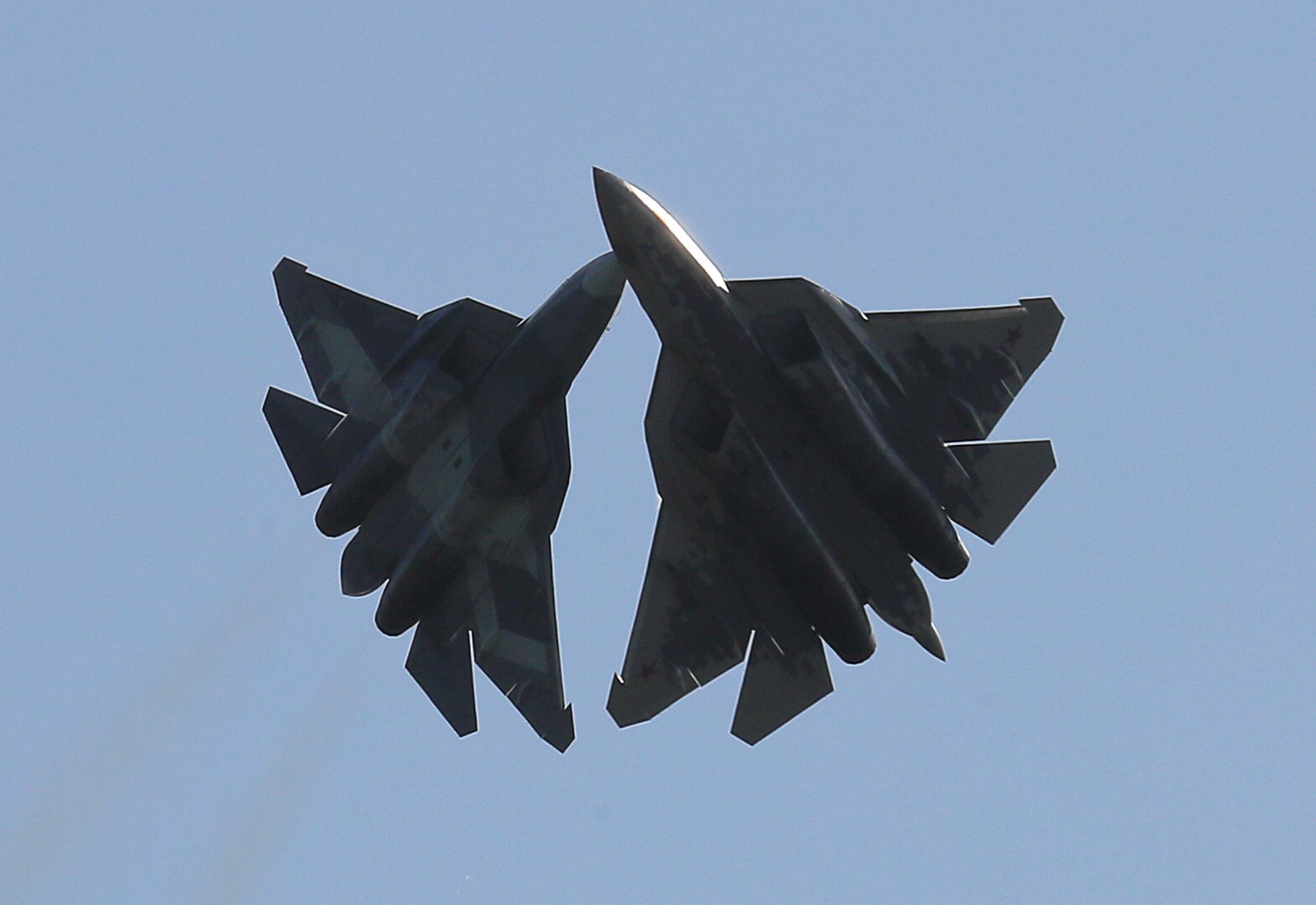
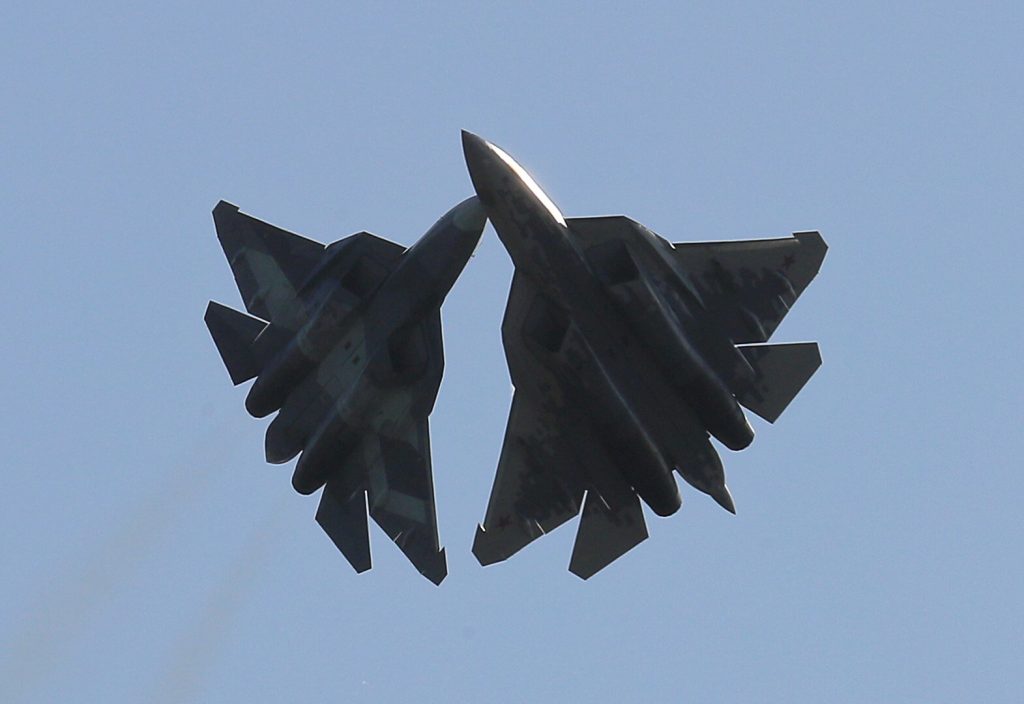
The National Interest magazine published an article by defense and national security expert Harrison Kass, discussing the deep crisis facing the Russian aviation industry that renders it unable to efficiently produce modern aircraft despite its engineering superiority.
The article particularly compares the stealth fighter Su-57, Russia’s first fifth-generation aircraft, with its American counterpart, the F-22.
The author argues that the problem with the Russian fighter lies not in the creative engineering minds but in the outdated manufacturing infrastructure that makes Russia’s production pace very slow compared to the United States and China.
He points out that the collapse of the Soviet Union in the early 1990s deprived factories of funding, forcing the state to merge them into large conglomerates like the United Aircraft Corporation, resulting in complex bureaucracy and a decline in human expertise after training programs stopped and a generation of veteran engineers and technicians retired.
According to the article, Russia relies on foreign components in developing its aircraft, especially electronics, avionics, and specialized materials.
Kass attributes Russia’s deprivation of these vital technologies and the disruption of supply chains, financing, and international partnerships to Western sanctions imposed after Russia annexed Crimea in 2014 and then launched a full-scale invasion of Ukraine in 2022.
However, he notes that even without sanctions, Russia remains behind in modern manufacturing technologies, lacking automated assembly lines, robotics, and additive manufacturing like those found in American companies such as Boeing and Lockheed Martin.
In this case, the article claims that Russian production still relies on slow manual labor, adding that the result is Moscow’s failure to convert prototypes into mass production despite successfully designing advanced aircraft like the Su-57.
The author concludes that Russia’s “deteriorating” economy and the Ukraine war, which drains money, resources, and workforce, do not help improve the situation.
He ends by saying that although Russia spends generously on defense relative to its GDP, its economy is much smaller than that of the United States or China, limiting its ability to expand aircraft production.




Recommended for you
Al-Jaghbeer: The Industrial Sector Leads Economic Growth
Alternative to UNIFIL Forces
Egypt Post: We Have Over 10 Million Customers in Savings Accounts and Offer Daily, Monthly, and Annual Returns
Talib Al-Rifai Chronicles Kuwaiti Art Heritage in "Doukhi.. Tasaseem Al-Saba"
Exhibition City Completes About 80% of Preparations for the Damascus International Fair Launch
Trump Advisor: Disarming Hamas is Central.. Palestinian Authority to Take Over Gaza After Required Reforms