









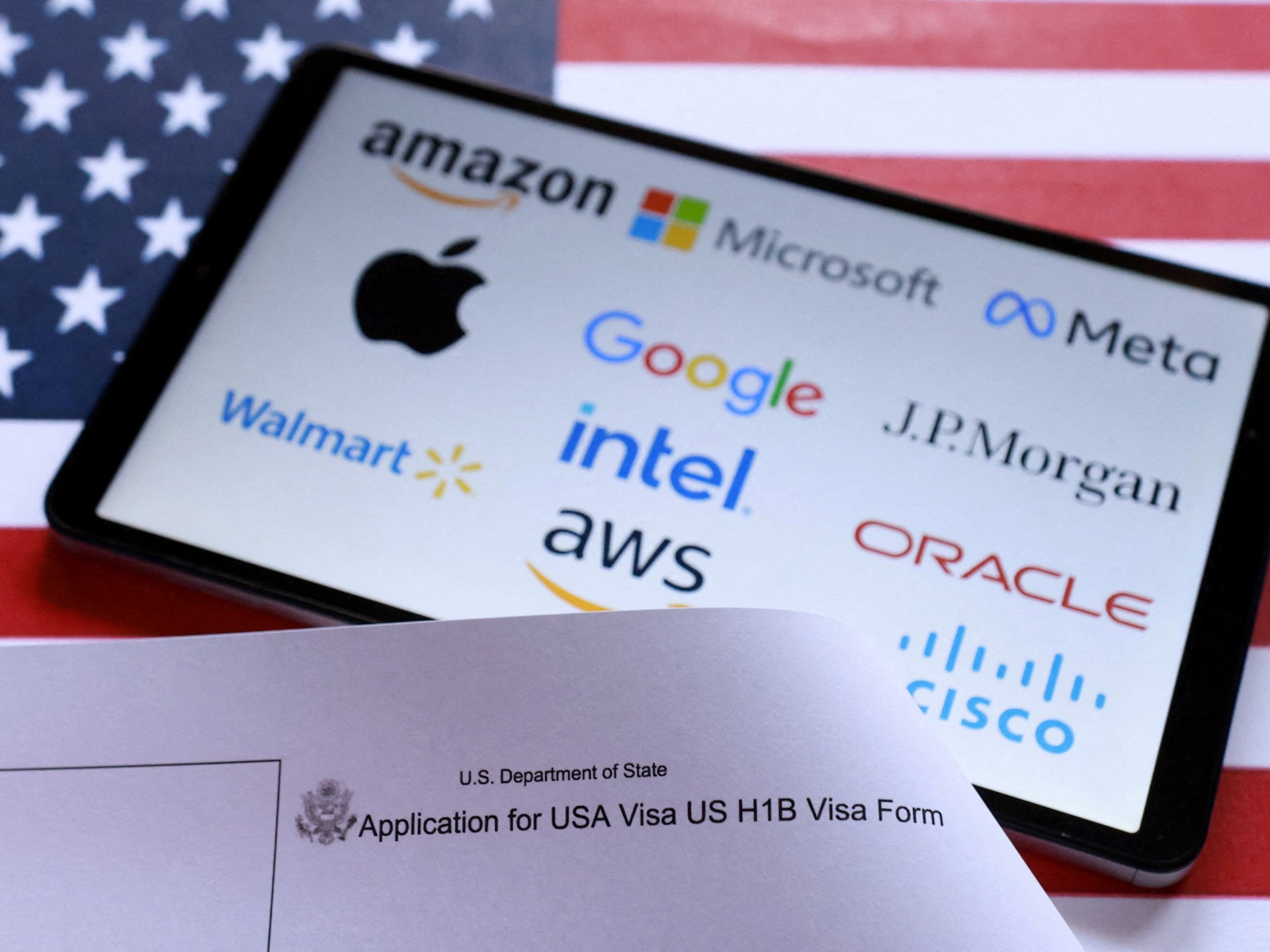
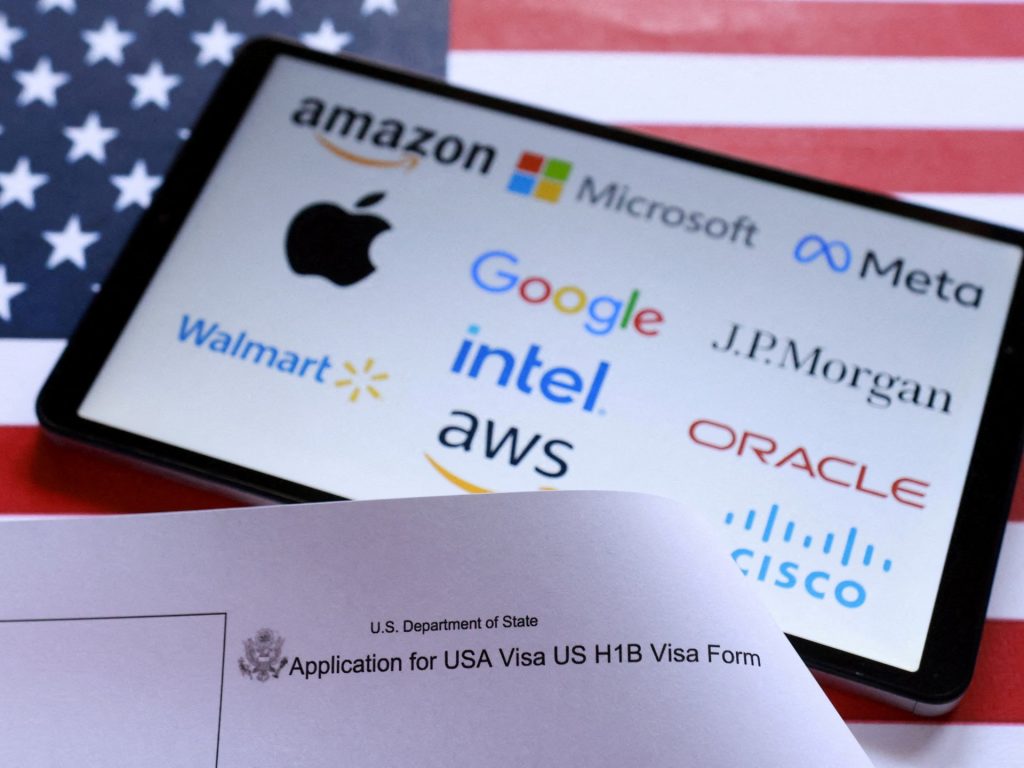
Debate continues in the United States over President Donald Trump’s sudden decision to impose a $100,000 fee on H-1B work visas, which allow companies to temporarily hire highly skilled foreign workers when local talent is unavailable. This decision has raised concerns among employers and workers inside and outside the US about its impact on companies, foreign workers, and the overall US economy.
According to the Department of Homeland Security, India leads in the number of H-1B visa holders, accounting for about 71% during fiscal year 2024, followed by China and the Philippines. Arabs hold a small share of 3,793 visa holders, led by Egyptians, Saudis, and Lebanese.
The majority of jobs are in computer-related fields, engineering, and education, with major tech companies like Amazon, Microsoft, Google, and Meta employing many visa holders. The highest average salaries are in legal, administrative, and IT fields.
The decision has sparked fears of a reverse brain drain, with skilled workers considering moving to countries like Canada and Germany, potentially weakening the US’s global competitiveness.




Recommended for you
Al-Jaghbeer: The Industrial Sector Leads Economic Growth
Egypt Post: We Have Over 10 Million Customers in Savings Accounts and Offer Daily, Monthly, and Annual Returns
Alternative to UNIFIL Forces
Talib Al-Rifai Chronicles Kuwaiti Art Heritage in "Doukhi.. Tasaseem Al-Saba"
Exhibition City Completes About 80% of Preparations for the Damascus International Fair Launch
Unified Admission Applications Start Tuesday with 640 Students to be Accepted in Medicine