











The internal political debate in Israel reveals a troubled scene heading towards increased political fragmentation and simmering tensions over the issue of detained prisoners and the broader war in the Gaza Strip, as well as regional files considered the true test that will determine the fate of the government and Israel’s position.
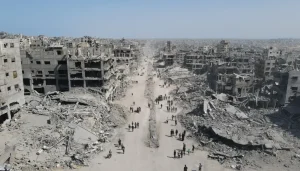
With the beginning of the attack on Gaza City as part of Operation Gideon Vehicles 2, approved by the Israeli Security Cabinet a few days ago, Israeli media revealed divisions at the political level and an unprecedented logistical and human crisis facing the Israeli army.
Document Leak
Haaretz newspaper revealed that an internal controversy erupted after the leak of a document prepared by Brigadier General (Reserve) Guy Hazut, head of the Operational Learning Center, describing Operation “Gideon Vehicles 1” as a failure, pointing to a series of failures and gaps in its management. Meanwhile, Yedioth Ahronoth reported that the document angered the army leadership, prompting the Ground Forces Commander Major General Nadav Lotan to officially reprimand Hazut.
According to Yedioth Ahronoth on Wednesday, the army is approaching the operation while suffering “massive erosion” in personnel and equipment, with about 40% of bulldozers unfit for combat use. The army also faces serious difficulties in securing spare parts for tanks and armored personnel carriers due to a prolonged war “unprecedented in its kind,” according to the newspaper. On another note, Maariv newspaper quoted former Navy Commander, retired Major General Eliezer Chenini, saying the Israeli army has begun relying on civilian contractors to compensate for the shortage of engineering equipment. He added that the occupation of Gaza City would be long and complex, describing the city as “almost the size of Tel Aviv, with high-rise buildings and an extensive tunnel network,” emphasizing that “evacuating the population is the essence of the matter.”
Despair and Anger
Leaked recordings from a tense meeting between Israeli Education Minister Yoav Kish and families of prisoners in Gaza revealed despair, anger, and a widening trust gap between Israelis and their government. In this context, the Israeli minister openly admitted the government’s international isolation and inability to manage the crisis, in a rare statement revealing the depth of the political crisis Israel is experiencing.
The meeting, whose recording was broadcast by Channel 12 on Tuesday, came amid escalating international and military pressures and the widening scope of the war, where family members directed harsh accusations at the minister and the government for “obstructing deals,” “causing the death of their loved ones,” and “acting detached from reality and international facts.”
The major shock in the recordings painted a picture of a paralyzed and uncoordinated government, according to the channel. The leaks were not just an ordinary dialogue but a document unveiling a deep governance crisis in Israel, where a senior Israeli minister admitted that the government is isolated and not in control of critical negotiations, which means — according to the channel — not only self-condemnation but a serious indicator of a split between the political leadership and the urgent popular will to end the crisis, pushing the fate of the prisoners, the future of the war, and Israel into a dark unknown.



Recommended for you
Al-Jaghbeer: The Industrial Sector Leads Economic Growth
Alternative to UNIFIL Forces
Egypt Post: We Have Over 10 Million Customers in Savings Accounts and Offer Daily, Monthly, and Annual Returns
Talib Al-Rifai Chronicles Kuwaiti Art Heritage in "Doukhi.. Tasaseem Al-Saba"
Exhibition City Completes About 80% of Preparations for the Damascus International Fair Launch
Trump Advisor: Disarming Hamas is Central.. Palestinian Authority to Take Over Gaza After Required Reforms