









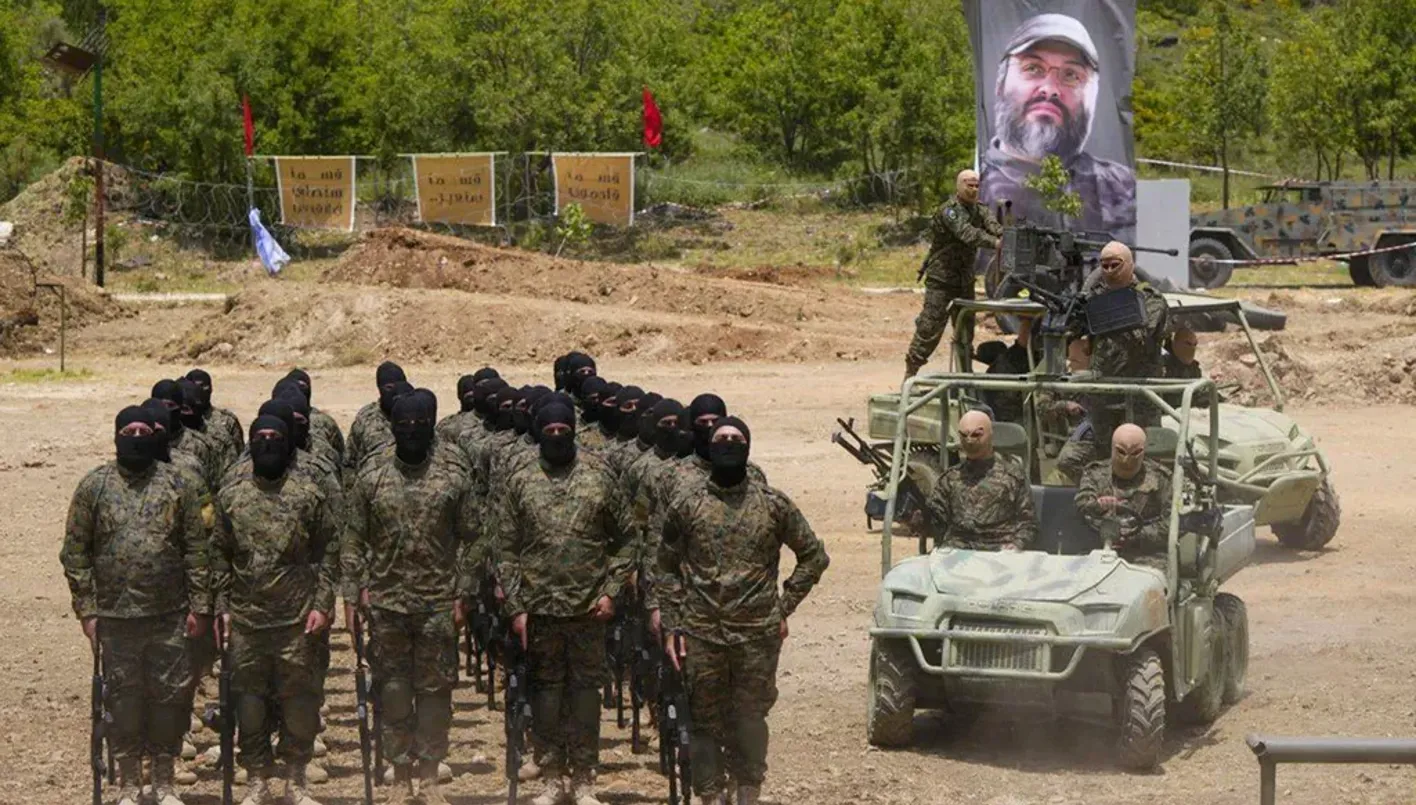

Hezbollah members during the Aramta maneuver (Nabil Ismail, archive).
On the second anniversary of the “Al-Aqsa Flood” operation on October 7, 2023, and following Hezbollah’s unilateral decision to open a “support front” that dragged it and Lebanon into a deadly war, the fundamental question resurfaces amid renewed confrontation possibilities: Who decides war in Lebanon? Can Hezbollah drag the country into conflict without an official state decision? This question goes beyond politics to the essence of sovereignty, law, and the constitution.
In this context, legal expert Youssef Abu Touma states, “The Lebanese constitution is clear and explicit in Article 65, which confines the decision of war and peace to the Council of Ministers convened. Any military action beyond legitimate self-defense cannot be issued except by an official documented decision accountable before parliament and the people. Accordingly, any party, regardless of its name or political position, that undertakes military action without government authorization is considered an aggressor against state powers and the principle of exclusive sovereign decision-making.”
He adds, “What is happening in reality is completely different. The party that retains its weapons outside the army’s authority acts according to decisions linked to considerations beyond Lebanese borders, connected to a regional axis led by Iran, meaning that the decision of war and peace is made outside Lebanese state institutions.”
He continues, “The Lebanese Penal Code in its articles (273 and following) criminalizes anyone who carries out warlike acts without assignment from the legitimate authority or exposes the country to aggressive acts. Thus, it can be said that any military action involving Lebanon in an external conflict without an official decision constitutes a crime against the state’s internal and external security. However, this rule remains theoretical because the Lebanese judiciary is unable to enforce it amid the dominance of political and military power balances and the absence of a national decision to impose the rule of law on everyone.”
The actual result of all the above is that the Lebanese state has become decisionless. The government neither declares war, stops it, nor determines its scope. The real decision is in the hands of one party, deciding when the fighting starts and ends, while official institutions merely issue “containment” or “position assessment” statements, as if they were an external party observing rather than a sovereign state.
In conclusion, legally, Hezbollah is responsible for any action that drags Lebanon into war outside the state’s will.
In reality, this responsibility is lost between fear, silence, and complicity.
But the fact remains that Lebanon, unless it settles who holds the decision of war and peace, will remain hostage to a war it may not want and a truce it does not decide.

Recommended for you
Talib Al-Rifai Chronicles Kuwaiti Art Heritage in "Doukhi.. Tasaseem Al-Saba"
Exhibition City Completes About 80% of Preparations for the Damascus International Fair Launch
Al-Jaghbeer: The Industrial Sector Leads Economic Growth
Unified Admission Applications Start Tuesday with 640 Students to be Accepted in Medicine
Egypt Post: We Have Over 10 Million Customers in Savings Accounts and Offer Daily, Monthly, and Annual Returns
His Highness Sheikh Isa bin Salman bin Hamad Al Khalifa Receives the United States Ambassador to the Kingdom of Bahrain