








October 7: Breaking the Narrative and the Beginning of a New Awareness
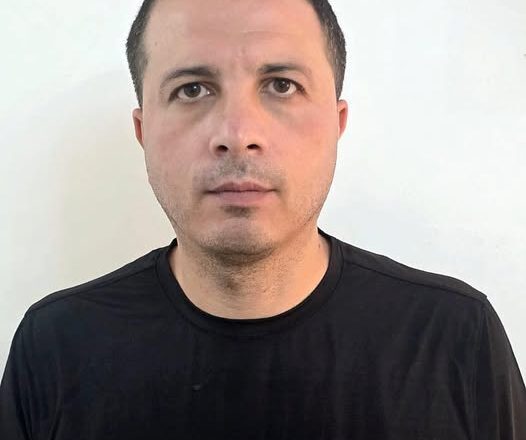
By freed prisoner Raed Nizar Abdel Jalil
In the history of peoples, there are pivotal moments not measured by weapons or equipment, but by their ability to ignite awareness and change collective imagination. October 7, 2023, was one such moment; it was not merely a surprise military attack, but a shock that shattered the myth of the invincible Israeli army and the undefeated state.
October was an event that transcended the military dimension. It was not just a “military operation,” but a philosophical, intellectual, psychological, cultural, and political text that reshaped many concepts related to occupation, resistance, and awareness. In a single moment, the grand narratives of occupation collapsed, and a new image of the Palestinian emerged in the collective consciousness: the actor, not the victim; the initiator, not the surrenderer.
Since its establishment, the Zionist movement relied on armed force as much as on “narratives”: Israel as the safe haven for Jews, its army capable of crushing any threat, and the iron wall that would make Arabs succumb to despair. This narrative was entrenched in the Arab and Palestinian imagination after the defeats of 1948 and 1967, making liberation seem like an illusion.
But October 7 exploded these myths. The attack not only exposed the fragility of the Israeli security system but showed that deterrence was no longer absolute, and that the Palestinian is capable of creating a historic event that overturns awareness and redefines the possible.
The Scene of Submission: A Picture Rewriting History
One of the strongest moments of that day was the image of the fully armed Palestinian fighter while occupation soldiers raised their hands in surrender.
For many years, the Palestinian was portrayed as a victim: a martyr or prisoner before a superior soldier. But October 7 reversed the image: the Israeli soldier kneeling, the Palestinian fighter standing tall.
This image was not just a fleeting scene but became a symbol redefining the relationship between victim and oppressor. It is proof that prestige is built by deeds, not propaganda, and that the Palestinian can move the conflict from “reaction” to “initiative.”
Palestinian-wise: the discourse of defeat declined and the sense of ability and initiative rose. The fighter was no longer just a symbol of sacrifice but became a symbol of historic action.
Arab-wise: the image of Israel as a guarantor of security and prestige for regimes collapsed, and the Palestinian action became recognized without doubt.
Western-wise: the image of Israel as a “besieged democracy” declined, replaced by the image of an “apartheid state” committing genocide, paving the way for a wave of recognitions of the State of Palestine from Britain, France, Canada, and Australia.
Gaza: The Pain Revealing the Fragility of Occupation
Despite the massacres, genocide, and the suffering and destruction experienced by our people in Gaza, what the occupation pours on the Strip is only an implicit acknowledgment that what happened in October was not a passing war but an existential war affecting the fate of the Zionist project itself.
Netanyahu understands that Zionism cannot live with the “other,” and that the mere existence of the Palestinian, whether Arab or human, means its project is incomplete. October 7 confirmed that this other is not only present but is an initiator capable of historic action.
Israeli Testimonies Reveal the Breakdown
- The Israeli army admitted a strategic failure in anticipating the attack and that technology and intelligence did not protect civilians.
- Itai Brun, former head of military intelligence analysis: “The breaches were at a strategic level, and changing personnel is not enough to fix them.”
- Meyer Ben Shabbat, former head of the National Security Council: “The October 7 operation shattered Israeli deterrence.”
- Newspapers like Haaretz described Palestinians as “the best defenders of their homelands,” confirming that their 75 years of steadfastness made resistance a collective unbreakable act.
- Frantz Fanon: Resistance is not just a military confrontation but the birth of a new human reclaiming dignity from the heart of battle. The Palestinian today embodies this transformation from “victim” to “historical actor.”
- Mohammed Abed Al-Jabri: Called for rebuilding the Arab political mind away from alienation. October 7 was a living critique of this alienation and the beginning of a new liberating mind.
- Ali Shariati: Considered resistance a civilizational project before being military, embodied by the Palestinian scene today.
- Edward Said: Clarified that the conflict with Israel is not only geographical but a conflict of narratives and representations. The moment of October 7 broke the image of the Palestinian as a helpless victim and reproduced him as a historical actor.
- Marwan Barghouti: From inside prison cells, he always reminded us that true power is not only in arms but in awareness and political will. He himself wrote that “freedom is not a distant dream but a daily act, its resistance begins from the mind before weapons or politics.” These words summarize the essence of what October 7 represented: that historic action begins with awareness before the bullet.
- Che Guevara: Revolution is “awareness before being a weapon,” a phrase summarizing what October 7 ignited in collective consciousness.
- Eduardo Galeano: Wrote about the “memory of fire” that fuels peoples. The image of the Palestinian fighter, along with images of destruction and pain, became a living memory that will be passed to future generations.
From Fanon to Edward Said: The Intellectual Approach
Finally
October 7 did not only change the balance of power but broke the narrative dominance that Israel had built for decades. Images of soldiers’ submission, leaders’ admissions of deterrence failure, and their newspapers’ articles praising Palestinian courage are all evidence of the birth of a new awareness.
But the greatest challenge is to transform this awareness into a long-term liberation project that combines political, cultural, and field resistance within a comprehensive national work, under a unified strategy based on national unity and aimed at liberation.
October was not just a military act but a philosophical, intellectual, psychological, cultural, and political text that changed many concepts related to occupation, resistance, and awareness. As Antonio Gramsci said: “Pessimism of the intellect, optimism of the will.”
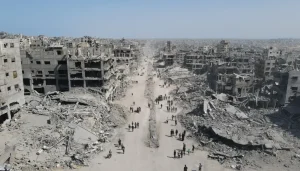
Despite images of destruction, death, hunger, and endless pain, this deep pain will not be the end but the seed of a beginning. From it will emerge a homeland and a state; this is a historical inevitability.


Recommended for you
Talib Al-Rifai Chronicles Kuwaiti Art Heritage in "Doukhi.. Tasaseem Al-Saba"
Al-Jaghbeer: The Industrial Sector Leads Economic Growth
Exhibition City Completes About 80% of Preparations for the Damascus International Fair Launch
Unified Admission Applications Start Tuesday with 640 Students to be Accepted in Medicine
Egypt Post: We Have Over 10 Million Customers in Savings Accounts and Offer Daily, Monthly, and Annual Returns
His Highness Sheikh Isa bin Salman bin Hamad Al Khalifa Receives the United States Ambassador to the Kingdom of Bahrain