









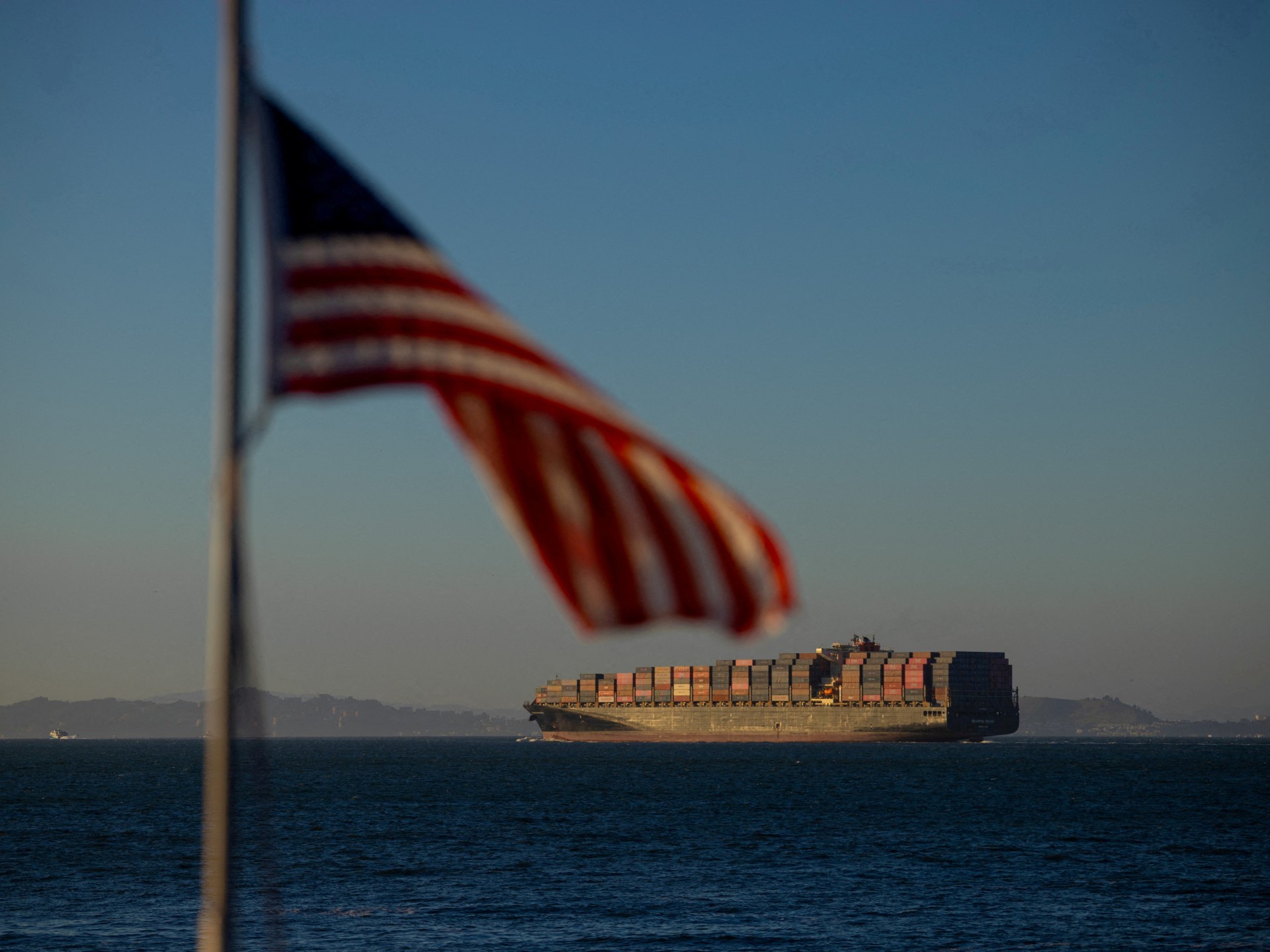
The United States has threatened to impose visa restrictions and sanctions in response to countries voting in favor of a plan proposed by the International Maritime Organization (IMO) to reduce greenhouse gas emissions from maritime shipping.
US officials said in a statement that the United States is considering retaliatory measures against United Nations member states that support the plan.
This could include barring ships flying those countries’ flags from entering US ports, imposing visa and fee restrictions, and sanctioning officials “who support climate policies driven by activists,” according to the statement.
US Secretary of State Marco Rubio, Energy Secretary Chris Wright, and Transportation Secretary Sean Duffy said in a joint statement: “The administration firmly rejects this proposal before the IMO and will not tolerate any action that increases costs on our citizens, energy providers, shipping companies and their customers or tourists.”
The statement added that “the proposal poses significant risks to the global economy and subjects not only Americans but all IMO member states to an unauthorized global tax system imposing punitive and retroactive financial penalties.”
Next week, UN member states are scheduled to vote on the IMO’s proposed framework for net-zero emissions to reduce global carbon dioxide emissions from the international shipping sector, which handles about 80% of global trade and emits nearly 3% of global greenhouse gases.
Major container shipping companies, facing pressure from investors to combat climate change, generally agree that a global regulatory framework is critical to accelerating decarbonization. However, some of the world’s largest oil tanker companies have expressed “serious concerns” about the proposal.
Supporters of the IMO proposal argue that without global regulation, the shipping industry will face a patchwork of rules and rising costs without effectively reducing greenhouse gas emissions.
In April, UN member states of the organization reached a historic agreement aimed at reducing carbon emissions in the maritime shipping sector, while the United States withdrew from the negotiations.
Under this agreement, fees will be imposed on ships that exceed emission limits, while rewards will be given to ships that use clean fuels and comply with environmental standards.
A fine of $380 will be imposed for each ton of carbon dioxide emissions exceeding the set limit, plus an additional $100 fine for each ton emitted above the highest reduction level.
These measures are set to be officially adopted following a meeting in October 2025 and will come into effect in 2027. They will be mandatory for large ocean-going vessels weighing over 5,000 tons, which account for 85% of total carbon dioxide emissions from international shipping.
According to the baseline reduction level adopted in the agreement, ships will be required by 2030 to reduce fuel emission intensity by 8% compared to 2008, while the higher reduction level requires a 21% cut. By 2035, these percentages will rise to 30% and 43%, respectively.




Recommended for you
Talib Al-Rifai Chronicles Kuwaiti Art Heritage in "Doukhi.. Tasaseem Al-Saba"
Exhibition City Completes About 80% of Preparations for the Damascus International Fair Launch
Al-Jaghbeer: The Industrial Sector Leads Economic Growth
Unified Admission Applications Start Tuesday with 640 Students to be Accepted in Medicine
Egypt Post: We Have Over 10 Million Customers in Savings Accounts and Offer Daily, Monthly, and Annual Returns
His Highness Sheikh Isa bin Salman bin Hamad Al Khalifa Receives the United States Ambassador to the Kingdom of Bahrain