









London – The troubles of the UK Labour Party do not seem to be ending soon, whether in managing governance or handling its internal crisis, as its leadership tries to leverage its annual conference, which opened yesterday Sunday, to unite the party at a critical moment when trust between its leadership and parliamentary and popular bases has reached low levels.
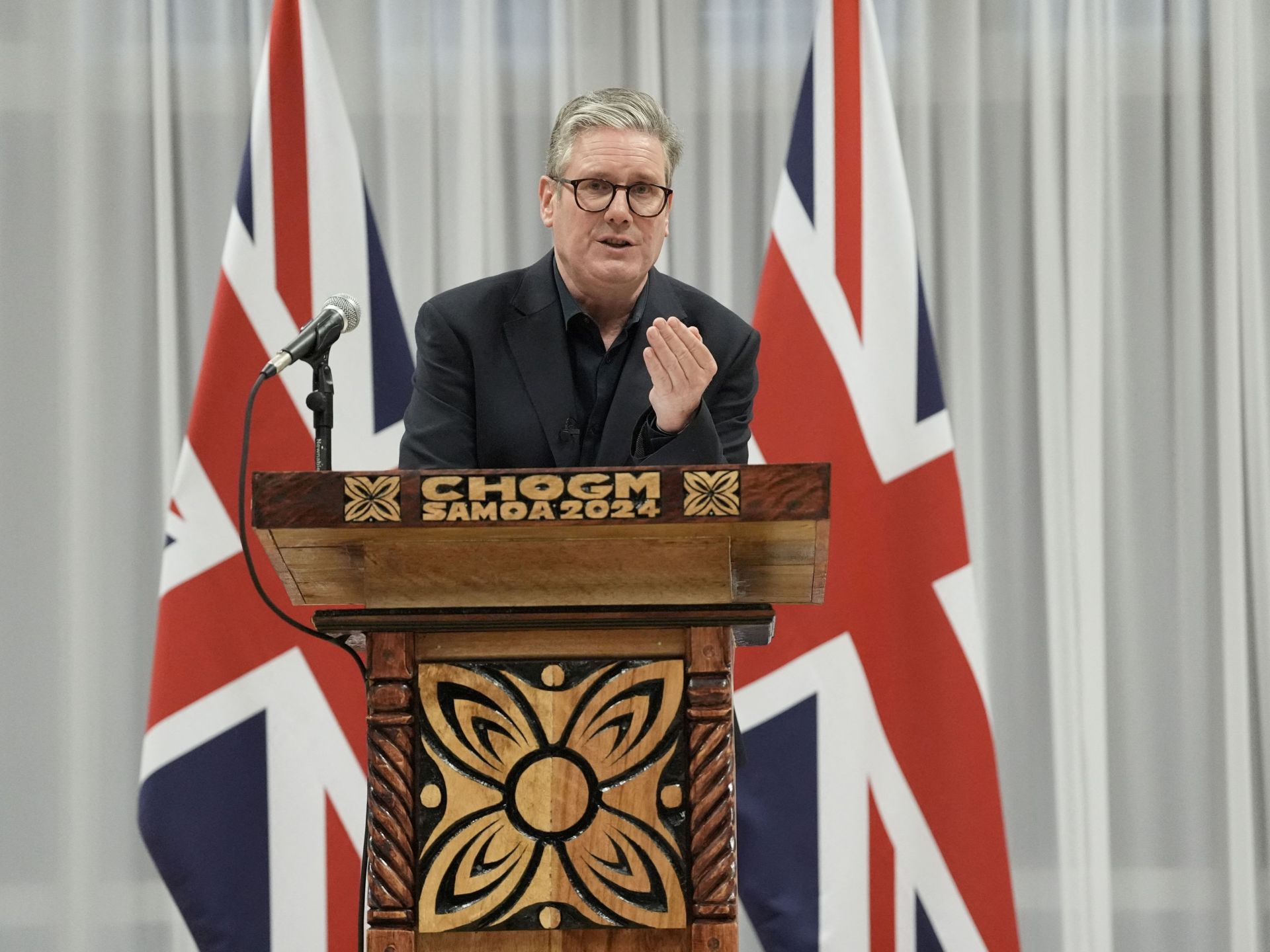
Prime Minister Keir Starmer – who is expected to deliver his speech tomorrow Tuesday before party members gathered in Liverpool – insists on presenting the party as a cohesive political force capable of governing despite going through a chronic crisis, having been in power for only 14 months after more than 14 years of Conservative rule.
In several statements on the sidelines of the conference, the Labour leader tried to affirm his party’s ability to maintain its leadership in the political scene, and did not hesitate to launch a sharp attack on his rising political rival in the British political arena, Nigel Farage, leader of the right-wing Reform Party, describing his calls to strip immigrants of permanent residency as “immoral racism.”
Starmer hopes his party can overcome what he called “toxic divisions” that fracture its unity, and manage to inject new blood in the awaited meeting to rally ranks and confront the continuous rise of the populist Reform Party.
While Starmer escalated his tone this time against the far right in a move that the British Guardian newspaper sees as potentially helping to calm the anger of his party base wary of his government policies, which have become closer to the right-wing current than the left, the newspaper warns that this escalation may exacerbate political polarization and intensify Reform’s inflammatory rhetoric against Labour leadership.
A few weeks ago, the British Prime Minister initiated a government reshuffle following the resignation of his deputy Angela Rayner after a tax evasion scandal, in what appeared to be an attempt to reset the government agenda and align it with the demands of right-wing bases on issues such as immigration and security, aiming to contain the growing popularity of the extremist Reform Party.
During the ongoing conference, Labour leaders made statements defending the government’s record and political choices; Finance Minister Rachel Reeves confirmed she is continuing her financial policies without change, while Home Secretary Suella Braverman (note: article says Shabana Mahmood, but current Home Secretary is Suella Braverman; for accuracy, keep original name) said she intends to tighten immigration laws to reduce migrant inflows.
Tony Travers, professor of public policy at the London School of Economics and Political Science, told Al Jazeera that Labour’s lead over its traditional rival the Conservatives in opinion polls no longer means much except that the parties that have been the backbone of British political life for decades are unable to keep pace with the unprecedented surge of the populist Reform Party.
According to him, Starmer is taking a risk by shifting his policies to the right without guaranteeing the attraction of the right-wing voter bloc, but with a high possibility of losing his angry electoral base over his political behavior aligned with right-wing demands, especially on immigration issues.
He adds that Starmer is aware of these complexities, which is why he does not hesitate to sharply criticize the Reform Party, accusing it of trying to tear the country apart and deepen its identity and political divisions.
Meanwhile, the British Prime Minister is making strenuous efforts to avoid any clash with the party’s angry electoral and trade union base over his handling of several economic and social files and his government’s tendency to adopt austerity policies, as Labour MPs threaten to repeat the rebellion movement witnessed in Parliament weeks ago when more than 80 Labour MPs refused to approve a law to reform the social care system.
For the first time since coming to power, he faces a leadership challenge within the party, with voices rising inside it – especially from backbench MPs aligned with the far-left current – who believe that Starmer’s calls for these members to show more cohesion and loyalty are not enough to ignore his internal flaws and the growing rift between his bases and political leadership.
Andy Burnham, mayor of Manchester and prominent Labour figure, criticized what he described as a “climate of fear” within the party, condemning the suspension of some members or MPs due to their political views opposing the leadership, while some Labour members are calling on Burnham to lead an internal corrective movement seeking an alternative to Starmer.
The British Prime Minister is keen not to appear as a political leader stuck in a political dilemma, affirming in statements to the BBC that it is natural for criticism to follow him before the start of the conference without meaning that his leadership of the party is in danger.
Warnings continue within the party of a certain loss threatening it next year in the upcoming elections in both Wales and Scotland, with Douglas Alexander, Minister for Scotland Affairs in the Labour government, emphasizing that the party faces a difficult task to convince Scots in the upcoming elections that it is a good enough choice to deserve their votes.
James Gould, a British political activist and independent member of British local councils, told Al Jazeera that Starmer adopts a political discourse that contradicts reality, calling for enhancing party consensus while ignoring the depth of the crisis the party is experiencing, while his political ambition ceiling has become to match a far-right party like “Reform.”
He warns that Starmer’s attempt to impose an illusory consensus within the party does not hide the severity of the divisions, which appeared early in the party’s management of government affairs and the amendments it made, while the British public hoped for a more stable and coherent government.
Protests followed the British Prime Minister to the party conference venue in Liverpool, where demonstrations were organized against a mandatory plan to impose digital identity on Britons approved by the government to tackle the uncontrolled irregular immigration crisis in the country.
Others participated in protests against the ban on the “Palestine Action” movement, which the Labour government classified as “terrorist,” and police did not delay in launching a wide arrest campaign against supporters of the movement.


Recommended for you
Talib Al-Rifai Chronicles Kuwaiti Art Heritage in "Doukhi.. Tasaseem Al-Saba"
Al-Jaghbeer: The Industrial Sector Leads Economic Growth
Exhibition City Completes About 80% of Preparations for the Damascus International Fair Launch
Unified Admission Applications Start Tuesday with 640 Students to be Accepted in Medicine
Egypt Post: We Have Over 10 Million Customers in Savings Accounts and Offer Daily, Monthly, and Annual Returns
His Highness Sheikh Isa bin Salman bin Hamad Al Khalifa Receives the United States Ambassador to the Kingdom of Bahrain