









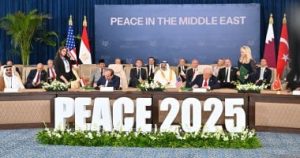
Will history record that on Monday, October 13, 2025, an agreement was signed in the Egyptian city of Sharm El-Sheikh declaring the end of the “genocide war” waged by Israel on the Gaza Strip over the past two years, which claimed the lives of more than 70,000 Palestinians, with many more wounded and missing, and destroyed all means of life for the Palestinians?
This question carries the weight of a tragedy that has lasted 77 years, marked only by wars, killings, destruction, expansion, Judaization, deprivation of rights, human rights violations, and breaches of all international laws and charters.
Therefore, the entire world, especially the Arab world, stands in anticipation, hope, and expectation that what was signed in Sharm El-Sheikh will be the beginning of a peace process and a step towards ending the suffering, placing the region on the path to a historic settlement that achieves security, peace, and justice.
Ibn Khaldun said, “History in its apparent form is nothing but information, but in its essence, it is insight and investigation.” What has been achieved so far is information and declaration, while its essence remains unknown in the realm of the unseen until positions become clear and the true intentions behind this agreement emerge, especially since one direct party, Israel, does not hide its intentions as the victor and is ready to translate its “victory” into more extremist positions that undermine everything announced in the agreement. Another indirect party, the United States, views peace from an Israeli perspective and considers the agreement a “stunning victory for Israel and the world… and the dawn of a historic new Middle East,” as U.S. President Donald Trump said yesterday in the Israeli Knesset.
Is this “new Middle East” the one Benjamin Netanyahu called for through his wars on Gaza, Lebanon, Syria, and Yemen over the past two years? Or is it a new Middle East where the region enjoys lasting and comprehensive security and peace, and justice is achieved through the implementation of UN resolutions, foremost of which is the establishment of an independent Palestinian state agreed upon by the world, thus “the nightmare is over… and peace is no longer just a hope,” as Trump himself said?
We stand at a pivotal moment in the region’s history: either we approach true peace, where Israel and its allies realize that continuous escalation cannot lead to lasting gains and that wars will not guarantee security even if they possess the most advanced weapons, or we enter a game of “crisis management” instead of solving it, meaning controlling the rhythm of the conflict and keeping the region unstable between calm and confrontation.
Importantly, President Trump, Egyptian President Abdel Fattah El-Sisi, his Turkish counterpart Recep Tayyip Erdoğan, and Qatar’s Emir Sheikh Tamim bin Hamad Al Thani signed the comprehensive document on Gaza during a summit that gathered several Arab and foreign leaders. The U.S. president described it as a “very comprehensive document that will clarify rules and regulations,” adding, “Ultimately, we reached a solution to this issue that has lasted more than three thousand years… this was perhaps one of the most difficult conflicts in the world,” but he did not specify the rules and regulations he mentioned, nor whether the solution would stop at Gaza or expand to include the entire Palestinian issue.

Recommended for you
Al-Jaghbeer: The Industrial Sector Leads Economic Growth
Egypt Post: We Have Over 10 Million Customers in Savings Accounts and Offer Daily, Monthly, and Annual Returns
Alternative to UNIFIL Forces
Talib Al-Rifai Chronicles Kuwaiti Art Heritage in "Doukhi.. Tasaseem Al-Saba"
Exhibition City Completes About 80% of Preparations for the Damascus International Fair Launch
Trump Advisor: Disarming Hamas is Central.. Palestinian Authority to Take Over Gaza After Required Reforms