








A victory in words but a defeat in reality
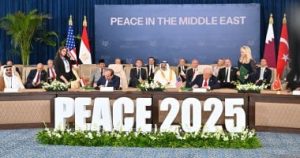
Finally, the first phase of a truce agreement between Israel and Hamas was announced, under the direct sponsorship of US President Donald Trump. It includes the release of a number of Israeli hostages in exchange for hundreds of Palestinian prisoners, and a partial withdrawal of Israeli forces from some areas of Gaza.
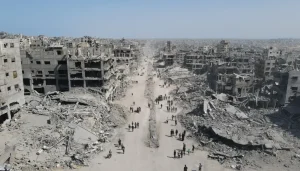
The agreement came after two years of fighting that destroyed almost everything in the Gaza Strip, leaving thousands dead and wounded in a war that brought nothing new but pain.
Yet, as always, Hamas quickly rushed, and its supporters here will rush, to present this truce as a “new victory,” and media close to it will start talking about a “major political victory,” while the truth is that what happened is nothing but a desperate attempt to save face after two years of tragedies and defeats.
This is not the first time failure has been turned into heroism. For years, the political Islamist discourse has lived on such verbal victories that translate into nothing in reality. It is a logic based more on illusion than on politics. Every loss can be presented as evidence of steadfastness, and every retreat marketed as a step towards liberation. However, numbers, facts, and blood do not lie: Gaza today is more destroyed, poorer than ever, and more isolated from the world than at any previous stage. So how can one talk about victory amid this devastation?
The announced truce, as is clear from its details, did not fundamentally change the balance of power. It is merely a temporary pause imposed by political necessity on both sides: Israel, which wants to recover its captives and improve its international image, and Hamas, which needs any achievement it can market to its public after a long series of disasters. Each side tries to exploit the moment in its own way, but the weaker side—as usual—pays the highest price.
Although this agreement was presented in the media as the result of a “successful Qatari mediation,” the real role Doha plays in this file is no longer a secret. Qatar, which presents itself as an honest mediator, is not so in reality. It is an active party in producing the crisis more than it is part of its solution. For years, Qatar has used political Islam as a tool of regional influence. This small state, whose size and location do not allow it to be a major player, found in sponsoring Islamic movements its guaranteed way to stay relevant. Through its media empire, it succeeded in creating a coherent discourse linking victimhood and heroism, steadfastness and victory, even if the result on the ground is complete devastation.
Now, with Trump’s new agreement, Doha repeats the same approach: it presents itself as an essential mediator that cannot be bypassed and adds a humanitarian dimension to the deal to hide the depth of political calculations. But it knows, as everyone does, that the continuation of the crisis is a condition for its staying in this role. The longer the bleeding lasts, the more important the mediator becomes. And whenever war returns, Qatar returns to the forefront. For this reason, no real efforts are made to end the tragedy, but rather to manage it and prolong its lifespan.
The media discourse supporting Hamas and Qatar is now operating at full capacity, and surely we are set for headlines of “great victory” that will top newspapers and news bulletins, with analysts talking about a “new phase of the conflict,” while the truth is that nothing has changed. The destroyed Gaza Strip will remain under siege, Israel still holds the keys to the crossings, air, and sea, the Palestinian economy is in total collapse, and the world watches from afar a people suffocating under its rubble. But the propaganda scene will insist that what happened is a victory. A victory in words only, not in reality.
The tragedy is that this discourse deceives no one as much as it deceives itself. People in Gaza know the truth. They know that the leadership speaking on their behalf has no political vision and bets on the media to compensate for the legitimacy it has lost. They know that victory is not achieved by releasing prisoners in exchange for hostages, but when wars stop and a country can be built that can be called a homeland. They know that those who invest in their blood to prove their presence are not leaders but spectators of destruction from afar.
Yes, what is happening in Palestine is historic injustice and ongoing colonization, and Israel’s responsibility for the continuation of the tragedy cannot be denied. But confronting occupation does not justify political blindness, nor does it give anyone the right to turn people’s tragedy into a commodity in the regional influence market. Resistance is not measured by the number of martyrs or the size of the rubble, but by its ability to protect people and turn steadfastness into a possible life, not continuous death.
What Palestine needs today is not a new mediator, nor a truce granted in exchange for symbolic concessions, nor a discourse that sells illusion in the name of heroism. It needs leadership that understands the world as it is, not as it imagines it. Leadership that knows dignity is not restored by slogans, and that politics is not betrayal but a means of survival. Every truce marketed as a victory, every deal presented as a “clear victory,” is just a new chapter of collective deception that the innocent pay for.
Tomorrow, when the photos of the released prisoners are published, the media will applaud, and the same phrases will be repeated: “Gaza has won.” But in the background, the destruction will remain a witness to the truth that needs no translation: we are facing a new defeat, only this time it was presented in a more elegant language.

Recommended for you
Talib Al-Rifai Chronicles Kuwaiti Art Heritage in "Doukhi.. Tasaseem Al-Saba"
Exhibition City Completes About 80% of Preparations for the Damascus International Fair Launch
Unified Admission Applications Start Tuesday with 640 Students to be Accepted in Medicine
Al-Jaghbeer: The Industrial Sector Leads Economic Growth
Egypt Post: We Have Over 10 Million Customers in Savings Accounts and Offer Daily, Monthly, and Annual Returns
His Highness Sheikh Isa bin Salman bin Hamad Al Khalifa Receives the United States Ambassador to the Kingdom of Bahrain