






With the ceasefire in Gaza coming into effect through Egyptian efforts, the United Nations called for rapid reconstruction and recovery to assist hundreds of thousands of displaced people exhausted by the war.
The World Health Organization (WHO) reported that approximately 42,000 people in the Gaza Strip suffer from injuries that have changed the course of their lives due to the war, with a quarter of these injuries occurring among children.
Dr. Rick Bebberkorn, WHO representative during his visit to Al-Amal Hospital in Khan Younis, stated that in the occupied Palestinian territories, the number of injured in Gaza exceeds 169,000, with a quarter requiring lifelong assistive equipment and technology due to their injuries, including more than 10,000 children.
The UN official said WHO will focus on rehabilitation during the early recovery and reconstruction phase, stressing the importance of supporting facilities like Al-Amal Hospital to provide appropriate healthcare and rehabilitation services.
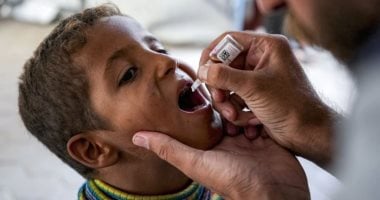
A UN media center report highlighted the story of Palestinian child Mohammed Al-Masri, who fell while trying to carry a heavy water container he had to carry multiple times due to water scarcity in Gaza. This time, he was unable to move. His father rushed him to the hospital where he was admitted to intensive care and diagnosed with Guillain-Barré syndrome.
Dr. Faiza Barqan, a physiotherapy specialist at Al-Amal Hospital affiliated with the Palestinian Red Crescent in Khan Younis, southern Gaza Strip, said that cases of Guillain-Barré syndrome (GBS) have spread widely in Gaza due to the war, especially among children.
According to the UN, Guillain-Barré syndrome is a rare disorder where the body’s immune system attacks the nerves, potentially leading to near-total paralysis. The increase in cases in Gaza may be linked to poor sanitation, malnutrition, lack of clean water and food, creating an environment conducive to infectious diseases that can cause this disorder.
Dr. Faiza added that the cases received by the internal medical rehabilitation department at Al-Amal Hospital require full rehabilitation, such as spinal injuries, strokes, and GBS, with patients fully dependent on others.
She emphasized that the goal is to treat and rehabilitate patients so they can leave the hospital able to rely on themselves for daily activities.
All this occurs amid many challenges faced by the hospital due to the two-year war, including the malfunction of most “electronic beds” and shortage of assistive devices for patients.
Dr. Faiza mentioned that the condition of Mohammed, who was admitted completely immobile and unable to sit, stand, or walk, is now improving as he performs some physiotherapy exercises with the help of specialists at the hospital.


Recommended for you
Talib Al-Rifai Chronicles Kuwaiti Art Heritage in "Doukhi.. Tasaseem Al-Saba"
Exhibition City Completes About 80% of Preparations for the Damascus International Fair Launch
Al-Jaghbeer: The Industrial Sector Leads Economic Growth
Unified Admission Applications Start Tuesday with 640 Students to be Accepted in Medicine
Egypt Post: We Have Over 10 Million Customers in Savings Accounts and Offer Daily, Monthly, and Annual Returns
His Highness Sheikh Isa bin Salman bin Hamad Al Khalifa Receives the United States Ambassador to the Kingdom of Bahrain