








After 19 years of captivity and 4 years since a daring operation shook Israel’s security system, Ayham Kamamji and Mahmoud Al-Ardah finally breathed the air of freedom.
With the release of prisoners Al-Ardah and Kamamji, a new chapter in the story of the “Freedom Tunnel” is completed, a story that engraved the names of six prisoners forever in the Palestinian memory.
From the town of Kafr Dan west of Jenin, Ayham Kamamji (born 1986) entered the world carrying the pain of the land, and today he returns after spending half his life behind bars, sentenced to two life terms plus five additional years.
Kamamji was re-arrested two weeks after his escape from Gilboa prison in September 2021, when he and five comrades executed the “Freedom Tunnel” operation that embarrassed Israel and ignited the Palestinian and Arab streets.
During his pursuit, he survived two assassination attempts before Israeli forces arrested him in Jenin. His goal, as he later said, was to reach his mother’s grave, who passed away while he was imprisoned in 2019.
Kamamji lost his mother and his brother Shaas, who was killed in 2022 by Israeli army gunfire. His siblings were repeatedly arrested, but he remained steadfast, repeating from his cell: “The resistance promised us a promise, and victory is coming despite the occupation’s nose.”
Today, Ayham is released as part of a prisoner exchange deal resulting from the historic Gaza agreement, heading towards the Gaza Strip with a group of deported prisoners, in a scene mixing joy with sadness, and freedom with absence.
Mahmoud Al-Ardah (50 years old), from the town of Arraba in Jenin district, has become a national symbol after leading the 2021 Gilboa prison escape, described by Palestinians as “the greatest liberation operation in modern history.”
Al-Ardah, first arrested at age 14, spent over 29 years in detention, sentenced to life imprisonment since 1996 for participating in operations against Israel.
Inside prison, he became a leader of the Islamic Jihad Movement and a member of its supreme leadership body for prisoners, an example of culture, discipline, and patience.
He memorized the entire Quran and authored several books from his cell, including “Jihad Jurisprudence” and “The Influence of Sheikh Al-Ghazali on the Islamic Jihad Movement.”
During his years of detention, Al-Ardah tried to escape twice before his historic success in Gilboa, paying the price with long solitary confinement. Today, he returns free in a prisoner exchange that included 250 prisoners, among them 154 deported outside the West Bank.
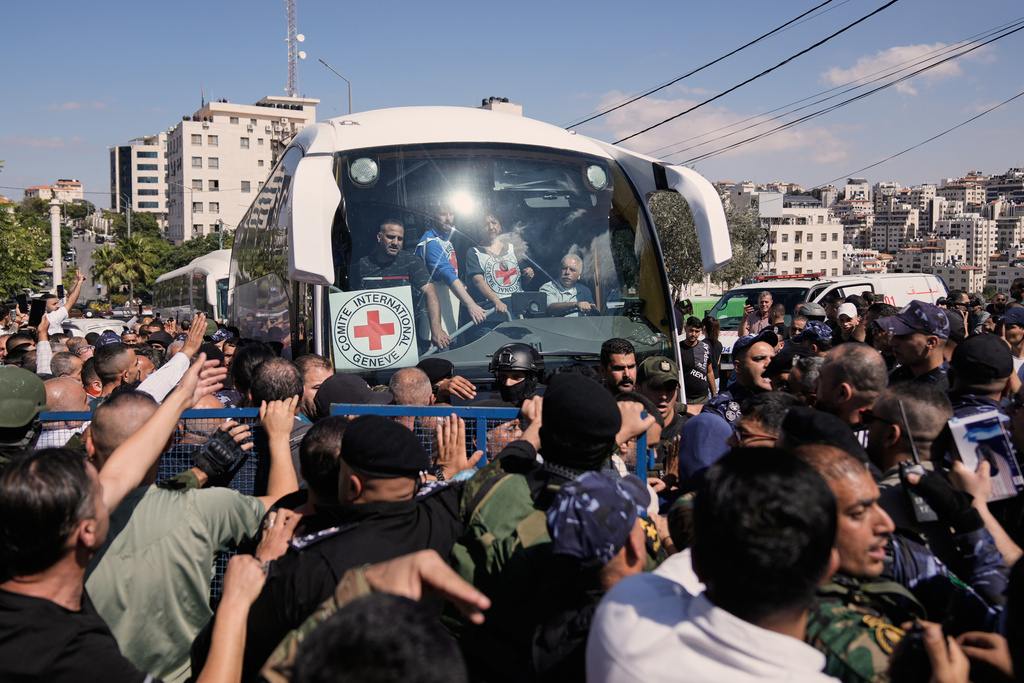
With the implementation of the Gaza agreement and ceasefire, the largest prisoner exchange in two decades between Hamas and Israel took place on Monday, including the release of prisoners sentenced to life, among them the heroes of the “Freedom Tunnel.”
Buses carrying the prisoners moved towards the Rafah crossing amid cheers and ululations from families, while Palestinians hung pictures of Kamamji and Al-Ardah on walls and raised banners reading: “From underground to the light of freedom… the resistance’s promise is true.”
Between Jenin and Gaza, the story returns to its roots: a land that breeds resistance, mothers waiting for their sons with tears of pride, and a people who never forget that freedom, no matter how long its night, begins with a tunnel and is fulfilled by a true promise.



Recommended for you
Al-Jaghbeer: The Industrial Sector Leads Economic Growth
Egypt Post: We Have Over 10 Million Customers in Savings Accounts and Offer Daily, Monthly, and Annual Returns
Alternative to UNIFIL Forces
Talib Al-Rifai Chronicles Kuwaiti Art Heritage in "Doukhi.. Tasaseem Al-Saba"
Exhibition City Completes About 80% of Preparations for the Damascus International Fair Launch
Trump Advisor: Disarming Hamas is Central.. Palestinian Authority to Take Over Gaza After Required Reforms