









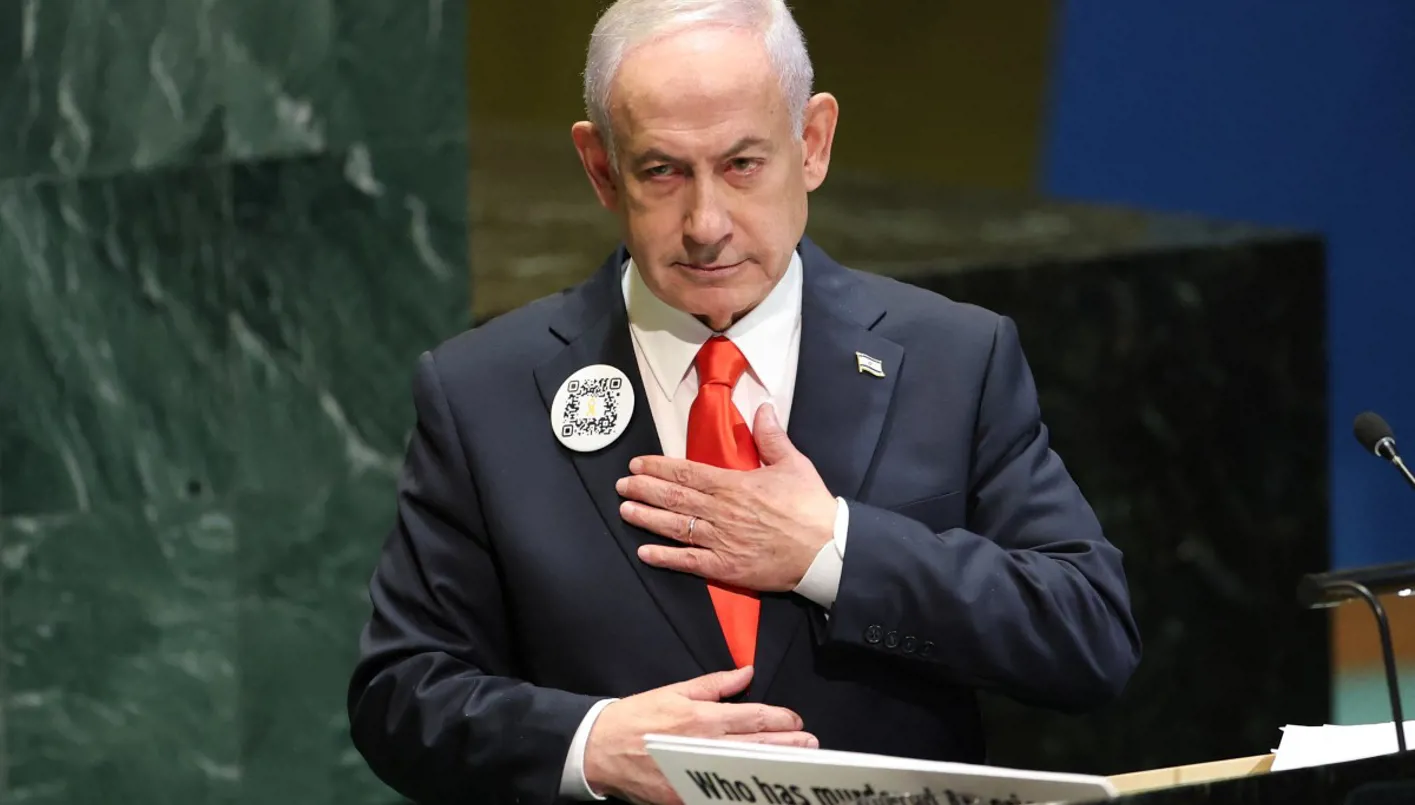
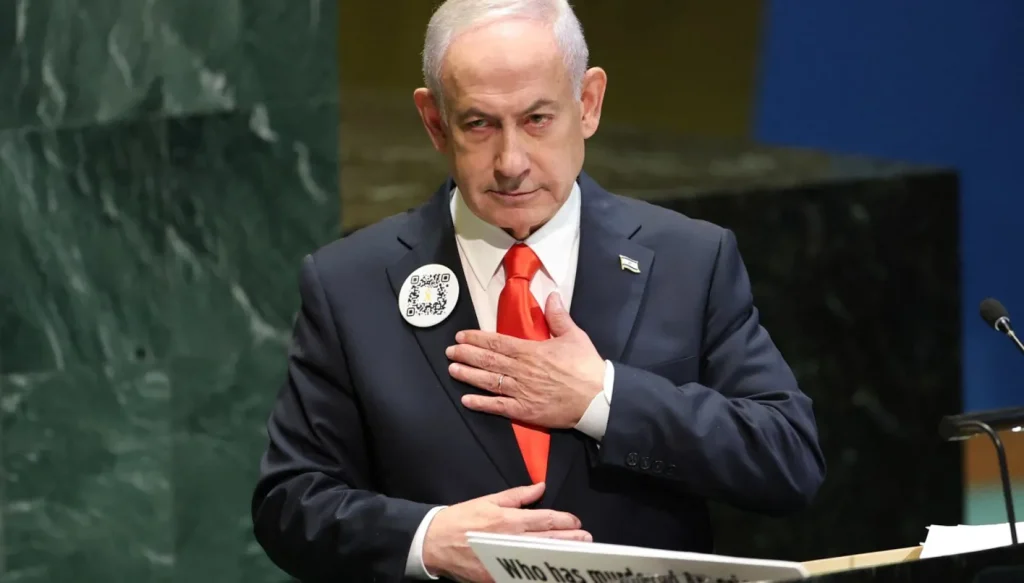
Netanyahu speaking before the United Nations General Assembly in New York. (AFP)
US President Donald Trump received a valuable gift from France, Britain, and Germany: the reactivation of UN sanctions on Iran starting Sunday. In return, the White House responded to European calls for greater involvement in the Ukrainian war and efforts to stop the Israeli war on Gaza.
Thus, the US plan consisting of 21 points was born, which Trump said aims to go beyond Gaza and to achieve a broader peace in the Middle East. One part of the plan addresses stopping the war in Gaza and recovering Israeli captives in exchange for releasing hundreds of Palestinian prisoners, gradual Israeli withdrawal from the Gaza Strip, and discussing the “day after” the war. The second, more difficult part, talks about achieving peace in the region without mentioning a Palestinian state, so as not to provoke Netanyahu into outright rejecting the plan.
This plan has burdened Netanyahu and confused his calculations. On one hand, he does not want to lose Trump, Israel’s last supporter in the West, and on the other hand, accepting a ceasefire would likely mean the collapse of his ruling coalition and heading to early elections in early 2026, which do not guarantee his return to power.
What deserves attention is that Netanyahu faces an international moment that has surpassed his narrow calculations based on continuing wars as a means to stay in power, and possibly even postponing the 2026 elections. It is a moment of bargaining between Trump and the European countries.
The Europeans have skillfully marketed their key role in reactivating UN sanctions on Iran and demanded a price from the United States in return. Otherwise, how can Trump’s turnaround on Putin be explained to the extent of considering supplying Ukraine with “Tomahawk” missiles, while signs of confrontation between Russia and NATO loom due to mysterious drone flights over Scandinavian, Baltic, and Polish countries? Trump is pleased to have Europeans pay for the American weapons sent to Ukraine and no longer fears the outbreak of a third world war.
Has Netanyahu become a “victim” of the US-European consensus on managing global crises? There is no doubt that the tip of this consensus iceberg terrifies the Israeli Prime Minister, who fears being toppled by a ceasefire in Gaza and by yielding to Trump’s request not to annex the West Bank.
It should not be forgotten that Trump, who did not object to the liquidation of Hamas leaders, expressed dissatisfaction with the attempt to target these leaders in Qatar specifically, a US ally, sowing doubt among other Gulf states about America’s readiness to defend them.
Trump has now obtained Arab countries’ approval for his Gaza plan, which he says, without details, will bring “something great in the Middle East.”
Israel, gradually turning into a pariah state due to the war, forces its Prime Minister to fly over countries not party to the International Criminal Court treaty, ministers in its government are banned from entering European and Western countries allied with America, and the European Football Union is about to ban Israeli athletes from playing in European stadiums. Israel faces an unprecedented situation and has begun to pay a heavy political and moral price for the war.
The question now is: what will follow the White House meeting?

Recommended for you
Talib Al-Rifai Chronicles Kuwaiti Art Heritage in "Doukhi.. Tasaseem Al-Saba"
Exhibition City Completes About 80% of Preparations for the Damascus International Fair Launch
Unified Admission Applications Start Tuesday with 640 Students to be Accepted in Medicine
Al-Jaghbeer: The Industrial Sector Leads Economic Growth
Egypt Post: We Have Over 10 Million Customers in Savings Accounts and Offer Daily, Monthly, and Annual Returns
His Highness Sheikh Isa bin Salman bin Hamad Al Khalifa Receives the United States Ambassador to the Kingdom of Bahrain