



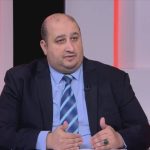




Former Foreign Minister Ambassador Nabil Fahmy stated that the current international system has become “unstable and dysfunctional,” failing to reflect the real balance of power in the world. He explained that the political structure on which the global system was founded after World War II is no longer suitable to address new challenges, and that international institutions, especially the Security Council, are no longer able to perform their roles.
Fahmy added, during his speech at the Maspero Cultural Salon broadcast on the First Channel on Saturday evening, that the current international system is based on a “political deal made in 1945 among the victors of World War II,” but this deal collapsed after the Cold War ended and the Soviet Union fell. He noted that “the balance that prevented clashes between major powers disappeared, disrupting the political equation and related institutions.”
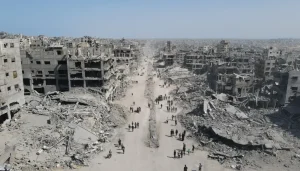
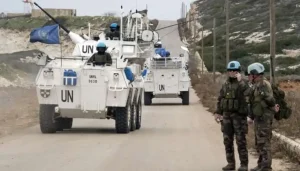
The former foreign minister said the Security Council has completely lost its effectiveness and has not been able to make a single positive decision in the past three years, even on urgent humanitarian issues such as the ceasefire in Gaza, due to sharp differences between the positions of the United States, Russia, and China. He considered this failure “evidence of a real crisis in the international system.”
Fahmy explained that the five permanent members of the Security Council no longer represent the current balance of power, saying: “Only three of these countries remain influential, while Britain and France are no longer among the top five powers in the world, which calls for a comprehensive review of the international system’s structure.”
He pointed out that recent years have witnessed blatant violations of international law by the major powers themselves and excessive use of military force at the expense of diplomacy, warning of an accelerating arms race among global powers amid announcements by China and the United States about developing new weapons and advanced nuclear programs.
Regarding climate issues, Fahmy said, “The Middle East is the most affected region by climate change, especially concerning water scarcity and desertification,” stressing that addressing this issue requires international solutions, not just regional ones, because its effects go beyond national borders.
He also noted the widening gap between industrialized northern countries and developing southern countries, both in technology production and the ability to face international debts, affirming that “rising indebtedness threatens global economic stability and affects the balance of relations between countries.”
Fahmy then moved to the situation in the Middle East, saying the region suffers from chronic instability but sees limited signs of improvement. He explained that one of the most prominent challenges is “the attempt to change the Middle East’s identity from an Arab-based region to one where Arabs are just one component among others,” describing it as a “dangerous trend coming from non-Arab powers in the region.”
He emphasized the necessity for the Arab world to have an active and proactive stance in facing international and regional transformations, instead of merely reacting, stressing that the current phase requires “a unified Arab strategy that restores balance to the region and confronts upcoming global risks.”
Recommended for you
Talib Al-Rifai Chronicles Kuwaiti Art Heritage in "Doukhi.. Tasaseem Al-Saba"
Exhibition City Completes About 80% of Preparations for the Damascus International Fair Launch
Al-Jaghbeer: The Industrial Sector Leads Economic Growth
Unified Admission Applications Start Tuesday with 640 Students to be Accepted in Medicine
Egypt Post: We Have Over 10 Million Customers in Savings Accounts and Offer Daily, Monthly, and Annual Returns
His Highness Sheikh Isa bin Salman bin Hamad Al Khalifa Receives the United States Ambassador to the Kingdom of Bahrain