








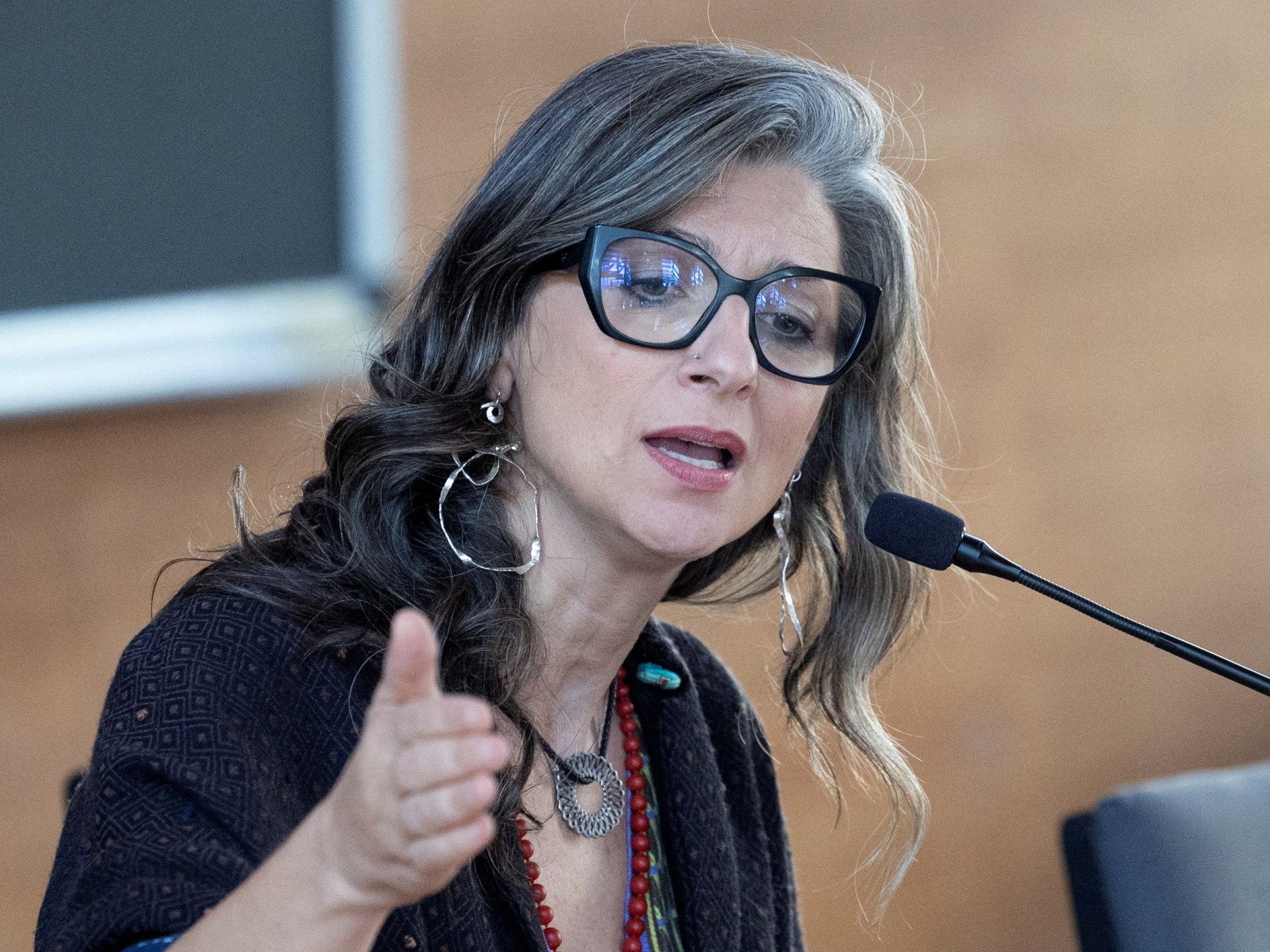
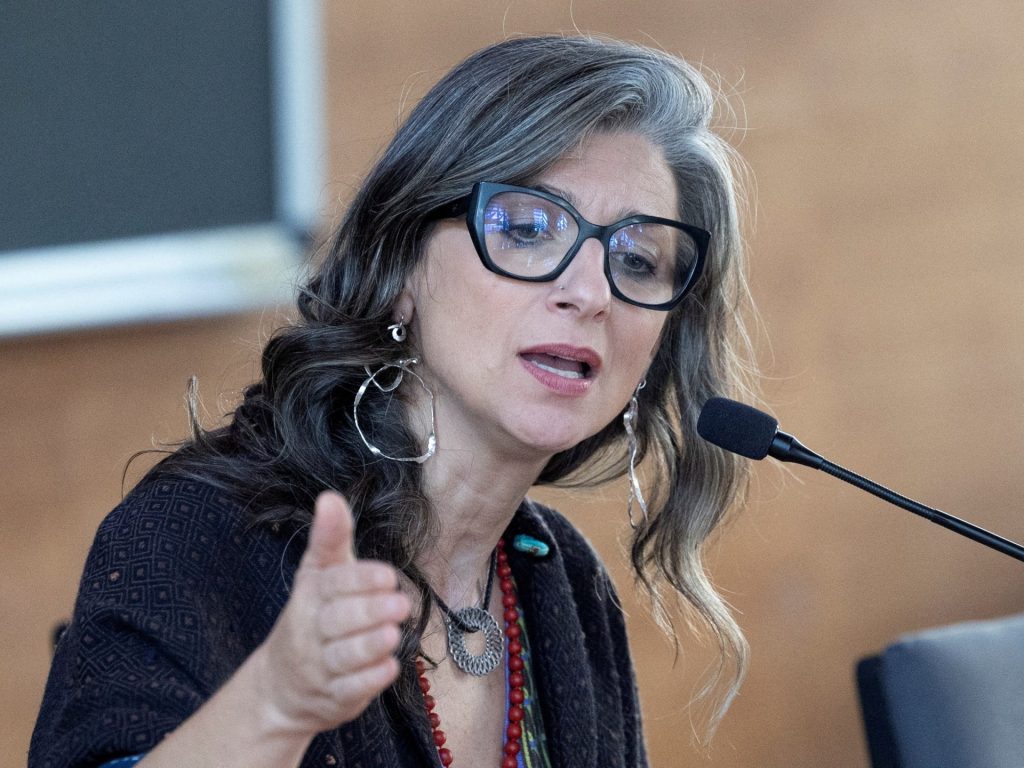
Francesca Albanese, the UN Special Rapporteur on the occupied Palestinian territories, is facing a wave of sharp criticism in Italy following a series of controversial statements and positions, most notably her public dispute with lifetime Senator Liliana Segre over the use of the term “genocide” to describe what is happening in Gaza.
According to the Italian newspaper Corriere della Sera, Albanese, known for her pro-Palestinian stance, has been widely criticized after describing Segre’s statements as unbalanced, noting that Segre’s personal experience as a Holocaust survivor affects her ability to objectively assess the situation.
Albanese said in a press interview, “You cannot ask for a diagnosis from someone who survived the disease, but from a specialist.”
The dispute began in August when Segre criticized what she called the excessive use of the term “genocide” in the context of Gaza, considering it a reflection of “hatred” and “anti-Semitism.”
Albanese responded via social media posts, affirming that the term “reflects collective and individual responsibility for what is happening in Gaza, sanctioned by protesters who believe they are right, whether elected or not, while an entire people is forced to pay the price for the endless sadism of a gang of criminals and their close and distant aides.”
At an official event in Reggio Emilia, northern Italy, the UN rapporteur sparked controversy again when she asked the city’s mayor, Marco Massari, not to repeat the phrase “end of genocide and release of hostages,” leading to negative reactions from attendees and widespread video circulation in the media.
Her sudden departure from the La7 studio during the live program “On Air” last Monday evening also drew media criticism, with some considering her withdrawal a protest against the mention of Segre’s name, while Albanese later clarified that her departure time was pre-agreed and that the real reason was “the exploitation of the senator’s name to deny the genocide in Gaza.”
At the same time, Albanese managed to cause divisions within the Democratic Party itself. While some local officials praised her—as happened with the initiative to grant her honorary citizenship by the Bologna municipality, which also sparked controversy—many national leaders view her statements unfavorably, describing her as a “narcissistic, polarizing, and divisive figure.”
She has also been criticized by prominent politicians such as Matteo Renzi, leader of the Italia Viva party, Maurizio Gasparri from Forza Italia, and Federico Mollicone from Brothers of Italy, who considered her statements about the Israeli “hostages” “inappropriate” and a “moral decline,” while others, like the Environmental Left Alliance, defended her as “one of the most prominent advocates for the peace process in the Middle East, which should have received support from the entire political class.”

Recommended for you
Talib Al-Rifai Chronicles Kuwaiti Art Heritage in "Doukhi.. Tasaseem Al-Saba"
Exhibition City Completes About 80% of Preparations for the Damascus International Fair Launch
Al-Jaghbeer: The Industrial Sector Leads Economic Growth
Unified Admission Applications Start Tuesday with 640 Students to be Accepted in Medicine
Egypt Post: We Have Over 10 Million Customers in Savings Accounts and Offer Daily, Monthly, and Annual Returns
His Highness Sheikh Isa bin Salman bin Hamad Al Khalifa Receives the United States Ambassador to the Kingdom of Bahrain