









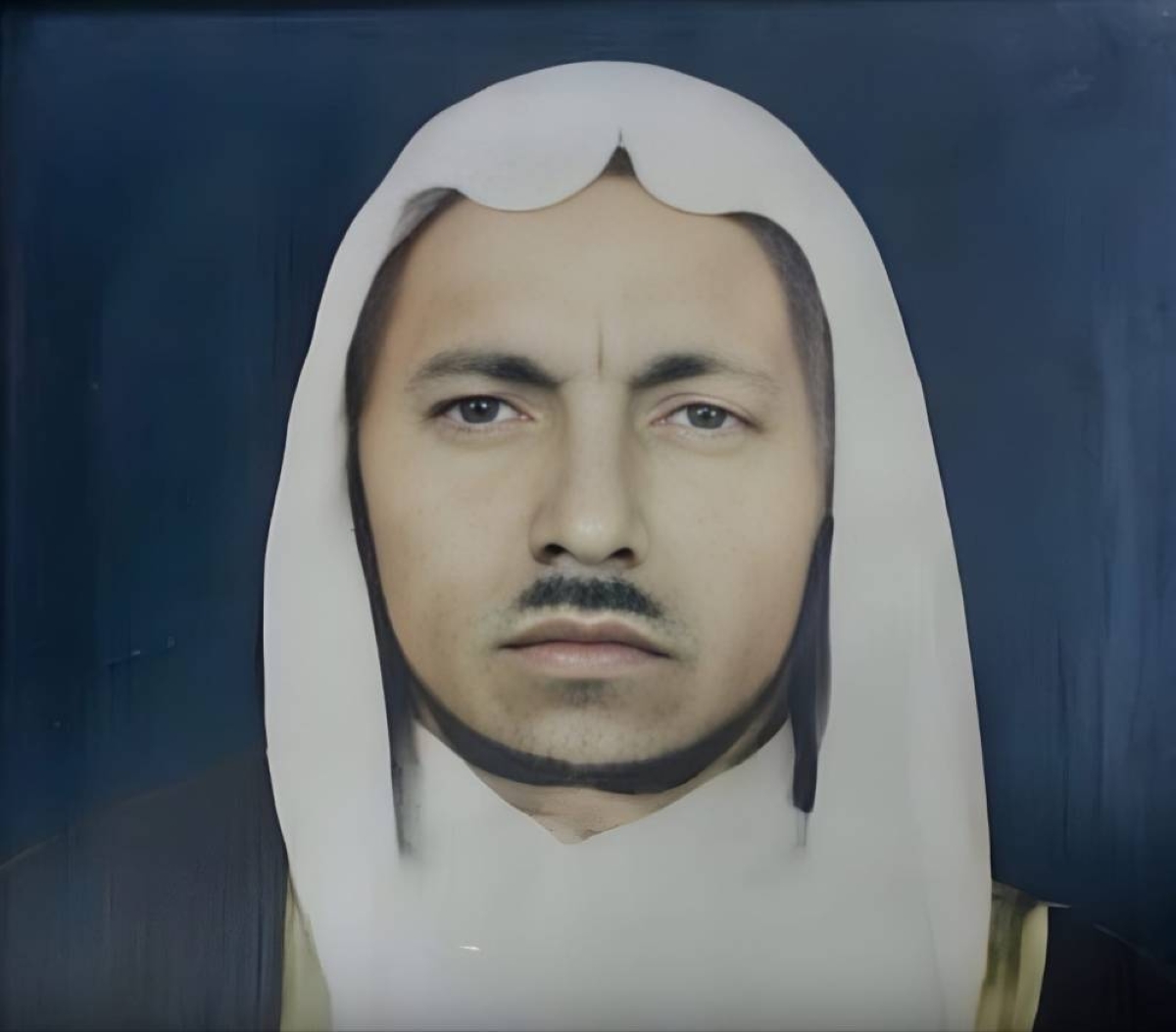
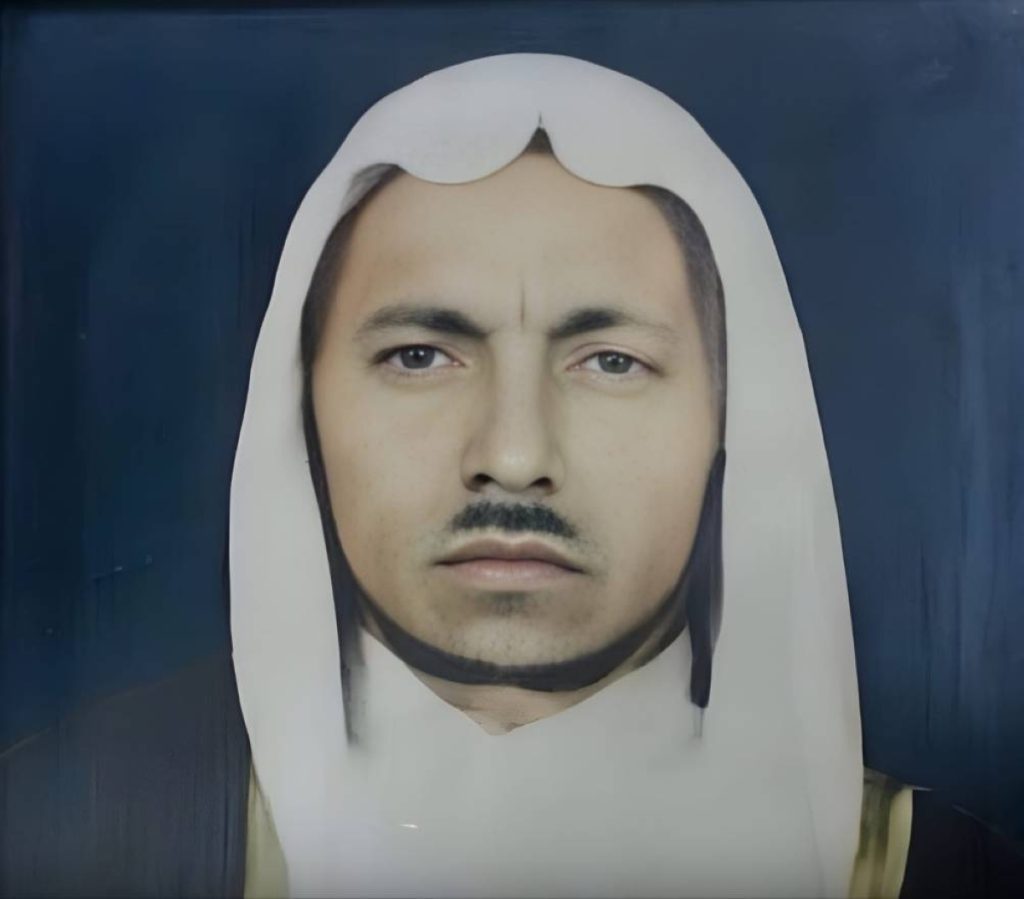
Ali Maajil bin Saad Al-Ghamdi was born in the village of Ara’a in Bani Zubyan in the highlands of Sarat Al-Baha in 1340 AH. He became fatherless at the age of two and was raised under the care of his elder brother Othman, who took on the responsibility of his upbringing. Ali, nicknamed Maajil after his maternal tribe, refused to remain confined by his village and difficult circumstances. He left as a youth for Mecca seeking livelihood, but the doors of the Haram provided him with a different kind of fortune. There, he attended scholars’ circles, learning and illuminating his mind, developing a love for knowledge and memorizing the Qur’an, and studying Islamic texts. He joined the Makkah Dar Al-Hadith in 1352 AH and studied there for four years, then moved to Riyadh to study under prominent scholars including Mufti Muhammad bin Ibrahim Al-Sheikh.
He later moved to Taif to join Dar Al-Tawhid, graduating after years of diligence, then continued his studies at the College of Sharia in Mecca, graduating in 1375 AH as the first student from southern Saudi Arabia to graduate from this prestigious institution with a specialized degree.
Ali carried knowledge as a weapon and honesty as provision. He joined the judiciary in Taif, then served as a judge in Mecca, known for his sermons and admonitions. He sat on the pulpit of the Holy Mosque addressing hearts and minds. After ten years in the judiciary, he left the judicial platform to join the Ministry of Education, moving between religious inspection and managing education in Al-Baha from 1386 AH. He witnessed a pivotal foundational stage lasting seven years, during which he laid down a scientific strategy that became a solid foundation for conscious education that produced a generation contributing to development and assuming leadership positions at the state level.
Ali Maajil was not only a judge and educator but also a preacher with a resonant voice in Al-Baha, Mecca, and Taif. He preached in mosques and wrote a weekly column in the newspaper “Al-Nadwa,” addressing people’s issues and responding to religious inquiries. He was known for his keen interest in correcting concepts related to monotheism and famously sought to remove a mosque built over graves in his village, which led to official authorities relocating the mosque.
Despite his high status, his home was open to strangers, the poor, and travelers. He offered them the finest bedding, clothed them from his own garments, and welcomed them with his usual smile and laughter. The writer Hamad Al-Jasser mentioned his generosity in his book “Sarat Ghamid and Zahran” after visiting Al-Baha in the 1390s AH.
He owned a rich library of jurisprudence and literary heritage books such as “Al-‘Aqd Al-Fareed,” “Subh Al-A’sha,” and “Nihayat Al-Arab,” combining the roles of jurist and literary figure, seriousness and humor, knowledge and life. He had prominent colleagues on his journey, including Sheikh Hassan Al-Sheikh, Sheikh Abdulaziz Al-Sheikh, and Sheikh Muhammad bin Jubair.
On the seventh of Rabi’ Al-Awwal 1395 AH, Ali Maajil ended his journey after battling illness, leaving behind children and grandchildren who continued his path and assumed leadership positions in various fields. His history tells that orphanhood can be a gateway to greatness and that the impact of men remains as long as giving continues.




Recommended for you
Talib Al-Rifai Chronicles Kuwaiti Art Heritage in "Doukhi.. Tasaseem Al-Saba"
Exhibition City Completes About 80% of Preparations for the Damascus International Fair Launch
Al-Jaghbeer: The Industrial Sector Leads Economic Growth
Unified Admission Applications Start Tuesday with 640 Students to be Accepted in Medicine
Egypt Post: We Have Over 10 Million Customers in Savings Accounts and Offer Daily, Monthly, and Annual Returns
His Highness Sheikh Isa bin Salman bin Hamad Al Khalifa Receives the United States Ambassador to the Kingdom of Bahrain