









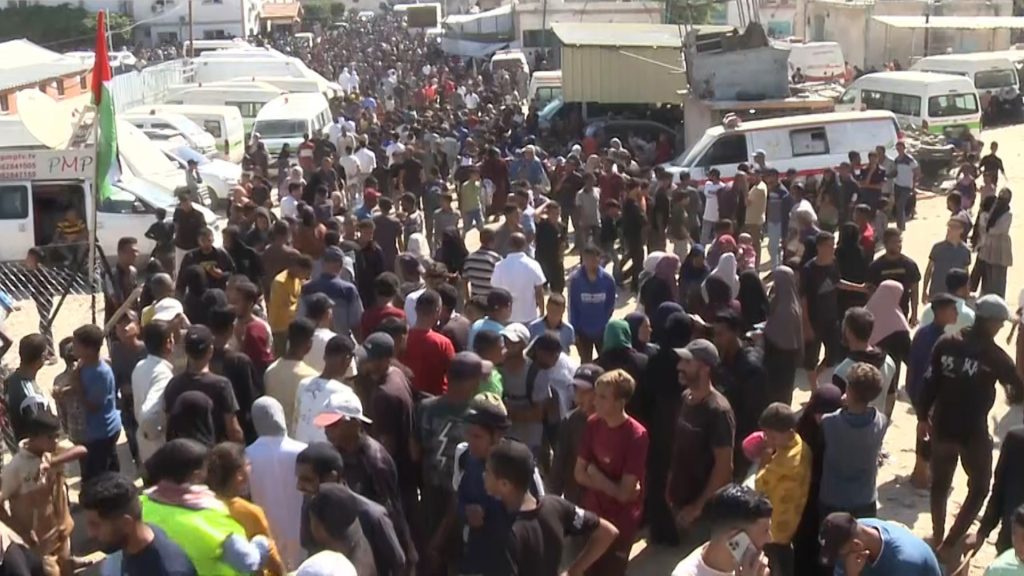
Walid Al-Omari, Al Jazeera’s bureau chief in Palestine, observed a clear contrast between the scenes of releasing Israeli prisoners by the Palestinian resistance and the way the Israeli occupation authorities treated the released Palestinian prisoners, considering that the difference reflects the ethical and political systems of each side.
Al-Omari pointed out that the resistance ensured that the recent releases were conducted in a “non-humiliating” manner for the Israeli prisoners, explaining that the fighters of Al-Qassam Brigades—the military wing of the Islamic Resistance Movement (Hamas)—managed the process with discipline and precise organization, coordinated with the International Red Cross, demonstrating full control and decision-making on the ground.
He explained that Israel was deeply upset by the scenes previously broadcast by the resistance, where Al-Qassam fighters handed over Israeli prisoners in an organized way, giving them the image of the victor controlling the ground. Therefore, according to Al-Omari, Tel Aviv insisted in the recent negotiations to prevent the repetition of these scenes, which Hamas accepted to avoid further complications.
He added that the absence of such images this time made the scene more ambiguous, but it did not negate the fact that the handover took place from multiple locations in the Gaza Strip, including central and southern areas, along with handing over the bodies of some Israeli prisoners killed during the war.
Al-Omari noted that the Israeli side treated the Palestinian prisoners in the opposite manner, as the release operations were accompanied by strict procedures and repeated humiliations for the prisoners and their families, pointing out that occupation forces toured the homes of prisoners with long sentences in recent hours, warning them against any signs of joy or celebration.
He indicated that the occupation authorities practiced harsh treatment of the released prisoners even before their release from prisons, where gas and sound bombs were fired to disperse the families gathered near Ofer prison, and the prisoners were transferred to crossings while handcuffed, in a scene that, according to Al-Omari, reflects “Israel’s desire for revenge rather than implementing a humanitarian exchange agreement.”
He added that National Security Minister Itamar Ben-Gvir was among the most inciting Israeli officials against Palestinian prisoners, as he visited the detention centers days before the exchange and deliberately humiliated them, a step Al-Omari described as “embodying the punitive mentality with which the Israeli government deals with Palestinians even in moments of relief.”
Notable Treatment
On the other hand, Israeli media highlighted new details about the resistance’s treatment of Israeli prisoners before their release, as Al-Qassam Brigades allowed some of them to make phone calls and video chats with their families before being freed, an unprecedented step in the history of deals between the two sides.
Yedioth Ahronoth newspaper reported that some prisoners spoke directly with their families from inside Gaza, including prisoner Matan Angrist, who appeared in an emotional call with his mother, one of the prominent activists in the Families of Prisoners movement that pressured Benjamin Netanyahu’s government to stop the war.
According to the newspaper, these communications, along with the calm and organized handover method, gave the impression that the resistance wanted to show its commitment to humanitarian standards despite the long war that lasted two years and claimed the lives of tens of thousands of Palestinians.
The handover process was carried out in two batches, the first including 7 prisoners and the second 13, bringing the total number of Israeli prisoners released by Al-Qassam to 20, according to the Israeli army radio, which said “there are no longer any living hostages with Hamas” after handing over the two batches to the International Red Cross.
Channel 12 reported that convoys of the International Committee moved from locations in Deir al-Balah and central Gaza towards the handover points, while Palestinian sources indicated that among those released were two soldiers and several civilians captured during the October 7, 2023 attack.
Meanwhile, the Israeli Broadcasting Corporation said the Prison Service completed preparations to release the Palestinian prisoners included in the deal, while the Israeli government approved amendments to the list that included adding names and replacing others at the last moments.
Israeli Concern
Al-Omari pointed out that these measures reflect a dual Israeli concern, both security and political, that the scenes of releasing Palestinian prisoners turn into manifestations of victory, confirming that the occupation was keen to “suppress Palestinian joy” by all means.
He noted that previous experiences showed that the occupation usually re-arrests some of the released prisoners shortly after, or punishes them by confiscating their property, making the moment of freedom temporary and tense for many prisoners and their families.
While crowds of Palestinians gathered in Khan Yunis and West Bank cities awaiting the release moment, cameras recorded completely different scenes on the Israeli side, where the freed prisoners were transferred by the Red Cross in secure vehicles amid an official reception far from popular celebration.
Al-Omari believes that the Palestinian and Israeli scenes summarize the fundamental contrast in dealing with human beings; despite the siege and destruction, the resistance cared for the dignity of Israeli prisoners, while Israel sought to humiliate Palestinian prisoners even after fulfilling the exchange agreement.



Recommended for you
Al-Jaghbeer: The Industrial Sector Leads Economic Growth
Egypt Post: We Have Over 10 Million Customers in Savings Accounts and Offer Daily, Monthly, and Annual Returns
Alternative to UNIFIL Forces
Talib Al-Rifai Chronicles Kuwaiti Art Heritage in "Doukhi.. Tasaseem Al-Saba"
Exhibition City Completes About 80% of Preparations for the Damascus International Fair Launch
Trump Advisor: Disarming Hamas is Central.. Palestinian Authority to Take Over Gaza After Required Reforms